
Does a Concrete or Paver Contractor Need a License in Florida? How to Check
A Florida concrete or paver contractor needs a license only for certain scopes: driveway installation is exempt by name, while structural concrete tied to a foundation or wall needs the state's structural masonry certificate. As of October 2026, the DBPR license search and a call to the county confirm what applies to a specific job and whether local licenses still exist after 2025's statewide changes.
By the Opera Concrete & Pavers estimating team · Updated October 1, 2026
Does a Concrete or Paver Contractor Need a License in Florida?
It depends on the scope. Driveway installation on its own is carved out of state and local licensing requirements by name, so a driveway-only business can legally operate without a state license, though a permit can still be required. Structural concrete tied to a foundation, footer, slab or wall falls under a separate state specialty certificate, and pavers and patios aren't named in the driveway exemption at all, which makes them a judgment call the statute leaves open rather than a clean yes or no.
How Do You Look Up a Contractor's License on DBPR?
The DBPR license search at myfloridalicense.com takes a business or individual name and returns license status, type and any discipline history on file. Two terms show up in that listing worth knowing apart: a "certified" contractor holds a state certificate of competency and can legally work anywhere in Florida, while a "registered" contractor is registered off a local competency license and can only work in the specific jurisdictions where that local license applies (F.S. 489.105; F.S. 489.117). A business that's "registered" in one county has no automatic standing to pull a permit or advertise in another, which matters for anyone comparing bids from businesses based outside their own county.
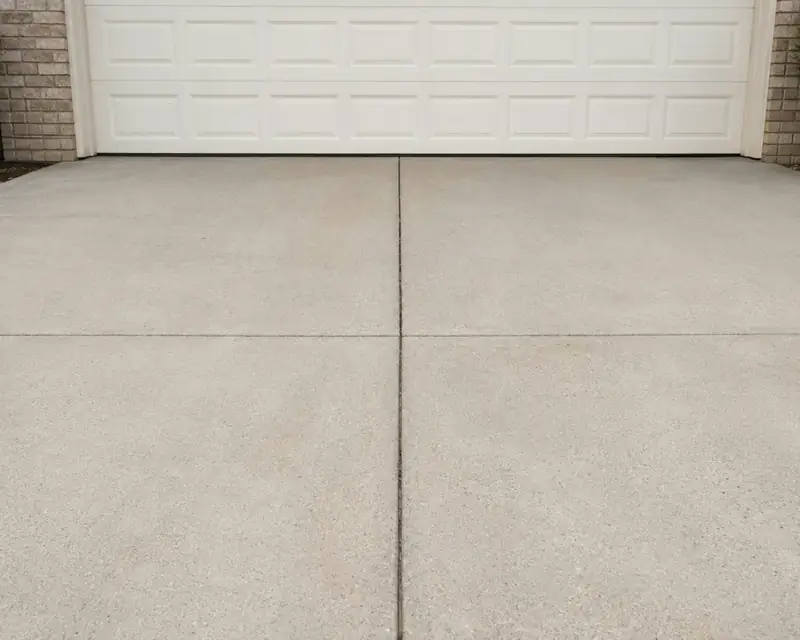
Which Jobs Are Exempt From Needing a License by Name, and Which Aren't?
F.S. 489.117(4)(a)1 lists specific job scopes a local government can't require a state or local license for, and "driveway or tennis court installation" is on that list by name, alongside "decorative stone, tile, marble, granite, or terrazzo installation" (F.S. 489.117). The statute doesn't abolish the permit itself, only the license requirement for that specific scope. Structural concrete work sits on the other side of the line: a 2024 rule created the "structural masonry specialty contractor" certificate, covering the forming, placing and finishing of concrete and masonry in foundations, slabs, footers, curbs, walls, columns and beams (Fla. Admin. Code R. 61G4-15.100). Pavers and patios fall in between, since neither is named in the driveway exemption and neither is clearly a foundation or footer, so whether a specific job "substantially corresponds" to the structural masonry scope is something the statute leaves to interpretation rather than settling outright. Pool decks sit in a similar gap: the pool contractor categories cover the pool structure itself, not the surrounding deck, by the statute's own text (F.S. 489.105).
| Job | License status |
|---|---|
| Driveway installation, stand-alone | Named exemption; no state or local license can be required for this scope |
| Decorative stone, tile, marble or terrazzo | Also named in the same exemption |
| Foundation, footer, structural slab or wall | Structural masonry specialty contractor certificate |
| Paver patio or paver driveway | Not named either way; confirm with DBPR and the county |
| Pool deck (not the pool structure itself) | No statute clearly assigns this to one category |
General guidance, not legal advice; a specific scope can combine more than one category.
What Happened to County-Level "Concrete" Licenses After 2025?
A lot changed here in a short window. A 2021 law, codified at F.S. 163.211, preempted occupational licensing to the state but let pre-2021 local licenses keep operating on a sunset clock that moved twice before landing on July 1, 2025. Past that date, DBPR's own guidance says a local government may only keep licensing specialty categories that substantially correspond to a state CILB category, or ones the statute expressly allows (DBPR CILB Hot Topics). Miami-Dade, outside our service area but a useful example, lists "Concrete Finishing," "Concrete Forming and Placing" and "Masonry Floor" among the local categories it preempted as a result (Miami-Dade Contractor License Category Preemption). Closer to home, Manatee County's own pages still describe local licenses covering "Mason, Masonry and Concrete" categories, with state-certified contractors able to register locally as well (Manatee County Contractor Licensing). Orange County's building safety page lists no separate concrete license category at all (Orange County Division of Building Safety). Osceola, Seminole, Lake and Sarasota counties' current local categories weren't confirmed from a page we could fetch directly, so a direct call to that county's contractor licensing office is the reliable way to settle it rather than assuming either way.
How Do You Check Insurance and Workers' Comp, Not Just the License?
A license search alone doesn't show current insurance coverage. Before a state certificate or registration issues or renews, an applicant has to file an affidavit confirming workers' compensation, public liability and property damage insurance in board-set amounts (F.S. 489.115). Rule 61G4-15.003 makes it a violation to stop carrying that coverage, but proof is checked through random board audits rather than posted publicly, so asking a contractor directly for a current certificate of insurance is more reliable than assuming the license listing covers it (Fla. Admin. Code R. 61G4-15.003). Workers' compensation itself follows its own rule in construction: any employer with at least one employee is covered, up to three corporate officers who each own 10 percent or more of the business can file for an exemption, and an independent contractor on a construction job generally counts as an employee for this purpose (F.S. 440.02).
What Happens If You Hire a Contractor Who Isn't Licensed for Work That Required One?
Three consequences, and they mostly protect the homeowner rather than the contractor. An unlicensed contractor can't enforce its own contract in court, though doing work in a scope that genuinely doesn't require a license (like a stand-alone driveway) doesn't make someone "unlicensed" to begin with (F.S. 489.128). An unlicensed contractor also has no lien rights against the property, which cuts both ways for a homeowner weighing risk (F.S. 713.02). And the state's Homeowners' Construction Recovery Fund, which can reimburse a homeowner for certain losses, only pays out for violations committed by a licensed contractor, so hiring around licensing for a scope that needed one forfeits that backstop entirely (F.S. 489.1425). Separately, state law requires a contractor's registration or certification number to appear on every bid, proposal or advertisement it issues, in any medium (F.S. 489.119); a written bid that's missing a license number where one should appear, or an unlicensed business that claims to be licensed or insured, is grounds for a local fine under the same statute.
Say You're Checking Two Bids for a Patio Extension in St. Cloud
A homeowner in St. Cloud comparing two concrete patio bids runs both business names through the DBPR license search first, noting whether either holds a certified (statewide) or registered (local-only) status, then calls Osceola County's building office directly since its current local licensing categories weren't something we could confirm from a published page. Both bids get asked for a current certificate of insurance rather than a verbal assurance, and both get checked for a printed license number, since a bid that's silent on that point either doesn't need one for its scope or is skipping a requirement it should be meeting. Our concrete patio cost guide covers where Florida market pricing lands for an extension that size.
Frequently asked questions
Does a concrete contractor need a license in Florida?
It depends on scope. Driveway installation on its own is exempt from state and local licensing requirements by name, while structural concrete tied to a foundation, footer or wall falls under the state's structural masonry specialty certificate. Running the business name through the DBPR license search, and asking directly which category applies to a specific job, settles it faster than guessing.
How do I check a contractor's license in Florida?
Use the DBPR license search at myfloridalicense.com, which returns the business's license status, type and any discipline history. A "certified" license is statewide; a "registered" license only covers the specific local jurisdictions it was issued for, which matters when comparing out-of-county bids.
Does a paver contractor need a license in Florida?
Pavers and patios aren't named in the state's driveway licensing exemption, and whether a given paver job falls under the structural masonry category is a judgment call the statute leaves open. Checking DBPR directly and asking the contractor which category, if any, covers the scope is the reliable approach rather than assuming either answer.
What's the difference between a certified and a registered contractor?
A certified contractor holds a state certificate of competency and can legally work anywhere in Florida. A registered contractor's standing comes from a local competency license and only covers the specific jurisdictions where that local license was issued, so a registered contractor from one county has no automatic standing in another.
What happens if I hire an unlicensed contractor for work that needed a license?
Three things, mostly protective of the homeowner: the contractor can't enforce its contract in court, it has no lien rights against the property, and the state's Homeowners' Construction Recovery Fund only reimburses losses caused by a licensed contractor, so that backstop isn't available. Checking DBPR before signing avoids finding this out after a dispute starts.
Sources
- F.S. 489.117 (2026) Registration; specialty contractors
- F.S. 489.105 (2026) Definitions
- Fla. Admin. Code R. 61G4-15.100 Certified Specialty Contractors (LII)
- DBPR License Search
- F.S. 163.211 (2026) Licensing of occupations preempted to state
- DBPR CILB Hot Topics
- Miami-Dade Contractor License Category Preemption
- Manatee County Contractor Licensing Section
- Orange County Division of Building Safety
- F.S. 489.115 (2026) Certification and registration; insurance
- Fla. Admin. Code R. 61G4-15.003 Public Liability Insurance (LII)
- F.S. 440.02 (2025) Workers' comp definitions
- F.S. 489.128 (2026) Unlicensed contracts unenforceable
- F.S. 713.02 (2026) Types of lienors and exemptions
- F.S. 489.1425 (2026) Recovery fund notice
- F.S. 489.119 (2026) Business organizations; advertising