
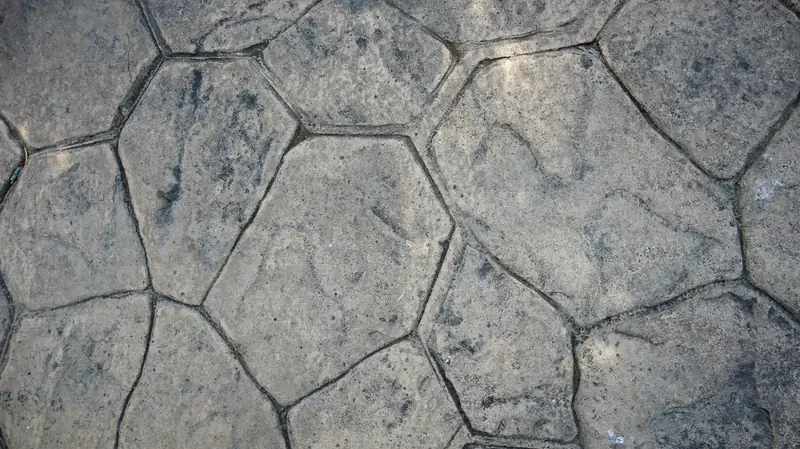
Concrete · Greater Orlando & Sarasota
Stamped concrete for driveways, patios and pool decks
As of October 2026, stamped concrete in Florida runs $8–$19 per square foot installed, typically $12–$16, across driveways, patios, walkways and pool decks. We build to the same thickness and joint spec as plain concrete, cure at least 3 days, and seal with a slip-resistant additive on wet surfaces for homes across Greater Orlando and Sarasota-Manatee.
By the Opera Concrete & Pavers estimating team · Updated October 1, 2026
Get a free estimate
Tell us about the project and we'll call to set up a free site visit.
What stamped concrete is, and where it works
Stamped concrete is a poured slab that gets a pattern pressed into it before it sets, slate, ashlar, wood-plank or cobble among the common choices, along with integral color, a release agent and a sealer to finish it off. This page covers every stamped surface we build: driveways, patios, pool decks and walkways. Pressing a pattern into a slab is a finishing choice, not a different service for each location, so stamped concrete gets one page rather than one per surface. If you want plain broom or trowel concrete instead, those live on concrete driveways, concrete patios and concrete pool decks; those pages cover the base spec and process for an unstamped slab. As of October 2026, stamped concrete in Florida runs $8–$19 per square foot installed, with $12–$16 typical for a one- or two-color pattern (Florida market range, October 2026, compiled from published contractor pricing and national cost guides. A written quote follows a site visit.).
Patterns and color: integral, hardener or stain
Integral color is mixed into the concrete at the plant, tinting the full thickness of the slab, so a chip or a worn spot shows the same color underneath rather than bare gray. Color hardener is broadcast onto the surface after the pour and floated in by hand, producing a harder, more saturated top layer but one that reveals plain gray if it ever wears all the way through. A release agent, dusted or sprayed on right before the mats go down, keeps the texture from sticking and leaves a secondary antiquing color in the pattern's recessed lines once it is pressed in and washed off. Flagstone's wide, irregular joint lines read more casual than a tight ashlar slate or running-bond brick pattern, and the pattern choice affects more than looks: wide flagstone joints can double as control joints with little extra planning, while a tighter pattern still needs true joints cut at the proper spacing, just routed along an existing line. Stamped concrete patterns and colors that work in Florida walks through the options in more detail.
Build spec: thickness, joints and base by surface
Stamping is a surface finish, not a different base or thickness. A stamped driveway follows the same 4-inch, 3,000–4,000 psi standard as a plain one because it carries the same daily traffic; a stamped patio or walkway can follow the lighter patio spec since it only ever sees foot traffic and furniture; a stamped pool deck needs an isolation joint where the slab meets the coping so the deck and the shell can move independently. Control joints still follow the same spacing rule as plain concrete, about 24 to 36 times the slab's thickness, roughly 10 feet apart on a 4-inch slab (NRMCA CIP 6), but on a stamped surface that joint is planned to land on a grout line in the pattern rather than cut as a visible groove across it.
| Surface | Thickness / psi | Base | Note |
|---|---|---|---|
| Driveway | 4 in., 3,000–4,000 psi | 4 in.+ compacted fill | Same vehicle-load spec as plain concrete |
| Patio / walkway | 4 in., 3,000–4,000 psi | 4 in.+ compacted fill | Pattern and border double as part of the joint layout |
| Pool deck | 4 in., 3,000–4,000 psi | 4 in.+ compacted fill | Isolation joint required at the coping |
Slip resistance around a pool or wet deck
Stamped concrete can be slippery when wet if it is sealed with a plain, high-gloss film and nothing else, because the sealer builds up over the texture and smooths out the grip the pattern is supposed to provide. The fix is a slip-resistant additive, a fine polymer grit, mixed into the sealer on any surface that sees standing water regularly, a pool deck especially, rather than relying on the pattern's texture alone once a film sealer is on top of it. A driveway or front walkway can often get by with a standard sealer since it dries between rains; a pool deck cannot. If an existing deck already feels slick, our guide to fixing a slippery pool deck covers the resurfacing and resealing options without a full tear-out.
Cracking, control joints and what's normal
Stamped concrete cracks for the same reasons plain concrete does: shrinkage as the slab cures, movement at an unsupported edge, or a control joint spaced too far apart. The pattern does not add extra crack resistance and it does not add extra risk by itself, but it does change where a crack is easiest to hide, since a hairline crack that follows an existing grout line reads as part of the pattern rather than as damage. Fiber mixed into the batch, more common than wire mesh under a stamped slab since mesh can get pushed out of position by the stamp mats, keeps a crack from opening wider once it forms; neither fiber nor mesh stops a crack from forming in the first place. A sudden depression paired with cracking that reaches toward the house is a different matter from ordinary shrinkage cracking along a joint line.
How long stamped concrete lasts, and when to reseal
A properly built and sealed stamped slab commonly lasts 25 to 30 years in Florida's climate, the same general range as plain concrete, as long as it is resealed on schedule (Decorative Concrete Tampa, Feb. 2024). There is no fixed code interval for resealing; it depends on sun exposure, traffic and, around a pool, chlorinated splash. Florida contractor guidance generally points to resealing every 2 to 3 years, sooner on a surface in full sun or near salt air, because intense UV and heat wear an acrylic sealer down faster here than in a milder climate (Concrete Solutions FL). Watch for the sealer going dull or chalky, or water that stops beading on the surface, rather than counting years on a calendar; our stamped concrete maintenance guide covers fading, flaking and the cleaning routine in between resealing.
Stamped overlay vs a new pour
An existing driveway, patio or pool deck in sound structural condition, no major cracking, no settlement, can sometimes take a stamped overlay instead of a full tear-out: a thin layer of polymer-modified concrete bonded to the old slab, textured and colored the same way a new pour would be. Overlay work runs $7–$15 per square foot nationally, generally less than a full stamped replacement because there is no demolition. An overlay is only as good as what is underneath it, though; a slab with active cracking or a settling corner will usually telegraph that movement right back through the new surface, which is when a full replacement is the better call. Resurface or replace a concrete driveway? walks through that decision for plain concrete, and the same logic applies to a stamped overlay.
Color choices and heat around a pool
Lighter colors absorb less solar radiation than dark charcoal or brown tones, which is standard heat-island physics rather than anything specific to stamped concrete: the EPA notes that conventional dark paving can reach surface temperatures up to 152°F at midday, while lighter, more reflective pavements ran 10 to 16°F cooler in one Arizona pilot program (EPA, cool pavements). Manufacturer claims for acrylic coatings like Kool Deck say the product lowers surface temperature and that its darker color options run warmer, but the manufacturer itself gives no degree figure, so we do not print one (Mortex Kool Deck). The practical takeaway for a stamped pool deck is to lean toward a lighter integral color or release color if bare feet around the pool matter to you, and to expect a dark charcoal pattern to run hotter underfoot on a sunny afternoon than a tan or gray one. How hot do pool decks get in Florida? compares deck materials by feel in more depth.
How we install stamped concrete, step by step
- Lay out the pattern. Before any concrete is ordered, the pattern, border and joint layout are planned on paper against the slab's actual shape, so a control joint lands on a grout line instead of cutting across the middle of a pattern.
- Form, base and reinforce. The base follows the same code minimum as any slab on the ground, at least 4 inches of compacted fill, regardless of what finish goes on top. Fiber reinforcement is common under a stamped slab since mats pressed into wet concrete can push wire mesh out of position.
- Pour and float. Concrete is screeded and bull floated to a level surface, with color hardener broadcast and floated into the top layer where the design calls for it.
- Release and stamp. A powder or liquid release agent keeps the texture mats from sticking and leaves a secondary color in the pattern's low points. Mats are pressed in panel by panel, with hand tools working any borders and tight corners.
- Cut joints and wash the release. Joints are sawn or routed to fall along a pattern line, and the chalky release residue is pressure washed off once the slab can be walked on.
- Cure, then seal. The slab cures at least 3 days before sealing. The sealer, chosen with a slip-resistant additive on a pool deck, is what saturates the color and protects the pattern from UV and foot traffic.
Weather and soil this build plans around
Stamping adds a narrower weather window than a plain pour. Once the evaporation rate off the surface climbs past about 0.2 pounds per square foot per hour, hot, dry, breezy afternoons that Florida produces often enough, concrete stiffens faster than usual, and a crew pressing mats into a surface that has already started to set gets a blurred imprint instead of a crisp one (ACI evaporation research). Summer storms in this part of the state tend to build through the morning and break by early afternoon within a wet season running roughly late May into mid-October, so a stamped pour scheduled during that stretch starts early enough to finish stamping before a typical afternoon cell arrives. The ground underneath matters too: flatwoods soils across much of Greater Orlando and the Suncoast, Myakka and Smyrna among the common series, hold a seasonal water table within 18 inches of the surface, which calls for a thicker compacted base than the code minimum on the wettest lots (NRCS soil survey). Curing still runs at least 3 days before sealing, longer in a hot stretch (NRMCA CIP 12).
What stamped concrete costs in Florida
Stamped concrete runs $8–$19 per square foot installed in current Florida and national data, with $12–$16 typical for a one- or two-color pattern; multi-color, multi-layer work runs higher (Florida market range, October 2026, compiled from published contractor pricing and national cost guides. A written quote follows a site visit.). A 20×20 ft stamped patio works out to roughly $3,200 to $7,600 before site conditions, and a 24×24 ft stamped driveway to roughly $6,900 to $10,400, both well above the plain-concrete figures for the same footprint. The stamped concrete cost guide breaks that down by pattern tier, and stamped concrete vs. pavers and broom vs. exposed aggregate vs. stamped finishes cover the decision against the alternatives.
Permits and HOA review for a stamped surface
A stamped driveway, patio or pool deck needs whatever permit the same surface would need unstamped; the pattern and color do not change the permit category. Orlando and Orange County require an engineering or zoning permit for the apron and for pavers alike, and a stamped driveway's apron follows the same rule (Orange County permitting). What a stamped finish does add is a second layer of review in many HOAs: an association's authority to approve the "location, size, type, or appearance" of a project covers color and pattern choices specifically, so clearing a building permit does not automatically clear a stamped driveway's color scheme with the architectural committee (F.S. 720.3035). Check both before ordering materials, not just the permit. See the permits and HOA hub, or the county guides for Orlando and Orange County and Bradenton, Lakewood Ranch and Palmetto.
Choosing a stamped concrete contractor
Finding the best stamped concrete contractor near you in Orlando or Sarasota comes down to checking the same things any decorative work needs confirmed before a deposit changes hands.- A sample panel or a recent job to see the actual color and texture in person, not just a brochure photo.
- Which sealer is specified, and whether it includes a slip-resistant additive for a pool deck.
- Whether the quote states thickness, psi and base depth, the same as it would for a plain slab.
- How a multi-truckload pour will be sequenced so a color seam does not land somewhere visible.
- A license lookup on the state's own database before signing anything (DBPR license search).
Our guide to vetting a hardscape contractor in Orlando and the Sarasota version both apply to stamped work. For a written estimate, send us the surface, size and pattern you have in mind.
Where we pour stamped concrete
Our Greater Orlando crew and Sarasota-Manatee crew both stamp driveways, patios and pool decks, with local permit and HOA notes for Orlando, Windermere, Sarasota and Lakewood Ranch, among other towns.
Stamped Concrete by city
Each local page covers that town's permit office, soil, HOA approvals and weather.
Orange County
Osceola County
Seminole County
Lake County
Polk County
Sarasota County
Manatee County
Frequently asked questions
Is stamped concrete slippery when wet?
It can be, if it is sealed with a plain, high-gloss film and no slip-resistant additive. The pattern itself provides grip, but a smooth sealer coat can mask it. We mix a fine polymer grit into the sealer on any surface that sees standing water regularly, a pool deck especially, and an existing slick deck can usually be fixed without a full tear-out.
Does stamped concrete crack?
It can, for the same reasons any concrete cracks: shrinkage, an unsupported edge, or joints spaced too far apart. Control joints are planned to fall along a grout line in the pattern rather than cut as a visible groove, so ordinary shrinkage cracking tends to follow a line that is already part of the design.
How often does stamped concrete need resealing in Florida?
Every 2 to 3 years is the general range Florida contractors point to, sooner on a deck in full sun or near salt air, since UV and heat wear an acrylic sealer faster here than in a milder climate. Watch for a dull or chalky sheen, or water that stops beading, rather than counting on a fixed calendar.
Can stamped concrete be installed over my existing slab?
Often, yes, if the old surface has no major cracking or settlement. A polymer-modified overlay, textured and colored like a new pour, bonds to the existing slab for less than a full replacement. A slab that is already cracking or settling will usually telegraph that movement through the new overlay, which is when a tear-out and new pour makes more sense.
How long does stamped concrete last?
A properly built and sealed stamped slab commonly lasts 25 to 30 years in Florida, close to the range for plain concrete, provided the sealer gets reapplied on a normal schedule. Neglecting resealing shortens that: UV and traffic wear through an unprotected sealer well before the concrete itself is at risk.
Which stamped concrete colors stay coolest around a pool?
Lighter tones, tan, buff and light gray, absorb less heat than dark charcoal or brown, the same physics behind any light-colored pavement running cooler than a dark one. No manufacturer publishes a verified degree-by-degree comparison for stamped color options specifically, so treat it as a real but unmeasured difference and plan accordingly if bare feet around the pool are a priority.
Sources
- HomeGuide — Stamped Concrete Patio Cost
- HomeGuide — Concrete Driveway Cost
- 2020 FBC Residential Ch. 5 Floors (UpCodes)
- NRMCA CIP 6 Joints in Concrete Slabs on Grade
- NRMCA CIP 12 Hot Weather Concreting
- ACI Concrete International Q&A - Estimating Evaporation Rates (Snell, 2007)
- NRCS OSD Myakka
- EPA Using Cool Pavements to Reduce Heat Islands
- Mortex Keystone Kool Deck product page (manufacturer claim)
- Orange County — Do I Need a Permit
- F.S. 720.3035 (2026) Architectural control covenants
- Florida DBPR — verify a license
Ready for a price on your project?
Request a free estimate
Tell us about the project and we'll call to set up a free site visit.