
How Hot Do Pool Decks Get in Florida? The Coolest Surfaces Compared by Feel
No single Florida study has measured every pool deck material side by side, but material and color predict heat better than anything else: light-toned travertine, shell stone and acrylic coatings like Kool Deck stay noticeably cooler underfoot in direct sun than dark stamped or broom concrete. As of October 2026, color is the first thing worth checking before choosing a deck surface in Greater Orlando or Sarasota-Manatee.
By the Opera Concrete & Pavers estimating team · Updated October 1, 2026
What Is the Coolest Pool Deck Surface for Bare Feet?
Among the surfaces we install, light-colored natural stone, travertine and shell stone, tests as the coolest underfoot in direct Florida sun, with a light acrylic coating such as Kool Deck close behind. Dark stamped concrete and dark concrete pavers run hottest. No single lab has measured every one of these materials side by side under Florida sun, so treat this as a ranking by color and material rather than a chart of exact degrees.
Two properties do almost all the work. A light surface reflects more sunlight than it absorbs, so it simply takes in less solar energy to begin with; a dark surface absorbs more and turns it into heat at the surface. Material comes second: a dense, light-colored stone like travertine holds less of that heat than a dense, dark-colored unit like a charcoal concrete paver. pool deck pavers and concrete pool decks both come in light finishes for exactly this reason, and it's worth asking about color before anything else when picking a pool deck surface.
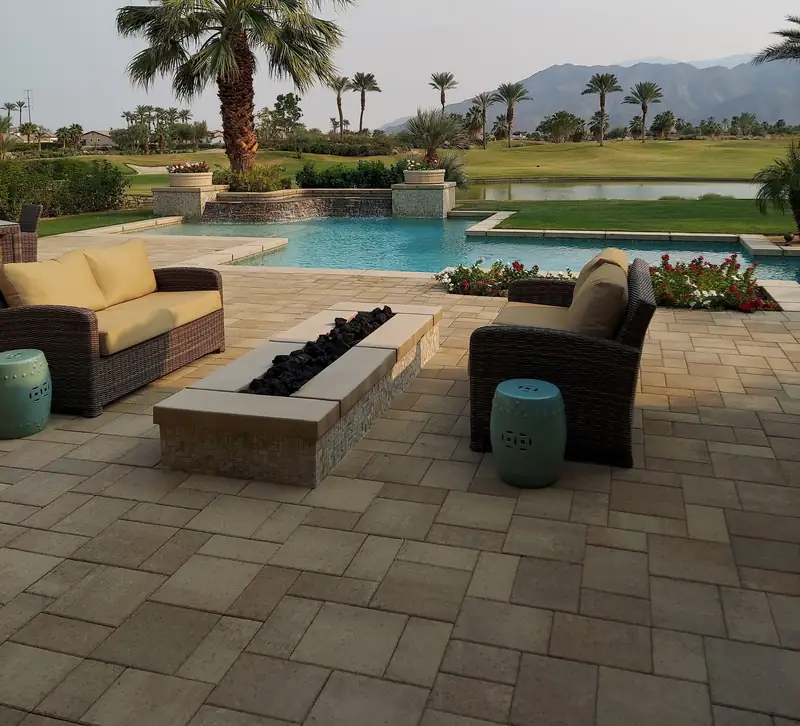
Why Does Color Matter More Than Material?
Color sets how much solar energy a surface absorbs before material properties ever come into play. Federal heat-island research puts dark asphalt paving's midday surface reading as high as 152°F, with a lighter-colored, more reflective pavement option measured 10 to 16°F cooler on the same day in an Arizona field test (EPA). That work covers pavements broadly, not a Florida pool deck test by itself, but the underlying principle holds for any outdoor surface baking in direct sun: light reflects, dark absorbs. It's why a pale concrete sealer reads cooler underfoot than a charcoal one, and why a light travertine deck outperforms a dark paver even though both are equally hard, mineral surfaces.
Travertine and Shell Stone: Why They Run Cooler
Travertine and shell stone, quarried coquina with visible shell fragments running through it, share two traits that keep them toward the cool end of the range: a pale, naturally variable color straight from the quarry, with no dark pigment added, and a matte, textured face rather than a polished one. pool deck pavers covers both materials alongside concrete pavers for the same deck. No Florida-specific lab reading separates travertine from concrete by a measured number, so we won't publish one, but the color and finish line up with the reflectance principle above.
What About Stamped and Colored Concrete?
A stamped pattern changes a slab's texture, not its color, and texture alone doesn't lower surface temperature the way color does. A stamped deck finished in a pale sand or buff tone performs close to plain broom concrete in the same shade; the same pattern finished in a dark charcoal or terra-cotta release color runs hotter, the same way a dark stamped driveway runs hotter than a light one in full sun. stamped concrete covers color and release options in more depth. For a pool deck specifically, we steer homeowners away from the darkest end of any stamped color chart, especially around the stairs and shallow end where people stand the longest.
Does Kool Deck or an Acrylic Coating Help?
Manufacturers describe Kool Deck-style acrylic coatings as staying cooler than plain concrete or other decking surfaces, and say the line's darker 'Designer' colors run warmer than its standard colors, though the manufacturer publishes no specific degree figure for either claim (Mortex). That matches the color principle above: a pale acrylic coating reflects more sunlight than a dark one. Resurfacing with an acrylic coating is one of the lower-cost ways to lighten an existing dark deck without a full tear-out. concrete pool decks and the pool deck cost guide cover what that resurfacing runs as of October 2026.
| Surface | Typical color range | What drives its heat | Installed cost |
|---|---|---|---|
| Travertine or shell stone, light tones | Pale, naturally variable | Light color, matte texture | $12–$30 per sq ft installed |
| Acrylic coating, light colors | Wide range; lightest standard colors run coolest | Thin, reflective coating | $5–$15 per sq ft installed |
| Broom-finish concrete, light sealer | Gray to tan | Color is the main variable | $5–$15 per sq ft installed |
| Concrete pavers, light tones | Wide color range | Dense material; heat follows color | $12–$30 per sq ft installed |
| Stamped concrete or dark pavers | Often darker: charcoal, terra-cotta | Dark color absorbs the most heat | $8–$19 per sq ft installed |
Florida market ranges as of October 2026, compiled from published cost-guide and contractor data; see sources below.
Practical Ways to Keep a Pool Deck Cooler
Short of replacing the whole deck, a few changes move the needle more than the rest.
- Pick a light sealer or coating color on the next resurfacing or reseal, rather than matching the darker color that's already there.
- Put real shade, a pergola, a large umbrella or the screen enclosure's own roofline, over the stretch of deck used most, since the sun angle changes through the day and a cage's screen alone doesn't block every square foot.
- Hose the deck down before bare feet or small kids use it at midday; it's a short-term fix, not a permanent one, but it works in the moment.
- Keep the darkest material or color off the areas people stand longest: the stairs, the shallow end, and any spot right next to a hot tub or sun shelf.
A Quick Example
Say you have a west-facing pool deck in a 2010s Lakewood Ranch subdivision with no overhead shade until early evening. A dark stamped finish in that orientation sits in direct sun through the hottest hours of the afternoon. Switching the plan to a light stamped color, or to pale travertine around the coping where bare feet land most, changes more than any coating or sealer applied later. A Sarasota paver contractor can walk a specific yard's sun exposure before you commit to a finish.
Related Reading
Frequently asked questions
Is travertine really cooler than concrete around a pool?
Generally yes, for two reasons: it's almost always a lighter color than standard gray or dark concrete, and a light color reflects more sunlight than a dark one absorbs. No independent Florida lab test compares the two surfaces side by side, so treat this as a color-and-material ranking rather than a measured temperature gap. pool deck pavers covers travertine alongside shell stone and concrete pavers.
Does resurfacing with Kool Deck actually lower surface temperature?
The manufacturer describes its coating as staying cooler than plain concrete, without a specific degree figure, and says its darker 'Designer' colors run warmer than the standard line (Mortex). Choosing one of the lighter standard colors is the more reliable lever than the coating itself.
Why does a dark stamped deck feel hotter than plain gray concrete?
Texture from a stamped pattern doesn't change how much sunlight a surface absorbs; color does. A stamped deck finished in a dark charcoal or terra-cotta release color absorbs more solar energy than the same pattern in a pale sand or buff tone, the same reason a dark car seat gets hotter than a light one left in the sun.
Can I make an existing pool deck cooler without replacing it?
Often, yes. Resealing plain concrete in a lighter color, or resurfacing with a light acrylic coating, changes the color without a tear-out. Resurfacing versus replacing with pavers or travertine compares the full set of options and what each one costs.
Does shade from a screen enclosure help with deck heat?
Wherever its panels or roofline actually block direct sun on the deck below, yes; a screen cage alone doesn't shade every square foot, since the sun angle changes through the day. Pairing real shade with a lighter surface color does more than either change on its own.