
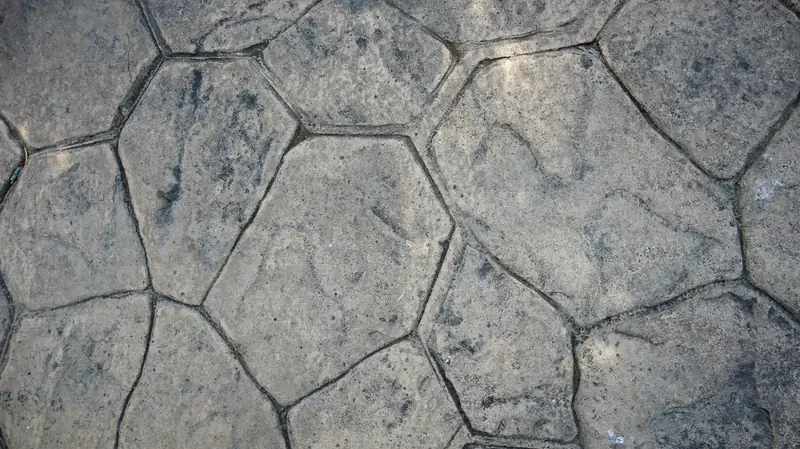
Stamped Concrete · Winter Springs, FL
Stamped Concrete Driveways and Patios in Winter Springs
Stamped concrete work in Winter Springs falls between $8–$19 per sq ft installed as of October 2026, moving with the pattern and number of colors. The city's driveway code names “concrete” as an approved material without separating plain gray from a decorative finish, so a stamped slab clears the same bar a broom-finish one does.
By the Opera Concrete & Pavers estimating team · Updated October 1, 2026
Get a free estimate
Tell us about the project and we'll call to set up a free site visit.
The approved-materials list doesn't single out a finish
Winter Springs Code §20-439(e) names “concrete” among the approved driveway surfaces for any lot developed or redeveloped since August 11, 2009, without distinguishing a plain pour from a stamped, stained or exposed-aggregate one (Code §20-439(e)). A slate-pattern stamped driveway files for the same driveway construction permit a flat gray one would, triggered by the use of impervious material rather than by how it's finished.
Control Joints Still Exist, They're Just Hidden in the Pattern
A stamped surface does not get a pass on control joints; the same spacing guidance that applies to plain concrete, roughly 24 to 36 times the slab's thickness, still governs a stamped driveway or patio. What changes is where the joint goes: rather than cutting a visible groove across a decorative surface, the layout is planned so a joint falls along a grout line already built into the pattern, usually where one course or color band meets another. On a Winter Springs job with an irregular layout, an L-shaped patio wrapping a pool equipment pad for instance, that planning happens before the first mat is pressed, since a joint added afterward would cut straight through the pattern instead of hiding in it.
An ashlar-pattern pool patio extension, sized out
A homeowner is extending a cracked 340 sq ft side patio into an ashlar-slate stamped pour with two blended earth tones. Figured at $8–$19 per sq ft installed, the job runs somewhere around $4,080 on the plain end and climbs to roughly $5,440 once the second color pass and a border band are added. Because it's still an impervious surface under Code §20-439 regardless of texture, Community Development reviews it through the same driveway-and-paving process a plain gray slab would use, so the decorative choice doesn't add a separate approval step.
Flatwoods subgrade matters more for a decorative slab than the pattern choice does
Myakka fine sand, typical of Seminole County's flatwoods ground, became Florida's state soil in 1989 (Florida Dept. of State, State Soil). A stamped finish adds depth to how much base work pays off, since a slab that settles unevenly on soft, poorly compacted subgrade shows that movement more visibly in a patterned surface than it would in plain gray concrete, where a hairline settlement crack reads less noticeably against the uniform color.
Rain on a Half-Stamped Surface Is Worse Than Rain on a Bare Slab
A downpour hitting plain concrete before it sets can wash out the surface finish, but the same storm hitting a slab mid-stamp, after color hardener is down and some mats are pressed in but others are not, can streak the color unevenly and blur the texture on whichever panels caught the worst of it. On a Winter Springs job, that risk is why crews track the radar through the stamping window the same way they would through the pour itself, not just up to the point the truck leaves. Patching a rain-damaged section of a stamped surface afterward almost always leaves a visible seam where the repair meets the original color and pattern.
The Base Layer Doesn't Change Because the Finish Is Decorative
Florida's residential code calls for at least 4 inches of clean graded sand, gravel or crushed stone under a slab on the ground, set over fill compacted for uniform support, and that requirement reads the same whether the surface on top ends up plain gray or a stamped pattern. A Winter Springs homeowner comparing quotes sometimes assumes a stamped driveway or patio comes with an upgraded base to match the upgraded finish, but the prep work underneath is the same code minimum either way. What the extra cost of stamping actually pays for is color, texture and the labor of pressing and detailing the pattern, not a different subgrade.
The Order of Operations Between the Pour and the Stamp
A stamped slab goes through more finishing steps than a plain one before a broom or a trowel gets put away: screed and bull float first, then color hardener broadcast and floated in where it is used, then edging and the control joint layout, then a texture skin check to confirm the surface has firmed up enough to hold an imprint. Only after that does the crew press the stamp mats in, working panel by panel, followed by hand tools at borders and tight corners the mats cannot reach. On a Winter Springs pour, rushing ahead to any one of those steps before the previous one is finished is the most common way a stamped job goes wrong.
Why Shade From an Oak Can Leave a Patio Two-Toned
A stamped patio that sits partly under a live oak canopy and partly in open sun ages unevenly: the shaded section keeps its sealer sheen and color longer, while the exposed section fades from UV sooner, which over a few years can leave the same pour looking like two different colors side by side. On a Winter Springs patio with this kind of mixed coverage, recoating the whole surface at once, rather than touching up just the faded section, keeps the sheen and tone consistent instead of adding a third shade to the mix. It is worth noting which parts of a patio sit under canopy before scheduling a reseal.
Frequently asked questions
Is a stamped finish reviewed any differently than a plain pour under Winter Springs' code?
No. Code §20-439 names concrete as an approved material without carving out a separate category for a decorative texture, so a stamped surface goes through the identical permit review a broom finish would.
Why might a stamped pattern crack more visibly than plain concrete on Seminole County flatwoods ground?
Uneven subgrade compaction on flatwoods soil can let a slab settle in spots, and that settlement tends to read more clearly in a textured, multi-color pattern than it would against a uniform gray surface, where the same movement is easier to miss.
Does Tuscawilla's HOA treat a stamped driveway the way it treats paver driveways?
The Country Club Village ACC exhibit that's been published specifically addresses driveway pavers as a product; a stamped concrete finish is a different material, so that community's residents check with the association rather than assume the paver clause carries over.
Sources
- Census Bureau PEP, City and Town Population Totals, Vintage 2025 (July 1, 2025)
- SJRWMD Watering Restrictions
- Florida Dept. of State - State Soil
- Florida Administrative Code — Rule 62-308.100, Synthetic Turf (effective May 19, 2026)
- Florida Statutes §125.572 — synthetic turf on single-family lots
- City of Winter Springs Code of Ordinances §20-439, Parking Areas on Residential Lots (via Zoneomics)
- City of Winter Springs, Site Work Permit Application
- City of Winter Springs, Building & Permits
- Country Club Village at Tuscawilla, ACC Request (Bylaws Exhibit IX, Driveway Pavers)
- Wikipedia, Winter Springs, Florida
- Wikipedia, Lake Jesup
- Play Orlando North, Central Winds Park
- Census Reporter, Winter Springs, FL (ACS 2024 5-yr, B25035)
Ready for a price on your project?
Request a free estimate
Tell us about the project and we'll call to set up a free site visit.