
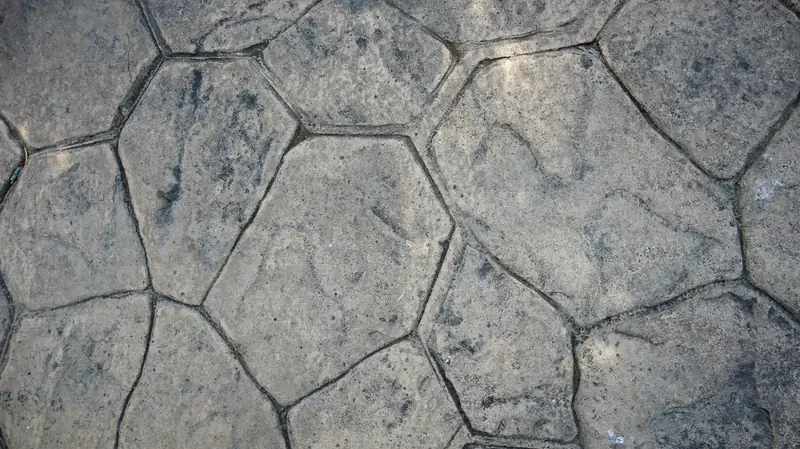
Stamped Concrete · Altamonte Springs, FL
Stamped Concrete Driveways and Patios in Altamonte Springs
Stamped concrete work in Altamonte Springs falls between $8–$19 per sq ft installed as of October 2026, swinging with the pattern and number of colors. A decorative finish doesn't change which permit form applies or how much it counts against the city's lot coverage limit; a stamped slab is measured in square feet the same way a plain one would be.
By the Opera Concrete & Pavers estimating team · Updated October 1, 2026
Get a free estimate
Tell us about the project and we'll call to set up a free site visit.
Pricing a multi-color ashlar pattern against a plain pour
A homeowner is comparing a plain 300 sq ft driveway apron against an ashlar-pattern stamped version with two blended colors. At $8–$19 per sq ft installed, the stamped option runs roughly $3,600 to $4,800, against perhaps half that for a basic broom finish at concrete pricing. Neither choice changes which box gets checked on the driveway application or how the square footage counts toward the lot's 45 percent coverage ceiling; the decision comes down to budget and appearance rather than paperwork.
The driveway form checks construction type, not decorative finish
Altamonte Springs' Driveway Construction Permit Application has the applicant check “3000 Concrete” as the construction type without a separate line for a stamped or stained surface (City of Altamonte Springs, Driveway Construction Permit Application). A slate-pattern stamped driveway apron goes through the identical compaction-test-and-inspection sequence a plain gray pour would, and a stamped patio instead falls under the general building-permit checklist the same way an unadorned one does.
A Flagstone Pattern and an Ashlar Slate Pattern Don't Lay Out the Same
An irregular flagstone pattern has wide, randomly spaced grout lines that can double as the slab's control joints without much extra planning, while a tight ashlar slate or running-bond brick pattern packs its lines closer together than the spacing a control joint actually needs. On a Altamonte Springs driveway using a tighter pattern, we still saw-cut true control joints at the proper interval, choosing cuts that fall along an existing pattern line wherever the layout allows it. Picking a pattern is partly an aesthetic decision, but the grid it creates on the surface also decides how much extra joint planning the job needs before the first stamp goes down.
Square footage, not finish, drives the lot coverage math
The R-1 district's 45 percent lot coverage cap under Land Development Code §3.7.8 counts a stamped patio or driveway exactly the way it counts a plain pour, by square footage rather than appearance (Altamonte Springs LDC §3.7.8). A homeowner adding a decorative stamped walkway on a lot already close to that ceiling runs the same coverage calculation a plain-concrete version of the same footprint would need.
The Base Layer Doesn't Change Because the Finish Is Decorative
Florida's residential code calls for at least 4 inches of clean graded sand, gravel or crushed stone under a slab on the ground, set over fill compacted for uniform support, and that requirement reads the same whether the surface on top ends up plain gray or a stamped pattern. A Altamonte Springs homeowner comparing quotes sometimes assumes a stamped driveway or patio comes with an upgraded base to match the upgraded finish, but the prep work underneath is the same code minimum either way. What the extra cost of stamping actually pays for is color, texture and the labor of pressing and detailing the pattern, not a different subgrade.
A Crack That Forms Before Stamping Runs Straight Through the Pattern
Plastic shrinkage cracking shows up when the evaporation rate off a fresh slab climbs above roughly 0.2 pounds per square foot per hour, the kind of hot, breezy, low-humidity afternoon Florida produces often enough, and on a surface that has not been stamped yet, those thin parallel cracks run straight across whatever pattern eventually goes over them. A Altamonte Springs pour on a day like that needs windbreaks, a fog spray or a dampened subgrade before the first mat is even brought out, because once a crack like this forms it cannot be stamped away, only patched in a way that rarely matches the surrounding color and texture. Watching conditions matters more here than on a job that will stay plain gray.
The Base Has to Pass Inspection Before the Color Goes Down
A permit inspection, when Altamonte Springs or the county requires one, almost always happens at the forming and base stage, well before color hardener, release agent or stamp mats enter the picture, because none of that groundwork is visible once the surface is finished. On a stamped job, a delay at this point costs more than it would on a plain pour, since pushing the pour date back can also push the job out of the narrow weather window the crew planned to stamp in, particularly during the rainy season. Scheduling the inspection as early as the permit process allows protects not just the pour date but the sequence of finishing steps lined up behind it.
Rinsing Pool Splash Off a Stamped Deck Isn't Optional Upkeep
Chlorinated water splashed onto a stamped pool deck leaves behind more than a wet patch once it evaporates: repeated exposure without rinsing works on the sealer film the same way sun does, breaking it down faster right around the pool's edge than anywhere else on the same Altamonte Springs deck. A quick hose-down of the areas that take the most splash, done as part of normal pool maintenance rather than as a separate task, slows that uneven wear enough to delay the next full reseal. Skipping it does not damage the concrete underneath, but it does mean the color and sheen around the pool fade noticeably faster than the rest of the deck.
Frequently asked questions
Does a stamped driveway need a different inspection sequence than plain concrete in Altamonte Springs?
No. The city's driveway application checks construction type as concrete, asphalt or other, without a separate category for a decorative finish, so the same compaction test and inspections apply.
Does a stamped patio count more heavily toward lot coverage than a plain one?
No. The R-1 district's coverage cap is measured in square footage, so a stamped and a plain-finish patio of the same size count identically toward the 45 percent limit.
Is a stamped pool deck resurfacing treated differently from a plain resurfacing job?
Both route through the same Building Permit Application Checklist; the finish choice doesn't change which form applies, only the cost per square foot.
Sources
- Census Bureau PEP, City and Town Population Totals, Vintage 2025 (July 1, 2025)
- SJRWMD Watering Restrictions
- Florida Dept. of State - State Soil
- Florida Administrative Code — Rule 62-308.100, Synthetic Turf (effective May 19, 2026)
- Florida Statutes §125.572 — synthetic turf on single-family lots
- City of Altamonte Springs, Driveway Construction Permit Application (rev. 3/1/2024)
- City of Altamonte Springs, Building Permit Application and Checklist (rev. 3/1/2024)
- City of Altamonte Springs Land Development Code §3.7.8, R-1 Lot Coverage (via Zoneomics)
- City of Altamonte Springs, Future Land Use Element, Data Inventory and Analysis, City Plan 2030
- City of Altamonte Springs, Project APRICOT
- Wikipedia, Altamonte Springs, Florida
- Census Reporter, Altamonte Springs, FL (ACS 2024 5-yr, B25035)
Ready for a price on your project?
Request a free estimate
Tell us about the project and we'll call to set up a free site visit.