
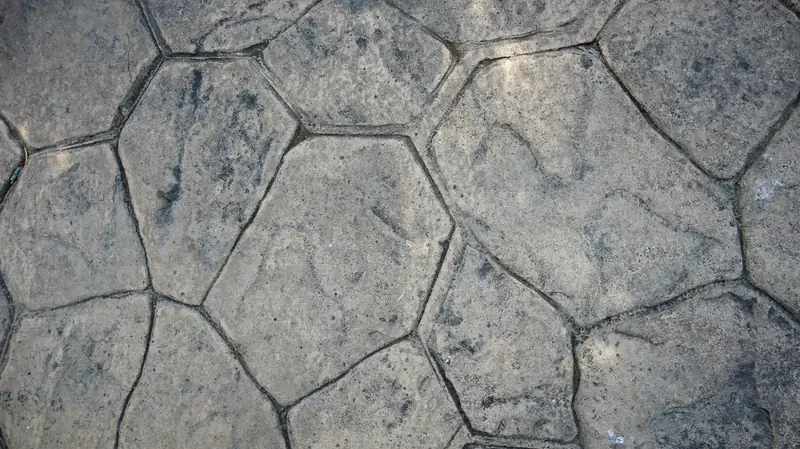
Stamped Concrete · Winter Park, FL
Stamped Concrete for Winter Park Driveways and Patios
A stamped-concrete pattern on a Winter Park driveway or patio falls between $8–$19 sq ft installed this October, the exact figure set by the pattern and the colors chosen. Because the work often goes on top of a slab that already exists, homeowners sometimes treat it as routine maintenance; the city's own guide treats it as permit work, triple-fee penalty included, the same as new construction.
By the Opera Concrete & Pavers estimating team · Updated October 1, 2026
Get a free estimate
Tell us about the project and we'll call to set up a free site visit.
A brick-pattern stamped driveway overlay, worked out in square feet
Picture a 350 square foot original driveway near a brick-street block getting a stamped overlay, running-bond pattern, integral rust color. Figuring $8–$19 per sq ft installed for that square footage puts the job in the neighborhood of $4,200 to $6,650, with the number of colors and the release agent used swinging the final bid up or down, and the permit filed before the crew ever mobilizes.
An overlay on existing concrete is still permit work
Winter Park's permitting guide doesn't carve out an exception for resurfacing or stamping an existing slab; the same list that covers “driveway… deck (wood, concrete, or other hard surfaces)” applies whether the concrete is new or already there, and the city charges triple the normal fee for work started before the permit is filed (City of Winter Park, Do I Need a Permit). A stamped pattern laid over a 1970s-era driveway without that step on file is the kind of after-the-fact penalty worth avoiding with one phone call before the crew mobilizes.
What the Release Agent on a Stamped Surface Is Actually For
A powder or liquid release agent is dusted or sprayed over the surface right before the stamp mats go down, keeping the textured mats from sticking to the wet concrete and, as a side effect, leaving a secondary color in the low points of the pattern that reads as an antiqued or weathered look once it is pressed in. The residue has to be pressure washed off within the days after stamping and before sealing, because leaving it in place tracks a chalky film onto shoes, pool decks and anything else it touches. On a Winter Park pour, skipping the release step entirely is not really an option, since bare mats on wet concrete would tear the surface apart when lifted.
Pattern and color don't change the coverage math
Section 58-65 treats a stamped driveway the same as a plain one for coverage purposes: the whole-lot 50 percent cap and the front-yard pervious requirement apply to the footprint, not the finish (City of Winter Park, Sec. 58-65 R-1A districts). A brick-pattern stamp near one of the city's own brick streets is a popular way to echo that look at a lower cost than real pavers, without adding any square footage beyond what a plain pour would have used.
Ridge Sand Needs Wetting Before It Will Compact for a Driveway
West of Orlando, sand ridge soils such as Candler and Astatula drain so well that the water table can sit more than 80 inches down, which sounds like easy ground but loose, excessively drained sand will not lock together under a plate compactor the way firmer soil does. For a stamped driveway on a ridge lot in Winter Park, we wet the base material enough to bind it and compact it in shallow lifts rather than one deep pass. Skipping that step on a decorative driveway is a costlier mistake than on a plain one, since replacing a sunken panel means matching a color and pattern that has already weathered a season or two.
A Textured Surface Can Still Turn Slick Around Water
Stamping adds grip through its texture, but sealer applied without a slip-resistant additive mixed in can build up a smooth film over that texture, especially after a few recoats, and the result is a pool deck that looks rough but feels slick the moment it gets wet. This risk is specific to surfaces that see standing water regularly, a pool deck more than a driveway, and it is easy to miss because the pattern itself still looks like it should provide traction. On a Winter Park deck, checking for this before the next pool season, not after someone slips, is the only way to catch a sealer problem the texture underneath is hiding.
The Base Has to Pass Inspection Before the Color Goes Down
A permit inspection, when Winter Park or the county requires one, almost always happens at the forming and base stage, well before color hardener, release agent or stamp mats enter the picture, because none of that groundwork is visible once the surface is finished. On a stamped job, a delay at this point costs more than it would on a plain pour, since pushing the pour date back can also push the job out of the narrow weather window the crew planned to stamp in, particularly during the rainy season. Scheduling the inspection as early as the permit process allows protects not just the pour date but the sequence of finishing steps lined up behind it.
Why Shade From an Oak Can Leave a Patio Two-Toned
A stamped patio that sits partly under a live oak canopy and partly in open sun ages unevenly: the shaded section keeps its sealer sheen and color longer, while the exposed section fades from UV sooner, which over a few years can leave the same pour looking like two different colors side by side. On a Winter Park patio with this kind of mixed coverage, recoating the whole surface at once, rather than touching up just the faded section, keeps the sheen and tone consistent instead of adding a third shade to the mix. It is worth noting which parts of a patio sit under canopy before scheduling a reseal.
Frequently asked questions
Does resurfacing an old driveway with a stamped overlay need a permit in Winter Park?
Yes, the city's permitting guide covers driveways and hard-surface decks whether the concrete is new or already in place, and it triples the fee for anyone who starts the work before the permit is filed.
Does a stamped pattern count differently than plain concrete toward the coverage cap?
No. Section 58-65's 50 percent lot and front-yard limits are based on the footprint, not the finish, so a decorative stamp or integral color doesn't change how much of the lot the driveway or patio is allowed to cover.
Can a stamped driveway match Winter Park's brick streets?
A brick-pattern stamp with an integral rust or red-brown color is a common way to echo the look of the city's brick streets for less than the cost of real clay brick or brick-toned pavers.
Sources
- City of Winter Park — Do I Need a Permit
- City of Winter Park — Sec. 58-65 R-1A districts
- City of Winter Park — Driveway Permit Requirements
- City of Winter Park — Setback/Coverage Worksheet
- City of Winter Park — Right of Way FAQ
- City of Winter Park Ordinance 3320-24 (tree preservation)
- City of Winter Park, Tree Removal Permit Application
- SJRWMD Watering Restrictions
- F.S. 720.3045 (2026) Installation, display, and storage of items
- Florida Statutes §125.572 — synthetic turf on single-family lots
- Florida Administrative Code — Rule 62-308.100, Synthetic Turf (effective May 19, 2026)
- Census Reporter, Winter Park, FL (ACS 2024 5-yr)
- Census Reporter API, Winter Park median year structure built (B25035)
- City of Winter Park, Street Brick Policy
Ready for a price on your project?
Request a free estimate
Tell us about the project and we'll call to set up a free site visit.