
Stamped Concrete Patterns and Colors That Work in Florida
Stamped concrete patterns and colors for Greater Orlando and Sarasota–Manatee homes include ashlar slate, wood plank, cobble and running-bond brick, installed at $8 to $19 per square foot as of October 2026. Pattern choice changes the texture and the release-agent color on top; cost and durability stay close across any stamped job.
By the Opera Concrete & Pavers estimating team · Updated October 1, 2026
What Stamped Concrete Patterns Are Available?
Stamped concrete patterns fall into a few broad families: stone looks (ashlar slate, flagstone, fieldstone), wood looks (plank and board), and unit-paver looks (brick, cobble and running bond), each pressed into the surface with a textured mat before the concrete sets. An installed stamped patio or driveway prices at $8–$19 per sq ft installed in Florida market data (src homeguide-stamped), and pattern choice itself adds little to that range; what moves the price more is the number of colors layered into the job.
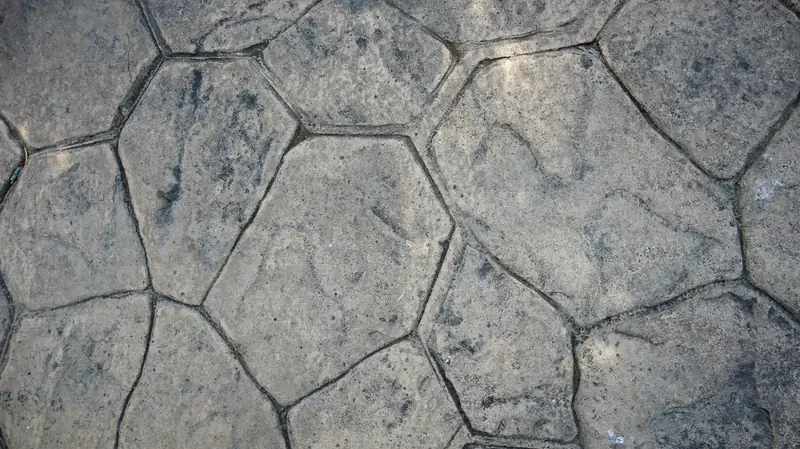
What Does an Ashlar Slate Pattern Look Like, and Where Does It Work Best?
Ashlar slate stamps an irregular, large-format flagstone look into the surface, with pieces of varying size and shape rather than a repeating grid, which reads less formal than a brick or running-bond pattern. It works especially well on a patio or pool deck meant to look like natural stone without the cost or porosity of actual flagstone, and the irregular joint lines hide minor surface imperfections better than a tight, uniform grid does. A large-format ashlar pattern on a small patio can look oversized; a tighter, smaller-format stone stamp generally reads better on a footprint under a few hundred square feet.
What Does Wood Plank Stamped Concrete Look Like?
Wood plank stamping presses a board-and-grain texture into the surface, run in long parallel rows, and it is one of the few stamped patterns that looks convincing from a few feet away rather than only from a distance, since the grain detail and board-to-board seams carry most of the realism. It shows up most often on a pool deck or a walkway meant to read as a dock or boardwalk without the maintenance an actual wood deck needs in Florida's humidity and termite pressure.
Because the plank pattern runs in one direction, laying it out to follow the longest sightline from the house, rather than cutting across a space, matters more for wood plank than it does for stone patterns, which read fine from any angle.
What Stamped Concrete Colors Are Common in Florida?
A base integral color, mixed into the concrete at the plant, sets the overall tone, and a contrasting release agent or an antiquing stain is worked into the surface afterward to add depth and shadow lines between the stamped joints. Warm tans, sandstone and weathered-gray tones dominate stone-look patterns in Florida because they read close to the limestone and coquina colors already common in the region, while wood plank patterns lean toward brown and driftwood-gray tones that mimic real lumber.
A lighter base color generally shows less dust, pollen and everyday wear than a dark charcoal or near-black stamped surface, the same light-versus-dark logic that applies to any paving in direct Florida sun (src epa-cool-pavements). Our stamped concrete maintenance guide covers how a color holds up once the sealer that protects it starts to wear.
What Is the Difference Between a Stone-Look Pattern and a Brick or Cobble Pattern?
A brick or cobble stamp repeats a uniform unit shape across a grid, closer in spirit to an actual paver installation, while a stone-look pattern like ashlar slate uses irregular shapes with no repeating module. A running-bond brick stamp tends to suit a more traditional home, the kind of look common in older Sarasota or Winter Park neighborhoods, while an irregular stone pattern pairs more naturally with a modern or Mediterranean-style house. Our stamped concrete vs. pavers comparison covers the cost and durability differences between a stamped brick look and installing real pavers in that same pattern.
Stamped Concrete Pattern Families Compared
| Pattern family | Examples | Reads best on |
|---|---|---|
| Stone look | Ashlar slate, flagstone, fieldstone | Pool decks, patios, modern or Mediterranean homes |
| Wood look | Plank, board | Pool decks and walkways meant to read as a dock |
| Unit-paver look | Running-bond brick, cobble | Traditional-style homes, driveway aprons |
Pattern choice adds little to the base price; the number of colors and release-agent layers moves it more.
How Durable Is a Stamped Pattern Compared With a Smooth Finish?
A stamped pattern does not change how a slab cracks or settles; the control joints, thickness and reinforcement underneath follow the same spec as any other concrete flatwork, with joint lines often routed along the pattern's own grout lines so a crack has somewhere planned to happen rather than showing up across the middle of a stamped panel. What does wear differently is the surface texture itself: a deep stone-look stamp holds dirt and pollen in its recessed lines longer than a shallow brick or cobble pattern does, which means a stone look generally needs a bit more attention during a routine cleaning pass.
Foot traffic and furniture dragged across a stamped surface wear down the high points of the texture faster than the recessed joints, which is normal and mostly cosmetic rather than a sign of a failing slab. A textured, stamped surface also tends to hide small surface imperfections, hairline shrinkage cracks and minor color variation better than a smooth broom or trowel finish does, since the pattern itself already breaks up the eye's read of the surface.
Where Does a Stamped Pattern Fit Alongside Other Finish Options?
Our concrete driveway ideas guide and our concrete patio ideas guide cover where a stamped pattern fits alongside broom, exposed aggregate and stained finishes on each surface. Our stamped concrete cost guide breaks pricing down further, and our comparison of broom, exposed aggregate and stamped finishes is worth a look if stamping is still competing against a simpler finish rather than against pavers.
Frequently asked questions
Can two different stamped patterns be combined in one project?
It is possible but uncommon. Most jobs use one primary pattern with a contrasting border, a plain band or a complementary pattern reserved for a border strip, rather than mixing two full patterns across the main field.
Does a darker stamped concrete color fade faster in Florida sun?
The integral color itself holds up reasonably well, but the sealer that carries most of the visible depth and sheen wears under UV faster on a dark color than a light one, since dark surfaces absorb more heat and UV exposure overall.
Is ashlar slate more expensive than a brick or cobble pattern?
Pattern choice itself adds little to the price. What moves cost more is the number of colors and release-agent layers used, which can be similar across a stone-look and a unit-paver-look pattern at the same complexity level.
Can stamped concrete match the color of my existing pavers?
A close match is usually achievable with the right integral color and release-agent combination, though an exact match is harder since paver color comes from manufactured units while stamped color comes from a poured, hand-finished surface. A sample panel poured on-site is the reliable way to check before committing to the full job.
Does wood plank stamped concrete get slippery when wet?
It can, like any stamped pattern under a smooth sealer coat, which is why a slip-resistant additive mixed into the final sealer coat matters around a pool deck stamped in a wood plank or any other pattern.