
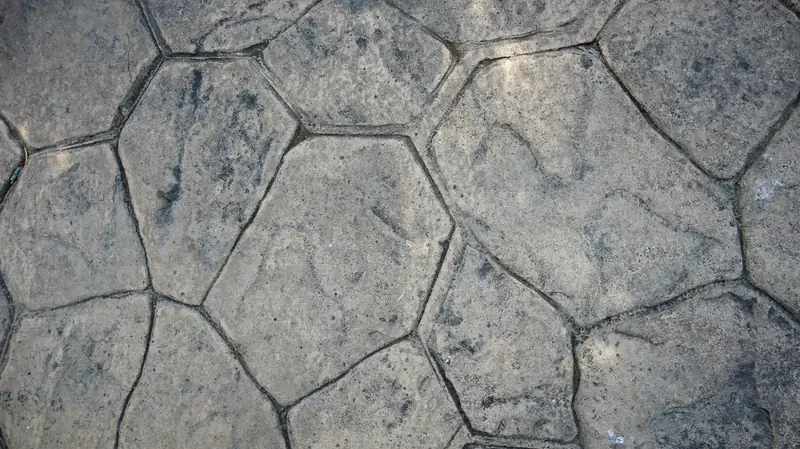
Stamped Concrete · Sanford, FL
Stamped Concrete Driveways and Walkways in Sanford
Stamped concrete work in Sanford falls between $8–$19 per sq ft installed as of October 2026, depending on pattern complexity and color count. Downtown Sanford's own 2004 streetscaping project set brick pavers and wider sidewalks along its historic core, a look homeowners near that district often try to echo in a stamped driveway or front walk.
By the Opera Concrete & Pavers estimating team · Updated October 1, 2026
Get a free estimate
Tell us about the project and we'll call to set up a free site visit.
Pricing a brick-pattern entry near downtown
A home a few blocks from Sanford's historic core is replacing a 200 sq ft driveway apron and front walk with a brick-pattern stamped finish and a rust-toned integral color. At $8–$19 per sq ft installed, that comes to roughly $1,600 at the plain end and up to $3,800 for a more detailed multi-color layout. If the lot sits inside one of the four historic districts, the Certificate of Appropriateness and the curb-cut rule both apply exactly as they would to a plain gray pour; outside those boundaries, only the standard permit review applies.
A 2004 streetscaping project set the visual tone downtown
A downtown streetscaping initiative launched in 2004 put brick pavers, wider sidewalks and restored infrastructure along Sanford's historic commercial core, part of an effort to draw new business and visitors to a district already known for its older brick storefronts (Wikipedia, Sanford, Florida). A brick-pattern stamped driveway or front walk near that core reads as an extension of that same streetscape, while a lot farther from downtown has more room for a contemporary slate or flagstone pattern instead.
Sealer Grit Is a Spec Decision Around a Pool, Not an Afterthought
A stamped pool deck gets wet in a way a driveway rarely does, and a sealer with a slip-resistant additive mixed in, usually a fine polymer grit, has to be part of the spec for that surface rather than chosen later. A driveway or front walkway in Sanford can often get by with a standard sealer, but the same product on a wet pool deck turns a textured stamped surface slick underfoot even though the pattern itself still has grip built into it. Deciding on grit at the sealing stage, not after the first slippery afternoon by the pool, is the difference between a textured deck that performs as designed and one that only looks like it does.
Inside the historic districts, the finish doesn't change which review applies
A stamped surface counts the same as plain gray concrete under Schedule S's list of allowed driveway materials, poured concrete, pavers, gravel or natural mulch confined by curbing, so the color or pattern doesn't exempt the work from a Certificate of Appropriateness (City of Sanford, LDR Schedule S). Stamped work outside the four districts skips that extra board review and goes through the standard Schedule F and Schedule N process instead.
Ridge Sand Needs Wetting Before It Will Compact for a Driveway
West of Orlando, sand ridge soils such as Candler and Astatula drain so well that the water table can sit more than 80 inches down, which sounds like easy ground but loose, excessively drained sand will not lock together under a plate compactor the way firmer soil does. For a stamped driveway on a ridge lot in Sanford, we wet the base material enough to bind it and compact it in shallow lifts rather than one deep pass. Skipping that step on a decorative driveway is a costlier mistake than on a plain one, since replacing a sunken panel means matching a color and pattern that has already weathered a season or two.
Why a Sealed Pool Deck's Color Fades Unevenly, Not All at Once
Sun and, around a pool, chlorinated splash both break down an acrylic sealer over time, and because a Sanford deck rarely gets the same sun exposure or the same amount of pool water across its whole surface, the fading shows up unevenly instead of as one uniform shift in tone: a shaded corner can still look glossy while a sun-struck edge near the water has gone chalky. That unevenness is sealer wear, not a flaw in the concrete or the color underneath it, and it is corrected by stripping and recoating the surface rather than by anything done to the slab itself.
Sealing Waits for the Cure, Not Just a Dry Surface
Hot-weather guidance calls for curing to continue at least 3 days after finishing, whether through a curing compound or wet curing, and a stamped surface follows that same minimum before anything else happens to it. Sealing too early, before the cure period is finished and the slab has had time to dry out, can trap moisture under the sealer film and cloud the finish instead of saturating the color the way it should. On a Sanford job, the gap between the stamping day and the sealing day is not wasted time: it is the window the slab needs to reach enough strength and dryness for the sealer, including any slip-resistant grit mixed into it, to bond properly.
Reading Wear Instead of a Calendar Before Resealing
No fixed interval sets when a stamped surface needs its sealer reapplied; UV exposure, foot and tire traffic, and for a pool deck, splashed pool chemicals all wear a sealer down at different rates depending on sun and use. A Sanford homeowner is better off watching for the signs, a duller sheen, color that looks chalky rather than saturated, water that no longer beads on the surface, than waiting for a specific number of years to pass. Resealing before those signs turn into actual wear on the concrete underneath keeps the color protected and costs far less than letting the surface go bare.
Frequently asked questions
Does a brick-pattern stamped driveway need special approval near downtown Sanford?
Only if the lot sits inside one of the four historic districts, where any driveway surface, stamped or plain, goes through a Certificate of Appropriateness along with the standard Schedule F review (City of Sanford, LDR Schedule S).
What inspired the brick look in downtown Sanford?
A 2004 streetscaping project added brick pavers, wider sidewalks and restored infrastructure to the city's historic commercial core, part of a push to attract new business to the district (Wikipedia, Sanford, Florida).
Is stamped concrete allowed in Sanford's historic districts?
The guidelines don't exclude a decorative finish; poured concrete is on the list of acceptable driveway materials regardless of whether it's plain or stamped, as long as it's confined by curbing.
Sources
- Census Bureau PEP, City and Town Population Totals, Vintage 2025 (July 1, 2025)
- City of Sanford — Building Division
- City of Sanford — LDR Schedule N
- City of Sanford — LDR Article VII Fees
- City of Sanford — LDR Schedule F
- Seminole County — Residential Driveway Construction Application
- Seminole County — New State Legislation Affecting Permits
- SJRWMD Watering Restrictions
- Florida Dept. of State - State Soil
- Florida Senate Interim Report 2011-104 (sinkhole insurance)
- Florida Administrative Code — Rule 62-308.100, Synthetic Turf (effective May 19, 2026)
- Florida Statutes §125.572 — synthetic turf on single-family lots
- FEMA Flood Map Service Center
- Census Reporter, Sanford FL (ACS 2020-2024 5-yr, B01003/B25035)
- Wikipedia, Sanford, Florida
- City of Sanford, LDR Schedule S, Historic Preservation District (Ord. 2023-4729/4730)
- Seminole County Water Atlas, Learn More: Soils
Ready for a price on your project?
Request a free estimate
Tell us about the project and we'll call to set up a free site visit.