
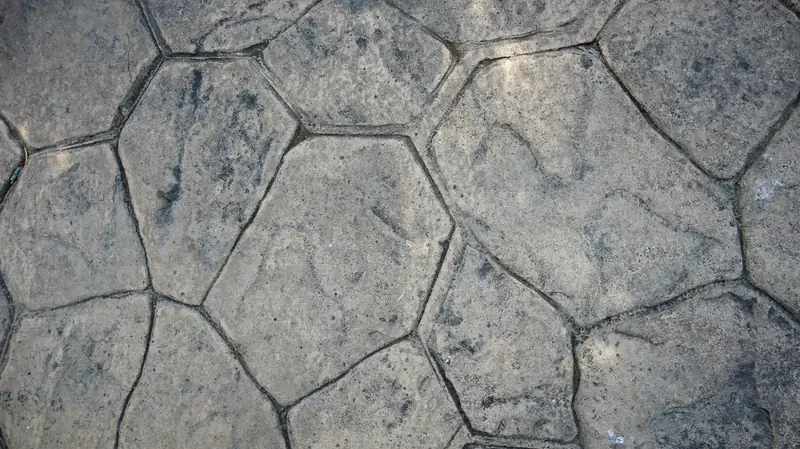
Stamped Concrete · Palmetto, FL
Stamped Concrete Driveways and Patios in Palmetto
Stamped concrete in Palmetto costs $8–$19 per sq ft installed as of October 2026, the same range whether the pattern goes on an entry walk downtown or a Riviera Dunes patio. A stamped apron crossing the right-of-way still falls under the same city permit a plain concrete driveway needs.
By the Opera Concrete & Pavers estimating team · Updated October 1, 2026
Get a free estimate
Tell us about the project and we'll call to set up a free site visit.
A decorative finish doesn't change which permit applies
Swapping a broom finish for an ashlar or cobble stamp pattern doesn't move the work out from under Sec. 25-2 if any part of it crosses the right-of-way at the street; Public Works still reviews that section the same way it would a plain pour Palmetto Code Sec. 25-2. Off that strip, the city's published rules stay quiet on flatwork generally, so a stamped patio addition gets the same call-ahead treatment to the Building Department that a plain one would Palmetto Building Department.
Grading a Stamped Patio Away From the House, Not Just the Pool
A stamped patio that slopes toward the house instead of away from it sends every afternoon storm back at the foundation, and on a patio that wraps around a pool, it is easy to grade carefully toward the deck drains while forgetting the stretch that runs along the house wall. Florida's compaction standard calls for fill shaped for uniform support, and part of getting that right on a Palmetto patio is setting the subgrade slope before the pattern work starts, since a stamped surface cannot be re-sloped later without tearing it out. This matters most on flatwoods lots where the water table already sits close to the surface for months at a time.
Working inside the region's late-spring-to-fall storm window
NWS Tampa Bay marks the regional rainy season from roughly May 15 through October 15 NWS Tampa Bay rainy-season dates, a stretch when an unplanned afternoon downpour can catch a crew mid-texture. Keeping the surface workable long enough to set an even stamp pattern during that window is less about the forecast for the week and more about starting early in the day, before heat and humidity speed up how fast the slab firms underneath the tools.
Sealer Grit Is a Spec Decision Around a Pool, Not an Afterthought
A stamped pool deck gets wet in a way a driveway rarely does, and a sealer with a slip-resistant additive mixed in, usually a fine polymer grit, has to be part of the spec for that surface rather than chosen later. A driveway or front walkway in Palmetto can often get by with a standard sealer, but the same product on a wet pool deck turns a textured stamped surface slick underfoot even though the pattern itself still has grip built into it. Deciding on grit at the sealing stage, not after the first slippery afternoon by the pool, is the difference between a textured deck that performs as designed and one that only looks like it does.
Say a 300 sq ft stamped-concrete entry walk and small front porch addition, downtown on an older Palmetto lot
Say a 300 sq ft stamped-concrete entry walk and small front porch addition, downtown on an older Palmetto lot. At $8–$19 per sq ft, that comes to $2,400 to $5,700 across the full range, narrowing to about $3,600 to $4,800 inside the typical $12–$16 band depending on color count and the stamp pattern chosen. None of the walk crosses the right-of-way in this layout, so Sec. 25-2's permit doesn't apply, though the crew still schedules the pour for an early morning start during the rainy season rather than risk the texture setting unevenly under an afternoon sky that's turned.
The Order of Operations Between the Pour and the Stamp
A stamped slab goes through more finishing steps than a plain one before a broom or a trowel gets put away: screed and bull float first, then color hardener broadcast and floated in where it is used, then edging and the control joint layout, then a texture skin check to confirm the surface has firmed up enough to hold an imprint. Only after that does the crew press the stamp mats in, working panel by panel, followed by hand tools at borders and tight corners the mats cannot reach. On a Palmetto pour, rushing ahead to any one of those steps before the previous one is finished is the most common way a stamped job goes wrong.
Flaking Color Hardener Is a Floating Problem, Not a Pattern Problem
Color hardener that is broadcast onto a surface too wet, or floated in before enough of it has absorbed moisture from the slab, can form a thin shell that never fully bonds to the concrete underneath, and that shell eventually flakes or spalls off under traffic, usually within the first year or two. It has nothing to do with which stamp pattern was used and everything to do with the floating technique and the timing of the broadcast relative to the slab's set. A Palmetto homeowner who notices small chips revealing gray concrete under a colored surface is looking at a hardener application problem, not a sign the whole pour needs to be replaced.
Matching Sheen, Not Just Color, When a Repair Gets Resealed
A patched section of a stamped surface, repaired after a chip or a flaking spot, needs more than the right color sealer to blend in: matte, satin and gloss sealers all catch light differently, and mixing sheens between an old, weathered section and a fresh patch makes the repair visible from across the yard even when the color is close. On a Palmetto job, matching the existing sheen level, worn down by however many seasons the rest of the surface has had, matters as much as matching the pigment. Skipping that step is how a careful color match still ends up looking like an obvious patch.
Frequently asked questions
Does a stamped driveway apron in Palmetto need the same permit as a plain one?
Yes. The decorative finish doesn't change the Sec. 25-2 requirement for any portion of the work that touches the public right-of-way at the street; Public Works reviews a stamped apron the same way it reviews a broom-finished one.
When is the riskiest time of year to pour stamped concrete in Palmetto?
Roughly mid-May through mid-October, the regional rainy season NWS Tampa Bay tracks for this part of the state, when an afternoon storm arriving before the texture is set can mar a stamped pattern.
Does stamped concrete cost more than a plain driveway in Palmetto?
Yes, generally: $8–$19 per sq ft for stamped work against $6–$15 for plain concrete, a gap tied to the integral color and texturing labor rather than to any difference in city permitting.
Sources
- Palmetto Code §25-2 Permit required for use of street or ROW
- Palmetto Right of Way Use Application/Permit (rev. 2019)
- Palmetto Building Department
- Palmetto Code §10-46 Seawall/retaining wall permit required
- Palmetto Code §29-207 Stormwater fee
- Manatee County - Modified Phase III water shortage restrictions
- SWFWMD District Water Restrictions
- FEMA - Features of Flood Insurance Rate Maps in Coastal Areas
- FDOT Structures Design Guidelines Vol. 1, §1.3.2 environmental classification
- NRCS OSD Immokalee
- NRCS OSD EauGallie
- NRCS OSD Felda
- Florida Administrative Code — Rule 62-308.100, Synthetic Turf (effective May 19, 2026)
- Florida Statutes §125.572 — synthetic turf on single-family lots
- F.S. 720.3045 (2026) Installation, display, and storage of items
- NWS Tampa Bay Thunderstorm Climatology Quick Reference
- Census Reporter, Palmetto FL (ACS 2020-2024 5-yr, B01003/B25035)
- Wikipedia, Palmetto, Florida
- Wikipedia, Snead Island
Ready for a price on your project?
Request a free estimate
Tell us about the project and we'll call to set up a free site visit.