
Can You Put Pavers Over Existing Concrete? Driveways, Patios and Pool Decks
Pavers can go over existing concrete on a driveway, patio or pool deck as long as the slab is sound, using a vehicle-rated overlay system for driveways or a mortar-set system for pedestrian-only areas. As of October 2026, the added height typically runs an inch or two, which matters most where the surface meets a door threshold or a pool's coping line.
By the Opera Concrete & Pavers estimating team · Updated October 1, 2026
Can You Put Pavers Over Existing Concrete?
Yes, on a driveway, patio or pool deck, as long as the slab underneath is sound: not actively cracking, not settled into a void and not heaving from a root or frost issue. Two different methods do it, an overlay on a thin bedding-sand system for a surface that still has to carry vehicle loads, or a mortar-set installation for a pedestrian-only area, and picking the wrong one for the load the surface actually sees is the most common reason an overlay fails early.
What Condition Does the Existing Slab Need to Be In First?
A candidate slab is flat, structurally sound and free of active movement, hairline shrinkage cracks that aren't tied to settlement are fine, but a panel that's sunk into a void, heaved by a root, or cracked into several independently moving pieces isn't, since an overlay reads every one of those flaws straight through to the new surface rather than hiding them. Our concrete repair page covers how we judge whether a slab is a repair candidate or needs to come out before anything goes over it.
Overlay vs. Mortar-Set: What's the Difference, and Which One Carries a Car?
The two methods aren't interchangeable, and the difference comes down to what's allowed to sit on top of the finished surface.
| Method | How it's built | Load it's rated for |
|---|---|---|
| Overlay (bedding sand) | A new or rehabilitative layer of pavers and bedding sand over the existing concrete or asphalt base | Pedestrian and vehicular areas, including driveways |
| Mortar-set (thick bed or thin-set) | Pavers set directly on a latex-fortified mortar bed or thin-set over the cured slab | Pedestrian traffic only, not rated for vehicles |
Guide specifications from the Concrete Masonry & Hardscapes Association, the industry body for paver construction standards (CMHA PAV-GSP-006, interlocking pavement overlay; CMHA PAV-GSP-010, pavers on a mortar setting bed).
A mortar-set installation set on a driveway anyway, carrying daily car loads it was never rated for, is a common reason bond failure and cracked units show up within a year or two on a job that otherwise looked fine the day it was finished.
How Much Height Does a Paver Overlay Add, and Why Does That Matter at a Door?
An overlay's bedding layer plus the paver thickness itself typically adds somewhere between an inch and two to the existing surface, nowhere near a full excavated base's buildup, but still enough to matter at a garage door, a threshold or a pool's coping line. We check that added height against every nearby door, the garage door's swing clearance and the coping or equipment pad before committing to an overlay, and where the buildup would leave a door dragging or a deck sitting proud of the coping, a thinner bedding system or shaving the old slab down slightly solves it without abandoning the overlay approach altogether.
Can Pavers Go Over an Existing Driveway?
Yes, using the overlay method rated for vehicle loads rather than the pedestrian-only mortar-set system, since a driveway carries the heaviest, most repetitive load any paved residential surface sees. The existing driveway slab still has to meet the same soundness bar as any other overlay candidate, and our paver driveway page covers the base-building detail for a ground-up installation where tearing out the old concrete turns out to be the better call instead.
Can Pavers Go Over an Existing Pool Deck?
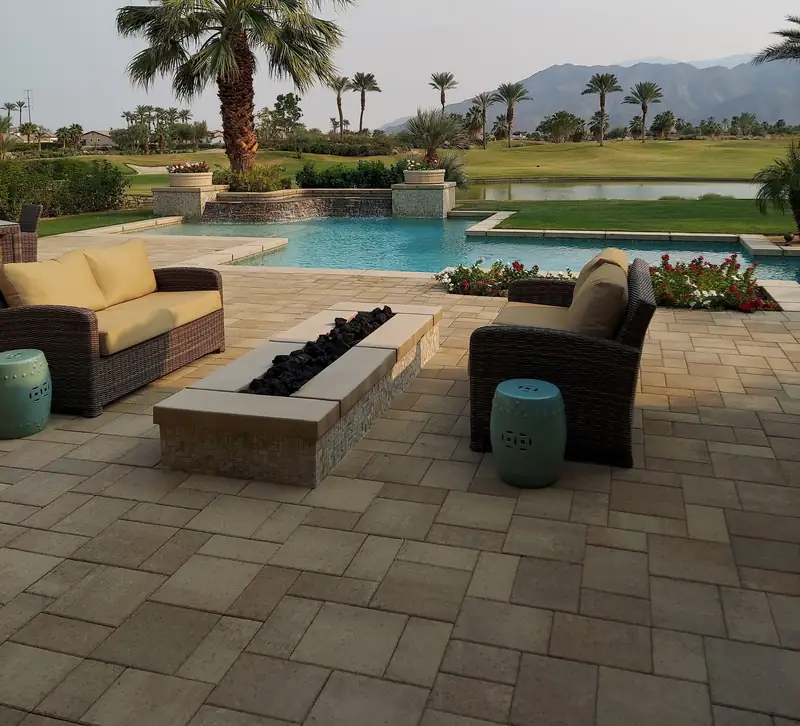
Often, and it's one of the more common overlay jobs in both service areas, since a pool deck's concrete frequently stays structurally sound long after its surface has worn, pitted or started holding water. The height buildup question matters more here than almost anywhere else on a property, since the finished paver surface has to meet the pool's coping cleanly rather than sitting above or below it. Our pool deck pavers page covers that coping-height detail specifically; this guide is about whether an overlay is feasible at all, across driveways, patios and pool decks alike.
Does a Paver Overlay Over Existing Concrete Still Need a Permit?
Often yes, since most jurisdictions in our service areas treat new paver installation as its own permitted scope regardless of what's underneath it, the same engineering or zoning review a ground-up paver driveway or patio needs. Our Orange County permit guide and our Sarasota County permit guide cover what each department asks for on new paver work; checking before scheduling an overlay avoids finding out about a required permit after the crew has already started.
Say You're Overlaying a 1990s Driveway in Clermont
A plain concrete driveway poured in a 1990s Clermont subdivision, cracked only along its original control joints and showing no settlement, is a reasonable overlay candidate rather than a tear-out. The existing slab is pressure washed and checked for hollow or loose sections, the overlay's bedding system is set to meet the garage door's clearance and the existing driveway apron, and the vehicle-rated overlay method goes down rather than a mortar-set system, since the driveway still carries daily car traffic. Our paver driveway cost guide breaks down how an overlay's pricing compares with tearing out the old slab and starting from bare ground.
Frequently asked questions
Can pavers be installed over a cracked concrete driveway?
Only if the cracking is cosmetic, hairline shrinkage cracks that aren't tied to a settled void, rather than active movement. A slab that's sunk, heaved by a root or cracked into independently moving pieces reads straight through an overlay and is usually worth repairing or replacing first.
Is installing pavers over concrete cheaper than tearing it out first?
Often, since an overlay skips demolition and disposal costs entirely and adds only the bedding system and paver material on top of what's already there. The savings depend on the existing slab being sound enough to build on; a slab that needs repair before an overlay can go down narrows that cost gap.
How much height does a paver overlay add to a surface?
Typically an inch or two once the bedding layer and the paver thickness are both counted, far less than a full excavated base adds. That buildup still has to be checked against nearby doors, a garage door's clearance and a pool's coping line before the overlay is finalized.
Can you drive a car on pavers installed over an existing driveway?
Yes, but only with the overlay method built for vehicle loads, not the mortar-set system used on pedestrian-only surfaces. Setting a mortar-set installation under daily car traffic is a common reason for early bond failure and cracked units.
Does a paver overlay over existing concrete need a permit?
Often, since most jurisdictions in Greater Orlando and Sarasota-Manatee review new paver installation under the same permit a ground-up paver driveway or patio needs, regardless of what sits underneath it. Confirming with the local building or engineering department before scheduling the work avoids a mid-job surprise.