
Can You Pour Concrete in the Rain? Florida Rainy-Season Scheduling Explained
Yes, a contractor can pour concrete through a brief rain if the crew is ready for it, but a Florida downpour that hits within the first hour or two after placement can wash cement paste out of the surface and leave a weak, pitted finish. As of October 2026, scheduling around the region's roughly late-May-to-mid-October rainy season and its afternoon storm pattern, not avoiding rain altogether, is what keeps a pour on track.
By the Opera Concrete & Pavers estimating team · Updated October 1, 2026
Can You Pour Concrete in the Rain?
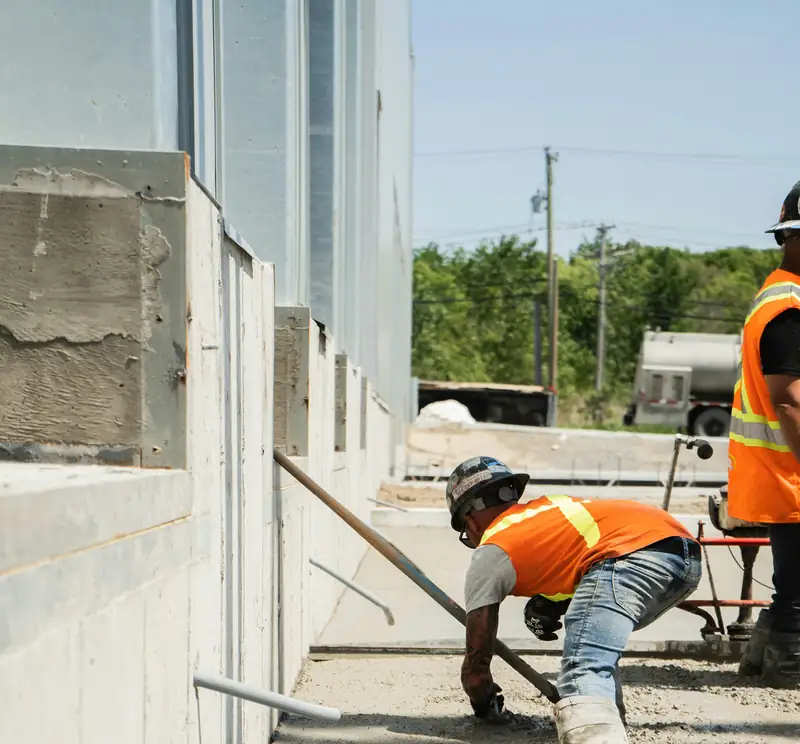
Yes, a light, steady rain during or shortly after a pour isn't automatically a ruined slab, but the first hour or two after concrete is placed is the window where rain does real damage, washing cement paste and fine particles out of the surface and leaving a weak, pitted skin behind. A crew that's watching the forecast will often keep working through a passing shower with plastic sheeting ready, rather than stopping the pour outright, which is different from scheduling a pour during a day with storms expected through the whole placement and finishing window. Both driveway and patio pours follow the same logic.
What Happens If It Rains Right After the Concrete Is Poured?
Rain on concrete that hasn't started to set yet raises the water content right at the surface, which can leave the top quarter-inch weaker than the rest of the slab and, in a hard rain, visibly pitted or marred. A crew's standard response is plastic sheeting, weighted down along every edge so wind doesn't get under it, laid as soon as possible without pressing into the surface and marring the finish itself. Any water that does pool on top typically gets dragged off with burlap before the crew refloats or retextures the surface once the rain passes, per the Michigan Concrete Association's guidance on concrete and rain.
How much margin a crew has before rain becomes a real risk depends on the weather. In typical Florida summer heat, concrete can start resisting rain in as little as one to two hours after placement, since the heat speeds up the early stiffening; in cooler, more humid conditions that window stretches out considerably, which is part of why the same storm can be a non-issue on one pour and a problem on another poured a little later in the day.
When Is Florida's Rainy Season, and How Does It Change Scheduling?
Central Florida's wet season typically starts around late May and runs into mid-October, with NWS Melbourne putting the median onset for the Orlando area at May 27 and the median dry-season start at October 15 based on records back to 1950. NWS Tampa Bay gives a similar window for the Suncoast, roughly May 15 through October 15 for the southwestern part of the region and a few days later on either end farther north in its own climatology reference. Orlando averages 51.45 inches of rain a year and the Sarasota–Bradenton airport averages 49.05, with June through September carrying most of it per NOAA's 1991–2020 climate normals.
What that means for scheduling is less about avoiding the rainy season entirely, since a project can't always wait five months, and more about the time of day. Florida's wet-season storms build through the afternoon far more often than they strike at sunrise, so an early-morning start gives a crew the longest stretch of dry hours to place, finish and get past that first vulnerable window before the typical 2 or 3 p.m. buildup. A driveway or patio scheduled for January instead carries almost none of this risk, which is part of why dry-season bookings fill up faster even though wet-season work is routine.
How Do Contractors Protect a Fresh Pour From an Afternoon Storm?
Beyond timing the start, the preparation that matters most happens before the truck even arrives. A base left open overnight ahead of a scheduled pour can wash out or soften if a storm moves through, so grading and base work is typically compacted and, where the forecast calls for it, covered or protected until pour day rather than left exposed for days in advance. On pour day itself, having plastic sheeting staged and ready, rather than scrambling for it once the sky darkens, is the difference between a managed shower and a damaged surface.
Say a crew has a two-car driveway scheduled and the forecast shows a 40 percent chance of afternoon storms: a realistic plan looks like an early call time, placement and finishing wrapped before midday, and sheeting on hand in the truck regardless, since Florida radar can change in the time it takes to pour a load.
Does Rain Affect the Strength of Concrete Once It's Already Set?
Not in the same way. Once concrete has reached its initial set, generally several hours after placement, additional moisture from rain is closer to a benefit than a risk, since keeping the surface wet is exactly what curing calls for; the vulnerable period is specifically the plastic stage before set, not the weeks afterward. Our post on curing in Florida heat covers what keeps a slab moist and strong once it's past that early window, including why Florida's heat makes the curing side of the equation its own separate challenge from the rain side.
Frequently asked questions
Will a contractor reschedule a pour if rain is in the forecast?
Often, yes, if the forecast shows steady or heavy rain through the placement and finishing window, since there's no good way to protect a slab that's being worked on for hours while it's actively raining. A brief, isolated shower is a different situation, and a crew with sheeting ready can usually work around it rather than postponing the whole job.
Can rain wash out a concrete driveway's base before it's poured?
Yes, an uncompacted or freshly graded base left exposed to a hard rain can erode or soften, which is why base work is typically compacted and timed close to the actual pour date rather than finished days ahead and left uncovered through a stretch of wet-season weather.
Does Florida's rainy season push driveway and patio projects into the dry season?
Some homeowners prefer it, but plenty of work happens through the wet season with early-morning scheduling and standard rain protection on site. Our post on timing a hardscape project looks at the trade-offs between the two seasons in more depth, including booking lead times.
What happens if it starts raining while the crew is still finishing the surface?
The crew covers the area with plastic sheeting, weighted at the edges, and lets the rain pass rather than trying to keep finishing through it. Once it clears, any pooled water gets removed and the surface is refloated or retextured as needed before the crew moves on to curing.
Does a light rain on a finished, already-set driveway cause any harm?
No. Once a slab has set, rain on the surface is cosmetic at most, a wet look that dries off, and keeping concrete damp during its early curing period is actually the goal rather than something to avoid. The storm-related risk is specific to the first hour or two before the surface sets, not to ordinary rain weeks or months later.