
Paver Patios & Walkways · Groveland, FL
Paver Patios for Groveland Backyards
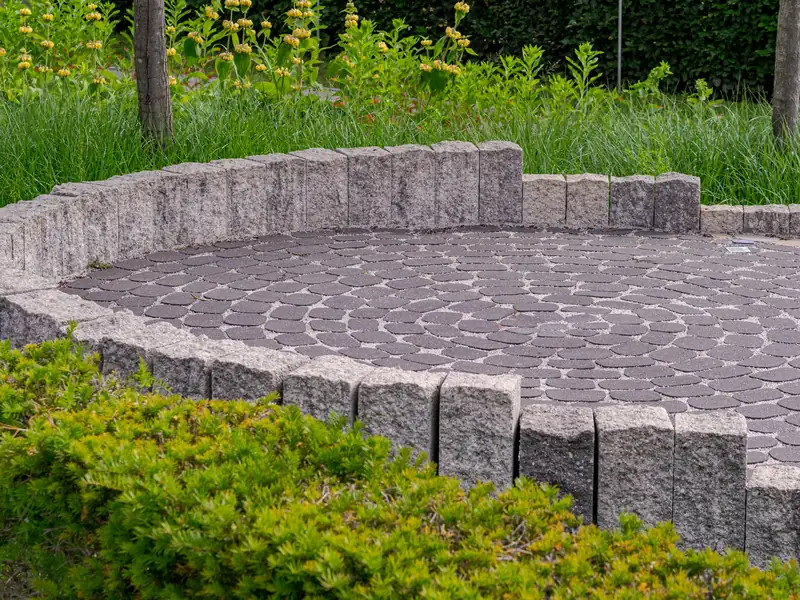
Paver patio work in Groveland is tracking at $10–$17 per sq ft installed under October 2026 Florida pricing. Unlike a driveway, the city's vernacular code calls for patio pavers to be permeable and signed off by the Community Development Director, and on a lot backing up to Groveland's Chain of Lakes, where that patio sheds water is part of what staff checks.
By the Opera Concrete & Pavers estimating team · Updated October 1, 2026
Get a free estimate
Tell us about the project and we'll call to set up a free site visit.
Permeable pavers and a director-level sign-off, not the driveway material list
Groveland's Article 6 splits patios out from driveways: where a driveway can be concrete, gravel, clay, crushed shell or brick pavers, a patio has to be built in permeable pavers specifically, and the Community Development Director or a designee reviews it before work starts (City of Groveland, Article 6 (Florida Vernacular Requirements)). That review sits alongside the same zoning application, site plan and impervious-surface worksheet the city uses for driveway work, so a patio project on a lot that already has a driveway permit on file still needs its own packet.
A backyard on the Chain of Lakes changes where the water goes
Lake David and Cherry Lake anchor two of Groveland's city parks along an interconnected chain of lakes that the South Lake Trail corridor runs alongside on its way toward Clermont (City of Groveland, Our History; Wikipedia, South Lake Trail). On a lot that backs onto one of those lakes or a connecting canal, a patio's slope toward the water gets checked against the easement waiver question on the zoning packet, since pavers set inside a platted drainage easement need that waiver signed before the base goes in.
Flatwoods soil and why the base sometimes gets thicker
A lot of the territory we work in sits on flatwoods soils such as Myakka, Florida's official state soil, where a seasonal high water table can sit within 18 inches of the surface for part of the year. ICPI's guidance is direct about what that means for a paver base: continually wet or weak soil needs a base 2 to 4 inches thicker than the standard patio or walkway depth. On a Groveland lot with poor natural drainage, that extra aggregate, plus a perforated drain pipe where the soil stays saturated, does more for the long-term flatness of the patio than any amount of extra paver thickness would.
How a walkway job differs from a full patio build
A connecting walkway or a run of stepping pavers moves faster than a full patio because the footprint is smaller and the layout is usually a single straight or gently curved line rather than a shape with multiple cut angles. On a Groveland property, a straightforward front-walk job can go from excavation to swept joints in a single day, where a comparable square footage of open patio with a border pattern takes closer to two. The base and compaction standards don't change for the smaller job, only the time it takes to move through each stage of it.
A lakeside patio addition, worked out in square feet
A 16 by 18 foot permeable-paver patio behind a Groveland home backing onto one of the city's chain lakes works out to 288 square feet. Set against the $10–$17 per sq ft installed range, that patio comes in somewhere near $2,880 to $4,896, before a fire-pit section or a different paver grade changes the total. Because the rear of the lot sits close to the water, the crew checks whether any part of that footprint falls inside a recorded drainage easement before ordering material, since that triggers the same easement waiver the zoning packet asks for.
Picking a paver thickness for a patio that only sees foot traffic
ICPI sets 60 mm (2.375 inches) as the standard thickness for pedestrian areas and residential driveways, reserving 80 mm (3.125 inches) units for streets and industrial pavement. A patio in Groveland that only carries foot traffic, patio furniture and the occasional wheelbarrow doesn't need the heavier unit some homeowners request after seeing it quoted for a driveway elsewhere. Going thicker than the job calls for mostly adds cost without adding durability where the load never approaches vehicle weight. What does more for long-term performance on a foot-traffic surface is a properly compacted base and a snug joint, not a thicker unit sitting on a thin one.
Downspouts and sprinkler overspray undermining the edge
A gutter downspout aimed at the patio edge, or an irrigation head throwing water against the same spot every cycle, concentrates far more water on one section of base than the rest of the patio ever sees. Over time that washes fines out from under the nearest pavers, and the edge restraint, which relies on solid compacted base to hold its spikes, loses its grip. On a Groveland patio bordered by a sprinkler zone, redirecting the head or adding a splash block costs little compared with resetting a section of pavers that settled because the ground under it was quietly eroding for two seasons.
Living with efflorescence while it fades
The whitish bloom that shows up on new concrete pavers within the first couple of months is cosmetic, and the most effective response on most Groveland patios is patience: normal rain and foot traffic wear it down over a season or two without any special treatment. A mild efflorescence cleaner can speed that up if the look bothers you sooner, but scrubbing too aggressively on a fresh install can do more harm than waiting it out. Sealing over an active efflorescence bloom is worth avoiding, since trapping the deposit under a sealer coat can make it harder to clear later rather than easier.
Frequently asked questions
Do Groveland patios have to use permeable pavers?
Yes. The city's Florida Vernacular code requires patio surfaces to be permeable pavers specifically, reviewed by the Community Development Director or a designee, a stricter standard than the broader materials list that applies to driveways.
Does a patio need its own zoning packet if the driveway already has one?
Yes. Each addition, patio included, goes through its own zoning application, site plan and impervious-surface worksheet, even on a lot where a driveway permit is already on file.
What happens if a Groveland patio falls inside a drainage easement?
The homeowner signs an easement waiver acknowledging the city can require the pavers removed later if the easement needs to function, which is a separate step from the standard zoning review.
Sources
- City of Groveland, Building Division — Pavers or Concrete Slab Checklist
- City of Groveland, Community Development Code — Article 6, Florida Vernacular Requirements
- City of Groveland — Our History
- Wikipedia — Groveland, Florida
- Wikipedia — South Lake Trail
- Census Reporter — Groveland, FL
- NRCS OSD Candler
- NRCS OSD Astatula
- SJRWMD Watering Restrictions
- Florida Administrative Code — Rule 62-308.100, Synthetic Turf (effective May 19, 2026)
- Florida Statutes §125.572 — synthetic turf on single-family lots
Ready for a price on your project?
Request a free estimate
Tell us about the project and we'll call to set up a free site visit.