
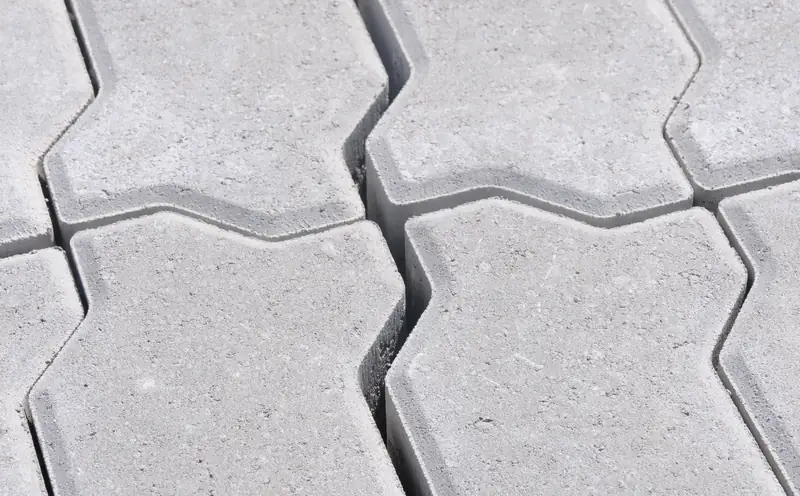
Pool Deck Pavers · Longboat Key, FL
Travertine and Paver Pool Decks on Longboat Key
Pool deck pavers or travertine on Longboat Key run $12–$30 per sq ft installed as of October 2026. In Bay Isles, the deck design answers to the neighborhood or condominium association first, and salt air off either shore shortens how long a sealer or edge restraint holds up.
By the Opera Concrete & Pavers estimating team · Updated October 1, 2026
Get a free estimate
Tell us about the project and we'll call to set up a free site visit.
Say you have a 700 sq ft travertine pool deck overlay on an older deck inside Bay Isles
Say you have a 700 sq ft travertine pool deck overlay on an older deck inside Bay Isles. At the market range of $12–$30 per sq ft, that comes out between $8,400 and $21,000, tightening toward $9,800 to $15,400 inside the typical $14–$22 band once the stone and pattern are picked. Before the overlay is priced, the homeowner's neighborhood or condominium association gets identified so the right body reviews the exterior change, and the deck's finished look still has to clear the Town's own site-plan rules on top of whatever the association decides.
Why a Bay Isles pool deck starts with the sub-association, not the Town
Bay Isles' own governing document, recorded in April 1976, hands architectural and construction approval to whichever neighborhood or condominium association covers that section of the community, not to one island-wide board Bay Isles Association, Inc., Declaration of Maintenance Covenants and Restrictions. The master Bay Isles Association only takes over that approval if the smaller association fails to exercise it, which is why pricing a travertine overlay there starts with identifying the right sub-association rather than assuming one island-wide process covers every section.
Setting an Overlay System's Thickness at the Door Threshold
Pavers set over an existing concrete deck add real height, typically the bedding system plus the paver itself, and that buildup has to be checked against every door threshold, pool equipment housing and the coping line before the job starts, not after. We often shave a shallow setback into the old slab near a sliding door, or choose a thinner bedding system specifically at that transition, so the finished paver surface doesn't end up higher than the threshold it meets. On a Longboat Key overlay job, missing that check is how a finished deck ends up funneling rainwater back into the house at exactly the door people use most.
What salt air off either shore does to joints and sealer
For bridge design, FDOT draws its marine-environment line at 2,500 feet from a chloride level above 2,000 parts per million FDOT Structures Design Guidelines Vol. 1, §1.3.2 environmental classification, a threshold that, on a key this narrow, puts both the Gulf shore and the bay shore of most lots inside the same salt-heavy air. The structural concrete under a travertine or paver deck doesn't need anything different for that, but an unsealed joint or a bare metal edge restraint shows the salt faster here than it would a few miles inland, which is why resealing a Bay Isles deck tends to land on a shorter cycle than the same job well off the water.
Setting Pavers Directly Over an Existing Concrete Deck
Setting pavers over an existing concrete pool deck skips the excavation and compacted aggregate a ground-up install needs, but it isn't a shortcut on prep. We sound the old slab for soft or hollow spots with a hammer test, patch anything that fails, and clean the surface before a thin bedding layer, either a sand-set system on a membrane or a mortar-set bed, goes down to receive the pavers. On a Longboat Key overlay job, the old slab has to be structurally sound and draining correctly on its own, since an overlay doesn't fix a base problem underneath it, it just covers it over.
Screen Cage Footers Shifting a Paver Field Near the Pool
A screen enclosure footer that wasn't isolated from the surrounding paver base during construction can settle or heave on its own schedule, and the nearest paver courses follow it, showing up as a localized dip or bump that tracks each post location around the pool rather than a random low spot. That pattern is often mistaken for ordinary base settling until someone notices it lines up with every footer rather than spreading evenly across the field. On a Longboat Key deck with an older screen cage, resetting the affected pavers usually fixes the symptom, but the footer itself may need its own separate repair if it keeps moving.
Overlay Prep: Cleaning and Testing the Old Slab Before Pavers Go Down
An overlay job starts with testing, not installing, since every square foot of the old concrete deck has to be sound enough to carry a new paver system before bedding material goes on top of it. We sound the slab for hollow spots, pressure-wash it to remove any sealer or coating that would block adhesion, and patch anything that fails before the bedding system goes down. On a Longboat Key overlay, this prep stage often takes as long as the paver-laying stage itself, since a problem found here is far cheaper to fix than one discovered after the new surface is already down.
Upkeep on an Overlay Deck Versus a Ground-Up Install
A paver system set over an existing concrete deck needs the same joint and surface care as a ground-up install, but it's worth an occasional check at the overlay's outer edge and at any door threshold, where the bedding system meets the old slab's edge, for signs of the two layers separating. That edge is the weak point in an overlay that a ground-up paver field, with edge restraint anchored into a full compacted base, doesn't really have. On a Longboat Key overlay job, catching an edge that's started to lift early means resetting a border course, not redoing the whole transition.
Frequently asked questions
Who approves a pool deck change inside Bay Isles?
The neighborhood or condominium association covering that part of the community, under Bay Isles' 1976 declaration. The master Bay Isles Association only steps in if that smaller association doesn't act.
Why does salt air matter more here than a few miles inland?
FDOT's own marine-environment threshold, water above 2,000 parts per million chloride within 2,500 feet, covers nearly the whole island on one shore or the other, which is why sealer and edge-restraint choices differ here.
Does a Bay Isles pool deck still need a Town permit?
Yes. The sub-association's architectural approval runs alongside the Town's own review, not instead of it, and either process can still trigger the state CCCL permit on a Gulf-front parcel.
Sources
- Longboat Key Code §57.03 Rights-of-way use permit
- Longboat Key Streets & Rights-of-Way
- Longboat Key Code §158.100 Off-street parking
- Longboat Key Code §150.30 Building Permit Required
- Longboat Key Code §158.144 Definitions (impermeable surface)
- Longboat Key Code §158.030 Performance standards (open space, CCCL)
- Longboat Key Code §158.062 R-3SF district
- Longboat Key Code §158.118 Lot excavation, grades, and frontage
- Longboat Key Code §158.102 Walls, fences, hedges, berms
- Longboat Key Code §100.04 Permit applications for new development (CCCL)
- Longboat Key Building Division
- Census Bureau PEP, City and Town Population Totals, Vintage 2025 (July 1, 2025)
- FDOT Structures Design Guidelines Vol. 1, §1.3.2 environmental classification
- FEMA - Features of Flood Insurance Rate Maps in Coastal Areas
- FDEP Coastal Construction Control Line Program
- FDEP — Apply for a CCCL permit
- Florida Administrative Code — Rule 62-308.100, Synthetic Turf (effective May 19, 2026)
- Florida Statutes §125.572 — synthetic turf on single-family lots
- SWFWMD District Water Restrictions
- USDA NRCS — Web Soil Survey
- USDA NRCS Official Series Description — Canaveral
- Census Reporter, Longboat Key FL (ACS 2020-2024 5-yr, B25035/B01003)
- Bay Isles Association, Inc. — Declaration of Maintenance Covenants and Restrictions on the Commons, recorded April 16, 1976
- Town of Longboat Key — Post-Hurricane Helene & Milton Building Permitting Information
- WWSB/Mysuncoast.com — final extension of Longboat Key's storm-related permit-fee waiver (Oct. 15, 2025)
Ready for a price on your project?
Request a free estimate
Tell us about the project and we'll call to set up a free site visit.