
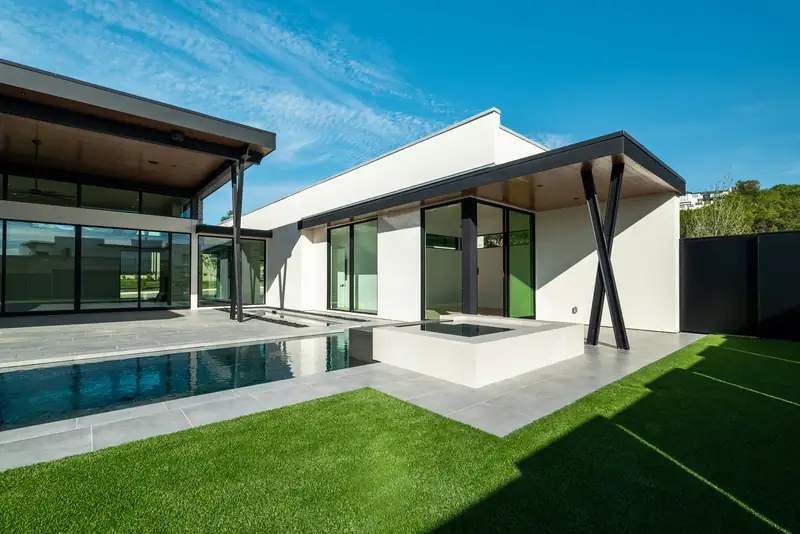
Artificial Turf · Apopka, FL
Artificial Turf for Apopka Yards
Turf installers are pricing Apopka jobs at $10–$25 per sq ft installed this fall. The state's 2026 synthetic-turf rule sets the same base, drainage and water-body buffer here as anywhere else in Florida, and Orange County's place on the state's own sinkhole-claims list is a reason a washed, well-drained base matters more here than the turf material itself.
By the Opera Concrete & Pavers estimating team · Updated October 1, 2026
Get a free estimate
Tell us about the project and we'll call to set up a free site visit.
The statewide base and buffer rules apply the same way in Apopka as anywhere else
Florida's synthetic turf rule, effective May 19, 2026, requires a washed, permeable subgrade, bars buried irrigation lines under the turf, and keeps the panel at least 10 feet back from a pond, lake or canal edge unless a seawall already stands between the two (Florida Administrative Code, Rule 62-308.100). A companion 2025 law caps how far a city or county can push its own turf rule past that state floor (Florida Statutes §125.572). On a lot near one of the ponds or drainage canals common in Apopka's newer subdivisions, that 10-foot line is worth measuring from the water's actual edge before a turf layout is finalized.
A well-drained base matters more here than elsewhere in Orange County
Florida Senate figures tied to a 2010 interim report place Orange among the counties that generated the bulk of the state's sinkhole insurance claims filed between 2006 and 2009 (Florida Senate Interim Report 2011-104), geology connected to the same limestone system that feeds Wekiwa Springs and Rock Springs nearby (Wikipedia, Wekiwa Springs State Park). That doesn't make a settling patch of yard a sinkhole, but it is a reason the washed, compacted stone base the state's turf rule already requires gets built to spec rather than skipped, since a poorly draining base on ground like this can pond water the turf itself was supposed to shed.
Does a sandy ridge lot near Apopka still need a compacted base
Not every yard needs the same treatment. On the excessively drained ridge sands west of Orlando, water already moves through the sand profile in minutes, and some homeowners assume bare native sand is base enough. It isn't. DEP Rule 62-308.100 still calls for a defined subgrade of washed crushed rock or crushed concrete, compacted enough to carry foot traffic without being packed so tight that it blocks water from moving through, which the same rule prohibits. Around Apopka, that usually means a thinner lift than a flatwoods lot needs, built from the same washed material rather than whatever fill happens to be on site.
Why a narrow side yard takes longer than its square footage suggests
Material and equipment access through a Apopka side yard is usually limited to a gate or a path a wheelbarrow can clear, which rules out larger compaction equipment and slows every stage down to what can be moved by hand. Base lifts go in with smaller, hand-guided plate compactors instead of ride-on equipment, and turf rolls that would normally be carried by two people get walked in sideways through a narrow gate. None of that changes what the finished base or turf has to meet, but a side yard with the same square footage as an open lawn panel routinely takes longer to finish.
Working a pond setback into a backyard turf layout
Picture a 420 sq ft stretch of backyard that runs down to a retention pond on a newer Apopka lot: pulling the layout back the required 10 feet from the water's edge trims off about 50 sq ft, leaving roughly 370 sq ft to actually turf. At $10–$25 per sq ft installed, that comes to somewhere between $3,700 and $9,250 once pile height and backing are chosen. Measuring from the pond's actual waterline, rather than from a fence set back from it, is what sets the real number before material gets ordered.
How seams and edges are anchored against wind and flooding
Florida's turf rule requires edges and seams to be anchored against wind and flooding, on top of whatever adhesive or seam tape the manufacturer specifies for the product itself. That usually means nail or spike spacing tightens up at the perimeter and along every seam, not just at the corners, so a gust under a loose edge can't start a peel that runs the length of a panel. Around a Apopka yard, perimeter nailing also has to work around a septic tank's cleanout and lid, which the rule requires stay accessible for pump-outs rather than being nailed over or buried under turf.
What happens when the base under turf isn't washed crushed rock
Limerock or road base with fines is cheaper and more common than washed crushed rock, which is exactly why it shows up under turf installs that skip the step DEP Rule 62-308.100 requires. Fines bind together once compacted and wet, sealing the subgrade instead of letting water pass through it, so a lawn that looked fine on a dry day in Apopka starts holding standing water under the turf after the first real storm. The turf itself doesn't fail in that scenario, the base does, and by the time it shows up as a soft or soggy spot, the turf has to come up to fix what's underneath it.
Keeping turf clear of the drainage paths it sits next to
DEP Rule 62-308.100 bars turf from a swale, ditch, stormwater pond or a pond's littoral zone, and the same logic applies to ongoing care: infill, trimmed edges and loose debris from a Apopka yard shouldn't wash into those drainage features even when the turf itself is set back from them correctly. Keeping the turf's edge clean and the infill topped up where it borders a swale keeps material from migrating downhill during heavy rain. A drainage path that's been narrowed by stray infill or buildup over a season or two is worth clearing before it becomes a bigger problem for the whole street.
Frequently asked questions
How close to a retention pond can artificial turf go in Apopka?
No closer than 10 feet from the water's actual edge under the statewide turf rule, unless a seawall or similar barrier already separates the lawn from the water.
Does Orange County's sinkhole history mean turf shouldn't go on certain Apopka lots?
Not as a rule, but it is a reason the washed, well-compacted base the state's turf standard already requires gets built properly, since a soft or poorly draining base is more likely to show a problem on ground tied to this kind of limestone geology.
Can a homeowners association near Apopka still restrict artificial turf?
An HOA's own architectural rules operate separately from the state law that limits city and county turf restrictions, so checking a specific community's guidelines is still worth doing before ordering material.
Sources
- Census Bureau PEP, City and Town Population Totals, Vintage 2025 (July 1, 2025)
- SJRWMD Watering Restrictions
- Florida Senate Interim Report 2011-104 (sinkhole insurance)
- Florida Administrative Code — Rule 62-308.100, Synthetic Turf (effective May 19, 2026)
- Florida Statutes §125.572 — synthetic turf on single-family lots
- Orange County — A Guide for Residential Plan Approval
- NRCS OSD Candler
- NRCS OSD Tavares
- NRCS OSD Astatula
- NRCS OSD Myakka
- NRCS OSD Smyrna
- City of Apopka, Building Permit FAQs
- City of Apopka, Permitting Fees
- City of Apopka, Engineering Division
- City of Apopka, Permitting
- City of Apopka, Permit Types
- City of Apopka, Apopka Art & Foliage Festival Proclamation
- Census Reporter, Apopka FL (ACS 2020-2024 5-yr, B25035/B01003)
- Wikipedia, Apopka, Florida
- Wikipedia, Wekiwa Springs State Park
- Orange County Parks & Recreation, Kelly Park/Rock Springs
Ready for a price on your project?
Request a free estimate
Tell us about the project and we'll call to set up a free site visit.