
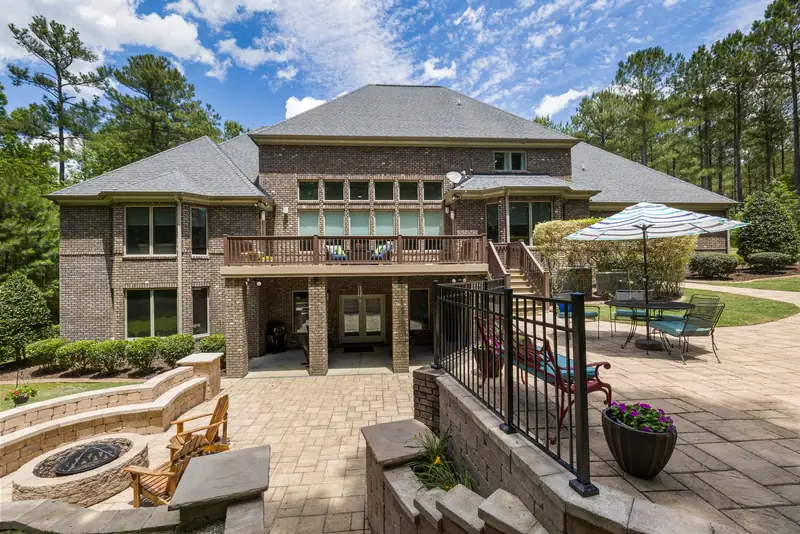
Paver Patios & Walkways · Apopka, FL
Paver Patios and Walkways for Apopka Backyards
A paver patio built in Apopka this October runs $10–$17 per sq ft installed, within the broader Florida range contractors are quoting. The city sits on ground shaped by the same limestone system that feeds Wekiwa Springs, and the soils under a typical backyard here range from fast-draining ridge sand to wetter flatwoods pockets within a short distance of each other.
By the Opera Concrete & Pavers estimating team · Updated October 1, 2026
Get a free estimate
Tell us about the project and we'll call to set up a free site visit.
A paver patio checked against two different corners of the same lot, worked out in square feet
Picture an 18 by 18 ft paver patio, 324 sq ft, planned for the back corner of a yard that slopes gently from the house toward a drainage swale. At $10–$17 per sq ft installed, that job runs roughly $3,240 to $5,508 depending on the paver and base depth. If that low corner tests out as wetter flatwoods soil while the rest of the lot drains like ridge sand, the crew typically adds a few extra inches of compacted base under just that section rather than deepening the whole patio uniformly.
A spring-fed landscape sits just outside the city limits
Wekiwa Springs State Park, bordering Apopka, covers roughly 7,000 acres and its spring feeds about 42 million gallons of water a day into the Wekiva River, which the park holds the headwaters of (Wikipedia, Wekiwa Springs State Park). That volume of water moving through limestone conduits is a reminder that the ground under much of north Orange County isn't uniform, and a paver patio base that assumes one soil type across the whole yard can run into a surprise a few feet from where a test hole was dug.
Where a screen enclosure track meets the paver field
A pool cage or screen room usually has an aluminum track anchored to its own footer, and the paver field has to meet that track cleanly without trapping water against it. We set a control joint there in practice, a slightly wider sand joint backed by a rigid edge restraint, right where the pavers meet the enclosure's base plate, so the two systems move independently without cracking the enclosure's footer or heaving the nearest paver course. On a Apopka lanai addition, matching that transition elevation precisely keeps the screen door swinging freely instead of dragging on a paver that settled a quarter inch high.
Ridge sand and flatwoods soil can trade places within the same yard
Candler and Tavares soils, both excessively to moderately well drained with the water table well below the surface, show up across much of the sand-ridge ground common in north and west Orange County, while Myakka and Smyrna, both poorly drained flatwoods soils, hold water within 18 inches of the surface for months at a time in lower spots (NRCS Official Series Description, Candler; NRCS Official Series Description, Myakka). On a lot where the back half of the yard sits lower than the front, a paver base crew sometimes finds both conditions on the same property, which is why a soil check at the actual patio location matters more than a general assumption about the neighborhood.
Grading a patio to slope away from the house
Before any base goes in, we set the finished grade so water runs away from the foundation and off the paver field, typically a slope of about 1 inch for every 8 to 10 feet of patio. That matters here: Apopka sees most of its roughly 50 inches of annual rain packed into a rainy season running from late May into October, often as a hard afternoon downpour rather than a gentle soak. A patio graded flat, or tipped back toward the house, holds that water against the slider or the lanai threshold instead of carrying it into the yard. Getting the slope right in the base is cheaper than fixing it after the pavers are down.
What happens when the base is skipped or under-compacted
The most common failure on a paver patio isn't a cracked unit, it's a low spot where the base underneath was never compacted to spec. On flatwoods soils with a seasonal high water table within 18 inches of the surface, an under-compacted base settles unevenly as the ground saturates and dries through the year, and the pavers simply follow it down. A Apopka patio built on a thin or skipped base might look fine the day it's finished and show the first dish-shaped low spot after one full rainy season. There's no fix for this short of pulling the affected pavers, correcting the base and resetting them.
Tying new paver work into an existing slab mid-project
When a patio extends off an existing concrete pad, the saw-cutting and elevation matching happen early, usually on day one, so every later stage, base compaction, sand screeding, paver laying, is built around a confirmed, flush transition rather than guessed at and corrected at the end. We dry-lay a row of pavers against the cut edge before compacting the final base lift, checking the finished height against the old slab with a straightedge. On a Apopka addition this extra verification step adds maybe an hour to the job and prevents the far more time-consuming fix of pulling up a finished section later.
Living with efflorescence while it fades
The whitish bloom that shows up on new concrete pavers within the first couple of months is cosmetic, and the most effective response on most Apopka patios is patience: normal rain and foot traffic wear it down over a season or two without any special treatment. A mild efflorescence cleaner can speed that up if the look bothers you sooner, but scrubbing too aggressively on a fresh install can do more harm than waiting it out. Sealing over an active efflorescence bloom is worth avoiding, since trapping the deposit under a sealer coat can make it harder to clear later rather than easier.
Frequently asked questions
Does Apopka's limestone geology affect a paver patio base?
Indirectly. The same limestone system that feeds Wekiwa Springs underlies much of the area, and while it doesn't set a specific paver spec, it's part of why soil conditions can vary noticeably within a single yard.
Can one yard in Apopka have two different soil types?
Yes. Fast-draining ridge sand and wetter flatwoods soil both occur in north Orange County, and a sloped lot can carry both, which is why a base crew checks the actual patio footprint rather than assuming one soil type for the whole property.
Is Wekiwa Springs close enough to Apopka to affect a backyard project?
The park borders the city, and while there's no setback rule tied to the spring itself for an ordinary residential patio, the groundwater system it belongs to is part of the reason local soil can be unpredictable over short distances.
Sources
- Census Bureau PEP, City and Town Population Totals, Vintage 2025 (July 1, 2025)
- SJRWMD Watering Restrictions
- Florida Senate Interim Report 2011-104 (sinkhole insurance)
- Florida Administrative Code — Rule 62-308.100, Synthetic Turf (effective May 19, 2026)
- Florida Statutes §125.572 — synthetic turf on single-family lots
- Orange County — A Guide for Residential Plan Approval
- NRCS OSD Candler
- NRCS OSD Tavares
- NRCS OSD Astatula
- NRCS OSD Myakka
- NRCS OSD Smyrna
- City of Apopka, Building Permit FAQs
- City of Apopka, Permitting Fees
- City of Apopka, Engineering Division
- City of Apopka, Permitting
- City of Apopka, Permit Types
- City of Apopka, Apopka Art & Foliage Festival Proclamation
- Census Reporter, Apopka FL (ACS 2020-2024 5-yr, B25035/B01003)
- Wikipedia, Apopka, Florida
- Wikipedia, Wekiwa Springs State Park
- Orange County Parks & Recreation, Kelly Park/Rock Springs
Ready for a price on your project?
Request a free estimate
Tell us about the project and we'll call to set up a free site visit.