
Why Is My Concrete Driveway Cracking? Which Cracks Are Normal in Florida
A hairline crack along or beside a control joint, cut every 8 to 12 feet into a 4-inch driveway, is ordinary shrinkage cracking and needs no repair as of October 2026. A crack that cuts diagonally across a panel, keeps widening, or has one edge sitting higher than the other points to a problem under the slab worth a look, in Greater Orlando or Sarasota–Manatee alike.
By the Opera Concrete & Pavers estimating team · Updated October 1, 2026
Are Cracks in a New Concrete Driveway Normal?
Yes, within limits. A new driveway almost always develops at least one hairline crack in its first year, usually running along or beside a control joint, and that's the slab doing what a correctly built driveway is designed to do: crack at the joint instead of somewhere random across the panel. What isn't normal is a crack that shows up away from any joint, keeps widening after the first few weeks, or comes with one edge sitting noticeably proud of the other. A new concrete driveway is built with that cracking behavior planned in from the layout stage; our concrete repair service is for the cases where it didn't go according to plan.
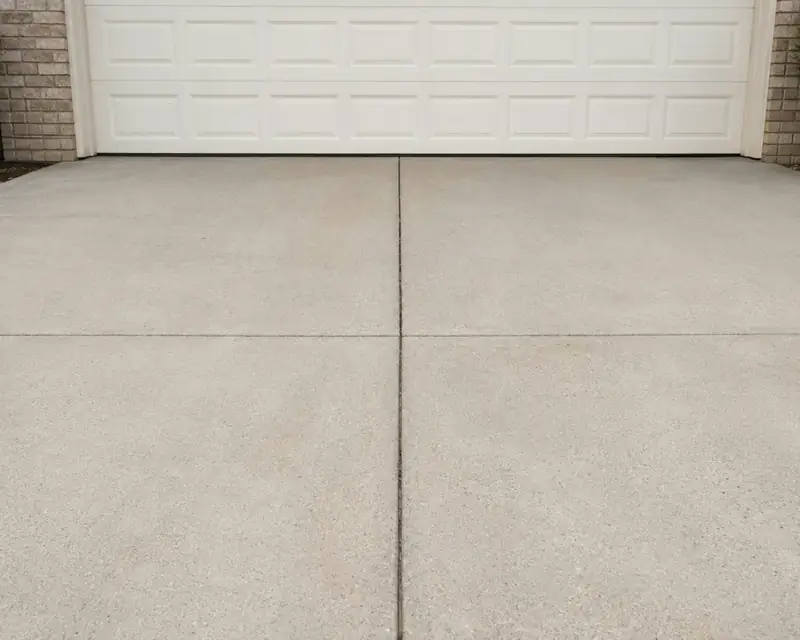
What's the Difference Between a Control-Joint Crack and a Problem Crack?
A control-joint crack follows a straight line the crew already cut on purpose; a problem crack cuts its own path instead, and that single fact separates most ordinary cracking from the kind worth a phone call. The table below sorts the patterns we get asked about most, matched to what usually causes each one and whether it calls for watching, filling or a closer look.
| What it looks like | Likely cause | What to do |
|---|---|---|
| Straight line along a cut joint | Normal shrinkage, the joint doing its job | Nothing; keep the joint clear of soil and mulch |
| Fine, web-like cracks across a small area | Plastic shrinkage from the surface drying faster than it was finished | Cosmetic; watch for growth, otherwise leave it |
| Single crack running diagonally across a panel | A soft spot or void opening under that section of base | Worth a look; see concrete repair |
| Crack with one side higher than the other | Settlement, or a root pushing up from below | Needs a diagnosis; see tree roots under a driveway |
| Crack that's visibly wider at one end, tapering toward the other | A corner or edge losing support, often near a drainage path | Schedule a repair before it reaches the rest of the panel |
A crack's shape points to a cause more reliably than its length alone does.
Why Do Hairline Cracks Show Up Within Hours or Days of the Pour?
The earliest cracks a driveway can get form before the concrete has even finished setting, when the surface dries out faster than the slab underneath gains enough strength to resist the shrinkage. Industry guidance on this kind of early cracking points to wind above about 5 mph, low humidity and high temperatures as the conditions that push evaporation past the rate a curing crew can keep ahead of, and the resulting cracks typically run parallel to each other, spaced roughly 1 to 3 feet apart (NRMCA CIP 5). A Central Florida afternoon in July or August, hot, humid and often still right before a storm rolls in, can still cross that line on a pour timed wrong, which is one reason crews here favor an early-morning start over a midday one. Once the slab has cured, that particular risk is gone for good; it's a pour-day issue, not something that develops later (NRMCA CIP 12).
Why Do Other Cracks Show Up Weeks or Months Later?
A second, slower kind of cracking shows up as the slab keeps losing the water it was mixed with over its first weeks, shrinking a tiny amount as it does. Control joints exist specifically to manage that movement, cut about a quarter of the slab's own depth so the panel cracks underneath the groove instead of somewhere the crack would be visible on the surface (NRMCA CIP 6). Say a homeowner in a 1990s Clermont subdivision notices a thin line open up along a joint about two months after a new driveway goes in; that's drying shrinkage finishing its course on schedule, not a defect in the pour. Reinforcement doesn't change this timeline either way. Wire mesh and dispersed fiber are both meant to hold a crack together once it opens, and neither one is built to stop the slab from shrinking in the first place (NRMCA CIP 6 Joints in Concrete Slabs on Grade).
What Does a Diagonal, Corner or Widening Crack Mean?
Once a crack ignores the joint pattern and cuts its own line, the explanation usually sits under the slab rather than in the pour itself. A diagonal crack across a panel, or one corner sitting lower than the rest, points to a soft spot or a small void in the compacted base, often from fine material that migrated out through a joint over a rainy season or two. A crack that follows an uneven, lifted path instead of a settled one points the other direction: something is pushing up from below, and a tree root near the edge of the slab is the most common cause of that pattern. Tree roots under your driveway or sidewalk goes through how to tell whether a nearby tree is the source. Either way, a crack that's still moving is a different problem than one that opened once and stopped, and treating the two the same, filling a crack that's actively getting wider, usually means doing the job again within a season. Our resurface-or-replace comparison walks through what to do once a panel is confirmed as a real problem rather than cosmetic shrinkage.
Does a Sunken or Cracked Panel Mean My Driveway Is Sitting on a Sinkhole?
Almost never. The far more common explanation for a slab that's cracked and dropped on one side is ordinary settlement: a base that lost material to water migration, not a geological collapse. Florida law reserves the term "sinkhole" for a specific, abrupt event with a visible depression and real structural damage, and that's a different thing from a driveway panel sinking an inch over a couple of rainy seasons (F.S. 627.706). Homeowners in Orlando and the rest of Central Florida sometimes worry about this more than Sarasota or Manatee residents do, for reasons that are worth understanding on their own; our sinkholes vs. normal settlement guide goes through how the two are told apart.
Say You Have a Hairline Crack Along One Joint on an Otherwise Clean Driveway
That's close to the most common call this trade gets, and it's usually not a call that needs a crew at all. A single thin crack that follows a cut joint, doesn't catch a fingernail dragged across it, and hasn't grown since it was first noticed is the slab doing exactly what it was built to do. Keep soil, mulch and grass clippings out of the joint so it can keep shedding water the way it was designed to, and check it again after the next heavy rainy-season storm rather than worrying about it in the meantime. Whether a Florida driveway needs sealing covers the maintenance side of keeping a sound driveway sound.
When a Crack Is Worth a Repair Call
A handful of signs separate ordinary shrinkage cracking from something that's actually getting worse underneath the slab.
- A crack that's visibly wider or longer than it was a season ago, rather than static since it first appeared.
- A vertical offset where one side of the crack sits higher than the other, which is a tripping concern on its own regardless of the crack's width.
- A crack that runs diagonally across a panel rather than following a cut joint or the slab's natural, straight lines.
- Several cracks converging on one low spot, which usually means a void rather than ordinary surface shrinkage.
- A crack that appeared or widened right after a nearby tree grew noticeably, or after a particularly wet rainy season.
Any one of those is worth a look from a concrete repair crew before the next rainy season tests it further. Our concrete repair cost guide breaks down what crack filling, resurfacing or a cut-out section replacement runs in current Florida market data.
Frequently asked questions
Will a hairline crack in my driveway get worse if I leave it alone?
A hairline crack that follows a control joint and isn't growing typically stays exactly as it is for years, since it's the slab relieving shrinkage stress the way it was designed to. A crack away from a joint is a different story; if it's still opening, whatever caused it, usually a soft spot in the base, is still active and tends to widen the crack further over successive rainy seasons rather than stabilize on its own.
Why does my brand-new driveway already have a web of fine cracks?
A web or map-like pattern of shallow, closely spaced cracks across a small area is almost always plastic shrinkage from the surface drying out faster than the crew could finish and cure it, usually during a hot, breezy pour. It's cosmetic, shows up within hours of the pour rather than developing later, and doesn't affect how the slab performs once it's cured.
Does Florida's heat make driveways crack more than they would elsewhere?
Heat and humidity raise the risk of one specific kind of early cracking, plastic shrinkage, more than a milder climate does, since high temperatures and wind push the surface's evaporation rate past what a curing crew can keep ahead of. It has nothing to do with the slower, unrelated drying-shrinkage cracking that shows up along joints weeks after any pour, in any climate.
Can I fill a driveway crack myself, or does it need a professional repair?
A stable hairline crack can often be left alone or filled with an off-the-shelf concrete crack filler as routine upkeep, the same kind of maintenance as resealing. A crack that's still moving, widening, or sitting over a void needs a diagnosis first, since filling the surface without addressing what's happening underneath usually means redoing the work within a season or two.