
How to Choose an Artificial Turf Installer in Florida
Choosing an artificial turf installer in Florida means checking three things before pattern or price: whether the base and infill plan match the state's 2026 turf standard, a written workmanship warranty separate from the turf's own manufacturer warranty, and who handles any local permit. As of October 2026, DEP Rule 62-308.100 sets minimum install standards statewide for lots up to one acre.
By the Opera Concrete & Pavers estimating team · Updated October 1, 2026
How Do You Choose an Artificial Turf Installer in Florida?
Picking an artificial turf installer in Florida comes down to three checks that matter more than color samples or a photo gallery: whether the base and infill plan matches the state's 2026 turf standard, whether there's a written workmanship warranty separate from the manufacturer's warranty on the turf itself, and who's responsible for any local permit. Two lawns can look identical on install day and perform very differently a year later, depending entirely on what's buried underneath and what the joints were filled with.
What Should You Ask the Best Artificial Turf Installer Near You?
A search for the best artificial turf installer near me mostly returns businesses sorted by ad spend, which says little about what's going under a specific lawn. The table below separates the turf-specific questions tied to Florida's state rule from the general contractor paperwork that applies to any hardscape job.
| Check | Why it matters |
|---|---|
| Subgrade and base material, in writing | State rule requires washed natural material such as crushed rock or crushed concrete, not unwashed fill |
| Infill type specified | Only clean silica sand, rock, shell or coated silica sand is allowed outside a playground footprint |
| In-ground irrigation plan for the footprint | State rule bars watering turf with an in-ground irrigation system |
| Setback from ponds, canals or other water | 10 ft minimum from the water line unless a seawall or bulkhead already exists |
| Tree drip line clearance | Turf can't go inside a drip line without a certified arborist's sign-off |
| Local building or zoning permit handling | Turf often counts as added impervious coverage; the office that reviews it varies by city |
| DBPR license status, if the installer holds one | No statute names turf installation as a licensed trade the way it does a driveway |
| Manufacturer warranty terms on the turf itself | Usually covers material defects and UV fading, separate from the installation |
| Written workmanship warranty on seams and infill | Covers installation defects such as a lifting seam or unevenly settled infill |
| General liability insurance certificate | Confirms coverage is current rather than taken on a verbal claim |
DEP Rule 62-308.100 sets the base, infill, setback and drip-line standards referenced here.
Does an Artificial Turf Installer Need a License in Florida?
Not in the clearly named way a driveway does. Florida's licensing statute carves "driveway or tennis court installation" out of state and local licensing requirements by name, but turf installation isn't listed alongside it (F.S. 489.117). Turf work also doesn't fall under the state's structural masonry specialty category, since there's no slab, footer or wall involved (Fla. Admin. Code R. 61G4-15.100). That leaves the question open rather than settled. Running a business name through the DBPR license search shows whether it holds any state certificate at all, and a call to the local building department clarifies whether a permit, rather than a license, is what actually governs the job in a given city. Our guide to checking a Florida contractor license covers that search in more depth than fits here.
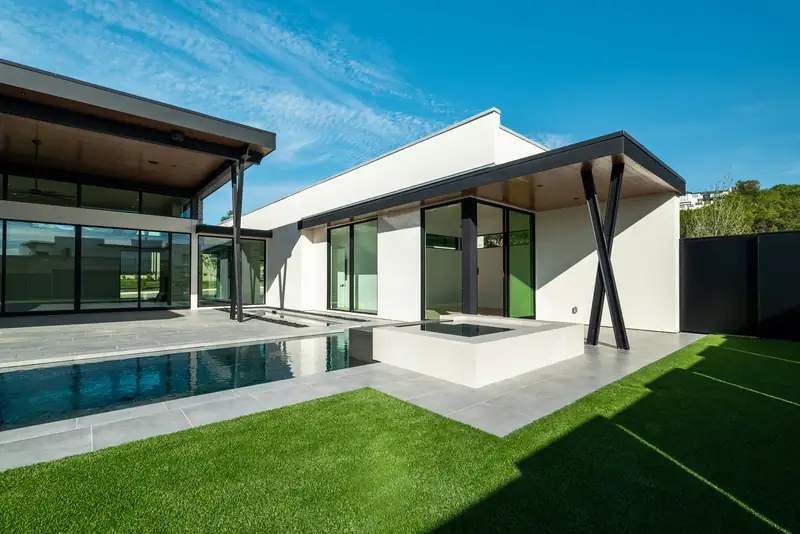
What Does Florida's 2026 Turf Standard Require, and How Does It Shape the Questions You Ask?
DEP Rule 62-308.100, effective May 19, 2026, sets minimum install standards for synthetic turf on single-family lots of an acre or less, and it's the baseline an installer's answers should match (Rule 62-308.100). The subgrade has to be washed natural material, crushed rock or crushed concrete, rather than unwashed fill that still carries fine particles capable of clogging drainage underneath. Infill is limited to clean silica sand, rock, shell or a coated silica sand; rubber or other synthetic infill is allowed only inside the footprint of playground equipment. The turf and its backing have to stay permeable over a pervious subgrade, graded so water moves off the lot instead of pooling, and installation can't go inside a stormwater swale, pond or a pond's littoral zone. Two setback numbers are worth asking about directly: at least 10 ft from a natural or man-made water body unless a seawall or bulkhead already serves as a barrier, and no turf inside a tree's drip line without a certified arborist's sign-off. Edges and seams get anchored against wind and flooding. None of this creates a new state-issued permit on its own, the rule says so directly, which is why the local building department, not DEP, is who to ask about paperwork. Our guide to Florida turf law and HOAs covers how the rule interacts with deed restrictions, and our turf installation process guide walks through how a compliant base and infill actually get built on site.
What Should a Written Turf Warranty Cover?
Two separate documents, not one. A manufacturer warranty covers the turf product itself, fiber UV resistance and color retention most commonly, and industry buyer guides describe residential turf manufacturer warranties running roughly 8 to 15 years depending on the product line (Ideal Turf, Artificial Turf Warranties). An installer's own workmanship warranty is a shorter, separate document covering the installation itself: whether a seam bonds and holds, whether infill distributes evenly, whether the base was prepared the way it was described, commonly a 1 to 3 year window according to the same buyer guide. Our guide to what a concrete or paver warranty should cover walks through the same manufacturer-versus-workmanship split for hard surfaces, and the logic for asking for both documents in writing carries over directly to turf.
What Permit Questions Should You Ask Before Turf Goes In?
Permit handling for artificial turf varies more by city than concrete or paver work tends to, since some jurisdictions treat a synthetic lawn as ordinary landscaping and others treat it as added impervious coverage subject to the same review as a patio. The city of Orlando, for example, routes turf through the same engineering permit used for pavers and concrete because the city counts it as impervious surface, with its own water-body buffer that runs wider than the state rule's 10 ft minimum (City of Orlando, Residential Permitting Requirements). Asking an installer directly which office handles the paperwork in a specific city, rather than assuming turf is exempt because nothing gets poured or mortared, is the safer approach. Our guide to preparing a yard for installation covers what else typically needs to happen before a crew arrives, beyond the permit question itself.
Say You're Comparing Turf Installers for a Pet Area in Apopka
A homeowner in Apopka comparing three quotes for a 600 sq ft pet turf area checks each one against the same three things regardless of price: a stated subgrade and infill spec that matches the state's washed-material and clean-infill rule, a written workmanship warranty kept separate from whatever the turf manufacturer offers, and confirmation of which office handles the local permit. A quote that stays silent on infill type or base material is the one worth a follow-up call before it's the one that gets accepted.
Frequently asked questions
Does artificial turf need a permit in Florida?
Often, yes, though the state's own 2026 turf standard doesn't create a new permit by itself. Many cities route a turf install through the same building or engineering permit used for pavers or concrete, since the finished lawn counts as impervious surface, so checking with the local building department before signing is worth doing rather than assuming turf is exempt.
Does an artificial turf installer need a state license in Florida?
Not in a clearly named way. State law exempts driveway installation from licensing requirements by name, but turf isn't listed the same way, and turf work doesn't fall under the structural masonry category either since there's no slab or footer involved. Running the business through the DBPR license search shows what, if anything, it holds, and a county or city building department call settles the permit side.
What should a turf warranty cover?
Two separate documents: a manufacturer warranty on the turf material itself, commonly 8 to 15 years against defects and significant UV fading, and a shorter installer workmanship warranty, often 1 to 3 years, covering seam bonding, infill distribution and base preparation. Asking for both in writing, rather than assuming one covers the other, avoids confusion if a seam lifts a year or two in.
What base material does Florida's 2026 turf rule require?
A washed natural subgrade material such as crushed rock or crushed concrete, not unwashed fill that still carries fine particles capable of clogging drainage underneath it. The rule also limits infill to clean silica sand, rock, shell or coated silica sand, with rubber or other synthetic infill allowed only inside a playground's footprint.
How close to a pond or canal can artificial turf go?
At least 10 feet from the water line under the state's 2026 standard, unless a seawall or bulkhead already serves as a physical barrier. The same rule keeps turf out of a stormwater swale, pond or a pond's littoral zone, and a city's own buffer can run wider than the state minimum.
Sources
- Rule 62-308.100 adopted text (.doc)
- F.S. 489.117 (2026) Registration; specialty contractors
- Fla. Admin. Code R. 61G4-15.100 Certified Specialty Contractors (LII)
- DBPR License Search
- City of Orlando — Residential Permitting Requirements
- Ideal Turf, Artificial Turf Warranties: What to Look For (updated Apr. 2, 2025)