
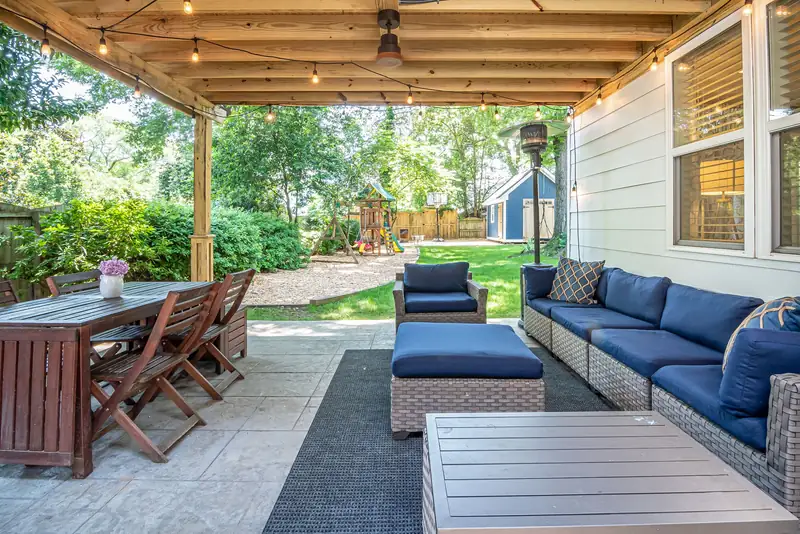
Paver Patios & Walkways · Casselberry, FL
Paver Patios and Walkways for a Casselberry Yard
A paver patio or walkway in Casselberry runs $10–$17 per sq ft installed as of October 2026. The same 50 percent impervious cap that governs a driveway applies to a patio, and a sizable share of Casselberry lots sit close enough to one of the city's two dozen lakes for shoreline rules to matter.
By the Opera Concrete & Pavers estimating team · Updated October 1, 2026
Get a free estimate
Tell us about the project and we'll call to set up a free site visit.
A patio is weighed against the identical lot-wide ceiling
Casselberry's zoning table doesn't set a separate allowance for a patio; it's part of the same single-family coverage limit, 50 percent of the lot, that also includes the house, driveway and pool deck (Casselberry Zoning Ordinance Ch. II). Adding a paver patio on a lot that already has a full driveway and house footprint is sometimes the project that pushes the total closest to that number, which is why we run the math against the lot before sizing the layout.
Flatwoods soil and why the base sometimes gets thicker
A lot of the territory we work in sits on flatwoods soils such as Myakka, Florida's official state soil, where a seasonal high water table can sit within 18 inches of the surface for part of the year. ICPI's guidance is direct about what that means for a paver base: continually wet or weak soil needs a base 2 to 4 inches thicker than the standard patio or walkway depth. On a Casselberry lot with poor natural drainage, that extra aggregate, plus a perforated drain pipe where the soil stays saturated, does more for the long-term flatness of the patio than any amount of extra paver thickness would.
Lakefront lots carry their own setback considerations
With more than two dozen lakes packed into roughly 8 square miles, a larger-than-usual share of Casselberry addresses sit within reach of a shoreline, including smaller named lakes like Lake Kathryn at about 74 acres (Seminole County Water Atlas, Lake Kathryn). A paver patio or walkway going in close to open water doesn't trigger the same build rule as artificial turf, but a lakefront layout is still worth walking before a final design is drawn, since grading toward the shoreline affects drainage differently than grading toward a street.
Why edge restraint isn't optional on a patio
Every paver field needs a continuous edge restraint around the perimeter and anywhere the paving material changes, whether that's plastic, aluminum or steel. The spikes that hold it down drive into the compacted aggregate base, not into the native soil beneath it, since soil alone won't hold a spike against the outward push of thousands of interlocking pavers. A strip of plastic landscape edging meant for a flower bed is not a substitute; it isn't rated for that job. On a Casselberry patio bordered by turf or mulch, a proper restraint is what keeps the outer courses from creeping outward season after season until the edge joints open up.
A lakeside patio near the coverage ceiling, worked out in square feet
Picture a Casselberry home near one of the city's smaller lakes adding a 15 by 18 foot paver patio, 270 square feet, off the back of the house, on a lot that already carries a full driveway and a modest addition. At $10–$17 per sq ft installed, that patio runs roughly $2,700 to $4,320, and on a lot already close to the single-family district's 50 percent ceiling, that square footage is checked against the zoning table before the final layout is cut.
Compacting the base before a single paver goes down
Aggregate base goes in 4- to 6-inch lifts, each one run over with a plate compactor heavy enough to reach 98 percent of standard Proctor density before the next lift is added, not after the whole pile is dumped and leveled at once. Skipping lift-by-lift compaction on a Casselberry patio is the single most common shortcut that shows up later as a low spot or a soft corner. We check compaction with a simple proof-roll, walking or rolling the compactor over the finished base and watching for any flex, before moving on to bedding sand the following day.
What happens when the base is skipped or under-compacted
The most common failure on a paver patio isn't a cracked unit, it's a low spot where the base underneath was never compacted to spec. On flatwoods soils with a seasonal high water table within 18 inches of the surface, an under-compacted base settles unevenly as the ground saturates and dries through the year, and the pavers simply follow it down. A Casselberry patio built on a thin or skipped base might look fine the day it's finished and show the first dish-shaped low spot after one full rainy season. There's no fix for this short of pulling the affected pavers, correcting the base and resetting them.
A seasonal rinse before the rainy season hits
A paver patio collects pollen, leaf litter and wind-blown dirt year-round, and all of it works into the joints and feeds algae if it's left to sit. A straightforward rinse and sweep a few times a year, timed before the rainy season ramps up from late May into October, keeps that buildup from compounding into a bigger cleaning job later. On a Casselberry patio under any tree cover, clearing debris off the surface regularly also protects the joint sand underneath it, since decomposing organic matter breaks sand down and gives weeds a foothold faster than clean sand ever would.
Frequently asked questions
Does a Casselberry patio count toward the same limit as the driveway?
Yes. The city's single-family zoning caps total impervious coverage, house, driveway, patio and pool deck together, at 50 percent of the lot, so a new patio is weighed against whatever coverage the property already has.
Do lakefront lots in Casselberry have extra patio rules?
A patio itself isn't subject to a special lakefront setback the way artificial turf near open water is, but grading and drainage near a shoreline lot are still worth reviewing on site before a final layout is set.
How many lakes does Casselberry actually have?
The city's own description counts more than two dozen lakes and ponds across about 8 square miles, with Lake Howell the largest and the Triplet Chain, Lake Kathryn and Lake Concord among the named waterbodies.
Sources
- City of Casselberry, General Information
- City of Casselberry, Building Division
- Casselberry Zoning Ordinance Ch. II, Table 2-5.4 (via Municode)
- Seminole County Water Atlas, Lake Kathryn
- Seminole County Water Atlas, Lake Concord
- Census Reporter, Casselberry, FL
- Census Reporter API, Casselberry median year structure built (B25035)
- SJRWMD Watering Restrictions
- Florida Administrative Code — Rule 62-308.100, Synthetic Turf (effective May 19, 2026)
- Florida Statutes §125.572 — synthetic turf on single-family lots
- F.S. 720.3045 (2026) Installation, display, and storage of items
- NRCS OSD Myakka
Ready for a price on your project?
Request a free estimate
Tell us about the project and we'll call to set up a free site visit.