
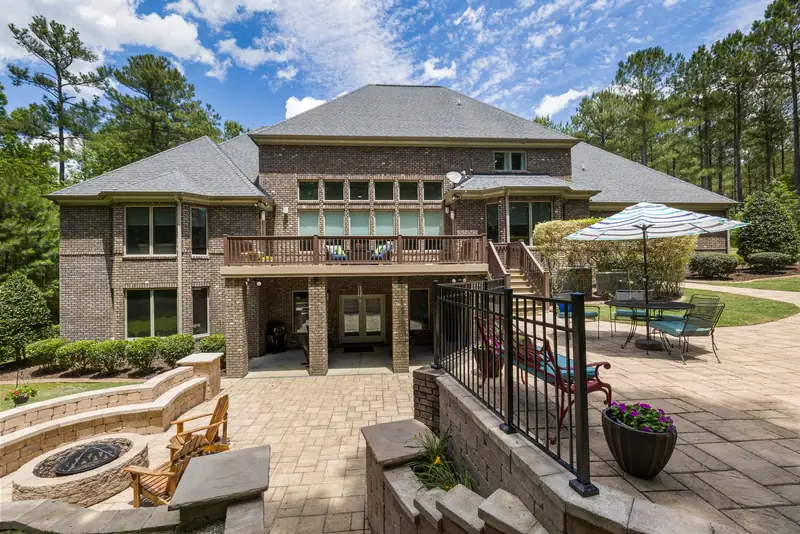
Paver Patios & Walkways · ChampionsGate, FL
Paver Patios for ChampionsGate Homes
Paver patio work in ChampionsGate is pricing at $10–$17 per sq ft installed this October 2026, current Florida figures. With a meaningful share of ChampionsGate homes operating as whole-home vacation rentals near the Omni Orlando Resort, a paver patio or pool deck here is more often built for daily guest turnover than for a single owner-occupied family.
By the Opera Concrete & Pavers estimating team · Updated October 1, 2026
Get a free estimate
Tell us about the project and we'll call to set up a free site visit.
Rental-intensity use changes what a patio has to hold up to
ChampionsGate's resort district, built around the Omni Orlando Resort and two Greg Norman golf courses, allows whole-home nightly rentals on part of the community (MoveWithMomentum, ChampionsGate neighborhood guide). A paver patio or pool deck on one of those homes sees a new set of guests cycling through most weeks of the year, which is a reason a denser edge restraint and a tighter joint-sand spec come up more often on a ChampionsGate quote than on a lot a family has lived in for a decade.
Flatwoods soil and why the base sometimes gets thicker
A lot of the territory we work in sits on flatwoods soils such as Myakka, Florida's official state soil, where a seasonal high water table can sit within 18 inches of the surface for part of the year. ICPI's guidance is direct about what that means for a paver base: continually wet or weak soil needs a base 2 to 4 inches thicker than the standard patio or walkway depth. On a ChampionsGate lot with poor natural drainage, that extra aggregate, plus a perforated drain pipe where the soil stays saturated, does more for the long-term flatness of the patio than any amount of extra paver thickness would.
Flatwoods ground means drainage planning starts before the first paver is set
Much of Osceola County's share of ChampionsGate sits on Myakka and Basinger flatwoods soil, both holding a seasonal water table close to the surface for months of the year (NRCS, Myakka series; NRCS, Basinger series). A patio base here is built with that shallow water table in mind from the compaction stage on, rather than assuming the fast drainage common on the sand-ridge lots up around Clermont and Groveland.
Adding a paver-set fire pit to the patio
A fire pit built into a paver patio needs its own base detail: a noncombustible pad, often a ring of concrete or extra-compacted aggregate under the fire pit itself, and enough clearance from the house, any screen enclosure and overhanging trees that heat and embers aren't a problem. We set the fire pit's paver course level with the surrounding field but treat the base under it as a separate, denser section rather than an extension of the standard patio base. On a ChampionsGate patio where the fire pit sits near a wood fence or landscaping, that clearance distance matters as much as the base spec underneath it.
A rental-home pool deck extension, worked out in square feet
A ChampionsGate vacation home extending its paver pool deck by 22 by 18 feet, 396 square feet, to add lounge seating for a larger guest group comes to roughly $3,960 to $6,732 at the $10–$17 per sq ft installed figure. Given the shallow water table common on these lots, the crew checks the base compaction against the flatwoods soil rather than assuming the lighter prep a ridge-sand lot would need for the same square footage.
Screeding sand and setting pavers
Once the base passes inspection, we screed bedding sand to a uniform 1 inch using pipe rails as a guide, then set pavers straight off the base without compacting that sand layer first, since compacting it before the units are down would leave the sand too dense for the pavers to settle in evenly. Laying typically runs from a fixed edge, like the house wall, outward toward the restraint line, with border pieces cut and set last once the field pattern is established. On a ChampionsGate patio of average size this stage usually takes a full day or two depending on the pattern and how much cutting the layout requires.
Treating landscape edging as a real edge restraint
Plastic or metal edging sold for flower beds is not rated to hold back a paver field, but it gets substituted in on budget jobs often enough that ICPI's own technical guidance specifically calls it out as unacceptable. Without a proper restraint spiked into the compacted base, the outer courses of a ChampionsGate patio creep outward a little at a time, usually from weight shifting as people walk the perimeter or furniture gets dragged across it, and the joints near the edge start opening within a year or two. Replacing bed edging with a real restraint after the fact means pulling and resetting the whole border course.
When to reseal a paver patio
ICPI's own technical guidance gives no fixed resealing interval for paver sealers, saying only that they need reapplication after a period of wear and weather and that acrylic sealers generally last a few years before a recoat is due. Rather than sealing on a calendar, the better signal on a ChampionsGate patio is watching the surface: water that used to bead now soaks in, or the color has gone flat and faded, both mean the old coat has worn through. A paver patio that's never been sealed can go years without a problem, since sealing is about appearance and stain resistance more than structural need.
Frequently asked questions
Do ChampionsGate vacation-rental patios need a different build than an owner-occupied home?
Often, yes, since guest turnover adds wear a typical owner-occupied yard doesn't see, which is why a tighter edge restraint and joint-sand spec come up more often on those quotes.
Does a ChampionsGate paver patio need a county permit?
Yes, reviewed by Osceola or Polk County's building office depending on the address; confirming which county applies before the project is designed avoids a misfiled application.
Why does the soil matter more for a ChampionsGate patio than for one near Clermont?
The ground here is poorly drained flatwoods soil with a seasonal water table close to the surface, unlike the fast-draining ridge sand common 25 miles north, so the patio base is built to manage standing water rather than loose, dry sand.
Sources
- Osceola County, Community Development Districts directory
- MoveWithMomentum, ChampionsGate neighborhood guide
- SFWMD, Year-Round Landscape Irrigation FAQ
- SFWMD, Upper Kissimmee Basin Water Supply Plan
- Osceola County — Parking Ordinance, Ch. 22 Art. II (Sec. 22-50.6)
- Osceola County — Right-of-Way Permit Information
- Osceola County — Homeowners
- Osceola County — Permit Information
- NRCS OSD Myakka
- NRCS OSD Basinger
- NRCS OSD Pomona
- Florida Administrative Code — Rule 62-308.100, Synthetic Turf (effective May 19, 2026)
- Florida Statutes §125.572 — synthetic turf on single-family lots
Ready for a price on your project?
Request a free estimate
Tell us about the project and we'll call to set up a free site visit.