
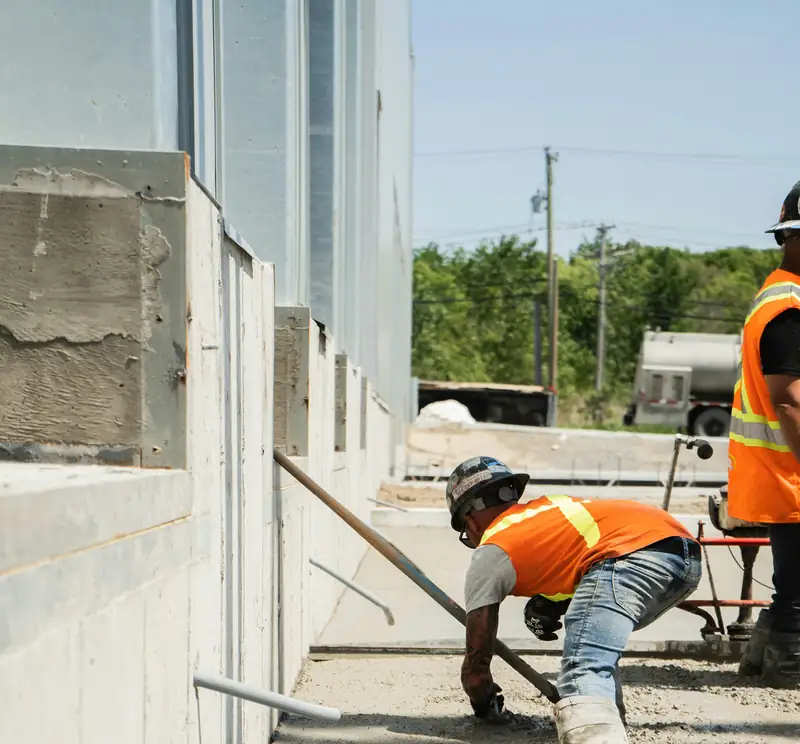
Sidewalks & Walkways · Clermont, FL
Concrete Sidewalks and Walkways In and Near Clermont
A concrete walkway near Clermont runs $7–$17 per sq ft installed as of October 2026. Just outside the city limits, in unincorporated Lake County, a walkway under 30 inches above grade is exempt from a building permit entirely; inside Clermont, that same walkway instead goes through the city's $45 zoning approval, the same process a driveway uses.
By the Opera Concrete & Pavers estimating team · Updated October 1, 2026
Get a free estimate
Tell us about the project and we'll call to set up a free site visit.
A front walkway replacement, worked out in square feet
Say a 4-foot-wide, 40-foot-long front walkway, 160 square feet, needs replacing between the driveway and the entry. At $7–$17 per sq ft installed, that lands between roughly $1,120 and $2,720. On a lot in unincorporated Lake County, a walkway that low off the grade typically clears the county's building-permit exemption outright; on an otherwise identical lot inside the Clermont city limits, the same walkway instead goes through the city's $45 zoning approval before the old concrete comes out.
Outside the city, a low walkway can skip the building permit altogether
Lake County's exemption list, built on Florida Building Code 105.2 #2, covers “sidewalks and driveways not more than 30 inches (762 mm) above adjacent grade,” as long as the walkway doesn't sit over a basement or lower story and isn't part of a required accessible route, zoning and flood requirements still apply on top of that exemption (Lake County, Residential Work Exempt from Permits). That exemption covers most ordinary front walkways, since a walk from the driveway to the door rarely climbs anywhere near 30 inches off the yard.
Steps Are Their Own Structural Element, Not Just a Thicker Slab
A set of steps built into a sloped Clermont walkway is not simply a thicker version of the flatwork around it: each riser and tread needs its own formwork, its own finish work for a non-slip surface, and often its own control joint separate from the joints in the level sections on either side. Treating steps as an extension of the surrounding slab, rather than a distinct piece of the job, is how a tread ends up slightly out of level with the riser below it. Building the steps as their own element, tied into the flat sections with a planned joint rather than a continuous pour, keeps each piece doing its own job correctly.
Inside the city, the walkway follows the same zoning path as a driveway
Once a lot sits inside Clermont's city limits, that same low walkway no longer qualifies for the county's height-based exemption; it instead goes through the city's zoning approval, a notarized application and survey for a flat $45 fee with no inspection, the identical process the city applies to driveway work (City of Clermont, Permit Checklists). Confirming which side of the city line a lot actually sits on is worth a call to Building Services, 352-241-7315, before assuming the county's exemption applies.
Stepping a Sloped Walkway Instead of Ramping It
On a sloped Central Florida lot, the ridge country west of Orlando especially, a straight-line walkway from the driveway to the front door sometimes drops more elevation than a continuous ramp can handle comfortably, which calls for the subgrade to be shaped in distinct level terraces rather than one even grade. Each step's landing gets its own compacted, leveled base rather than treating the whole run as a single sloped plane, since an uneven subgrade under a step shows up immediately as a tread that is not level. Getting that terracing right on a Clermont lot starts with surveying the actual elevation change before deciding how many steps the walk needs.
A Walkway Without Enough Joints Cracks on Its Own Schedule
A long walkway poured without close enough joint spacing, or with panels that run long and narrow instead of close to square, does not crack less than a properly jointed one, it just cracks somewhere nobody planned for. That risk is sharper on a Clermont walkway than on a wide driveway, since a narrow panel has less width to absorb stress before a diagonal crack runs clean across it rather than along a clean joint line. A walkway with this problem usually looks fine through its first year, then develops a crack that cuts across a panel at an angle, both weaker and more visible than the straight joint lines it should have followed.
A Long, Narrow Pour Dries From Both Edges at Once
A walkway's shape works against it on a hot Clermont pour day in a way a wider driveway slab does not: with almost the whole surface close to an edge, evaporation can pull moisture from both sides of a narrow section at the same time, raising the effective drying rate even when the air temperature and wind match conditions on a wider pour nearby. Starting early and watching the evaporation rate rather than just the clock matters as much here as on any other flatwork, but a narrow walkway gives a crew less margin for error before plastic shrinkage cracking shows up along both edges of the same panel.
Watching a Step's Tread for Moss, Not Just Cracks
A shaded step on a Clermont walkway, one that sits under a tree canopy or close to the house, holds moisture longer after rain than the flat sections on either side of it, which makes that tread a more likely spot for a thin film of algae or moss to build up over time. Checking a shaded step specifically, rather than relying on how the whole walkway looks from a distance, catches that film while a stiff brush and some water still handle it, before it gets slick enough to matter. It is a small, regular check worth doing more often on steps than on the level sections nearby.
Frequently asked questions
Is a walkway exempt from a permit in unincorporated Lake County?
Often, yes, if it stays under 30 inches above the adjacent grade and isn't part of a required accessible route. Zoning and flood requirements still apply even where the building-permit exemption covers the walkway itself.
Does a walkway need a different review than a driveway inside Clermont?
No, the city applies the same zoning-approval process to both, a notarized application and survey for a flat $45 fee with no inspection, rather than treating a walkway as a separate permit category.
How do I know if my Clermont-area lot is inside or outside the city limits?
Building Services, 352-241-7315, can confirm from the address. That distinction decides whether a low walkway qualifies for Lake County's height-based exemption or instead needs the city's own zoning approval.
Sources
- City of Clermont — Building Services FAQ
- City of Clermont — Permit Checklists
- City of Clermont — Applications & Forms
- City of Clermont — Permit Type Descriptions
- City of Clermont — Municode Ch. 125 Div. 5 R-1
- City of Clermont, Economic Information
- Census Bureau PEP, City and Town Population Totals, Vintage 2025 (July 1, 2025)
- Census Reporter, Clermont FL (ACS 2020-2024 5-yr, B25035)
- Wikipedia, Sugarloaf Mountain (Florida)
- Lake County — Residential Work Exempt from Permits
- Lake County — Residential Driveway Apron Permit
- Lake County — LDR Appendix A Transportation Standards
- Lake County — Right-of-Way Permit
- Lake County — Building Services
- NRCS OSD Candler
- NRCS OSD Tavares
- NRCS OSD Astatula
- SJRWMD Watering Restrictions
- Florida Administrative Code — Rule 62-308.100, Synthetic Turf (effective May 19, 2026)
- Florida Statutes §125.572 — synthetic turf on single-family lots
- Florida Senate Interim Report 2011-104 (sinkhole insurance)
- Citizen Portal, Clermont City Council meeting summary — Sky Ridge Road paver variance
- Kings Ridge Community, Frequently Asked Questions
Ready for a price on your project?
Request a free estimate
Tell us about the project and we'll call to set up a free site visit.