
Pool Deck Pavers · Clermont, FL
Travertine and Paver Pool Decks in Clermont
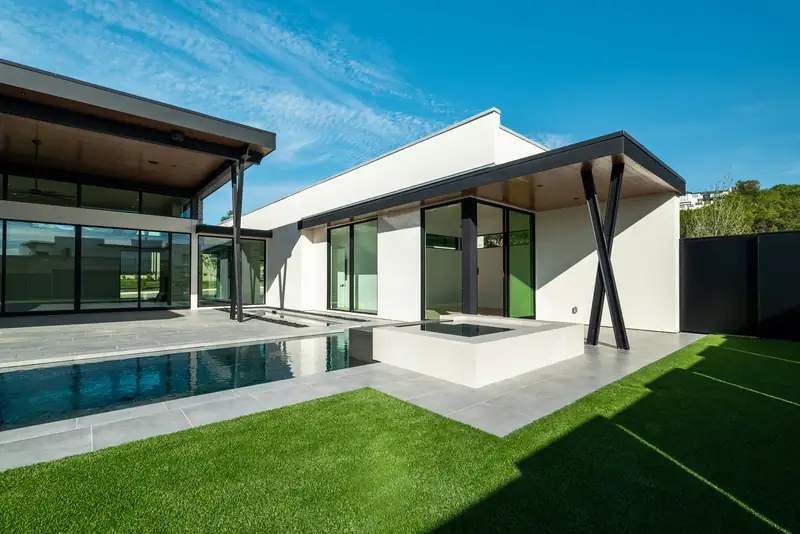
Clermont pool decks finished in travertine or pavers are pricing between $12–$30 per sq ft installed, tracking current Florida contractor rates. With Clermont's median home built in 2006, the newest of the Orlando unit's nine incorporated cities, a paver pool deck here is more often a first install alongside new construction than an overlay on a worn original deck.
By the Opera Concrete & Pavers estimating team · Updated October 1, 2026
Get a free estimate
Tell us about the project and we'll call to set up a free site visit.
A newer city means more first installs than overlays
Clermont's population grew from 42,992 residents in 2020 to roughly 52,812 by mid-2025, and the typical home dates to 2006 (Census Bureau PEP, Vintage 2025; Census Reporter, Clermont). That pace of new construction means a meaningful share of the pool decks going in around Clermont are specified in travertine or pavers at the same time the pool itself is built, a design decision made once, rather than a resurfacing call on a deck that's already cracked or faded.
The Coping Joint Needs a Sealant, Not Just Sand
Where the field pavers meet mortar-set coping at the pool's edge, a standard sand joint isn't the right detail, since the two systems move independently and a rigid mortar line right there cracks the same way a concrete deck would without an isolation joint. We detail that transition with a flexible sealant over a backer rod instead, the same approach a poured concrete deck uses at its own coping line. On a Clermont paver deck, butting sand-set pavers straight against mortar-set coping without that flexible joint is one of the more common reasons the first paver course against the pool starts rocking within a year or two.
A new paver pool deck, worked out in square feet
A newly built pool on a Clermont lot calling for 580 square feet of travertine instead of plain concrete lands in the $12–$30 per sq ft installed bracket, which works out to roughly $6,960 on the low end and $17,400 toward the high end depending on the stone and pattern chosen. Because the deck and the pool shell are both new, the paver layout is set against the contractor's own elevation survey from the start, rather than measured against an existing deck the way an older-city resurfacing job would be.
On a sloped lot, the deck's layout gets checked against the shell before the first course goes down
A lot that sits among the Lake Wales Ridge's hills rarely has a perfectly flat building pad, so on a new pool build, the paver or travertine deck's layout gets checked against the pool contractor's shell elevation before the base is cut, the same grading question a poured concrete deck faces on the identical lot. Getting that elevation wrong on a sloped lot means pavers that don't sit level with the coping, a harder fix after the base is already compacted than before.
Settling Near the Coping Versus Something in the Pool Itself
A low spot or opening joint right along the coping is almost always paver base settling, the base under that stretch losing compaction or washing out from splash-out, rather than any movement in the pool's own structure. True structural issues in a pool shell show up inside the pool's interior finish, not as a dip in the surrounding deck. Orange County carries a higher concentration of documented sinkhole claims statewide; Sarasota and Manatee do not. A Clermont homeowner seeing unevenness specifically along the coping line should expect a base and drainage conversation, not a call about the pool shell itself.
Base Depth for a Paver Deck Follows the Patio Spec, Not the Driveway Spec
A paver pool deck carries the same light pedestrian load a patio does, lounge chairs, foot traffic, the occasional umbrella stand, so the ICPI minimum of 4 inches of compacted base on well-drained soil applies here too, not the heavier 6-inch driveway spec. What's different around a pool is how much more moisture the base near the water's edge sees from splash-out, backwash and equipment pad runoff, on top of whatever rain the rest of the yard gets. On a Clermont job, we treat the few feet closest to the coping as wetter ground by default and compact accordingly, even on a lot where the rest of the base tests dry.
Scheduling Joint Sand and Sealing Around a Rainy-Season Pour
Joint sand compaction and sealing both want a dry window to set up properly, which matters more on a pool deck job scheduled during the rainy season that typically runs from late May into October across this part of Florida. We try to finish base compaction before midday and push joint sand and sealing to the driest stretch available in the forecast, since a downpour on freshly swept joint sand before it's compacted can wash sand straight toward the pool. On a Clermont job, laying the pavers themselves tolerates a light shower far better than the joint-locking stage ever does.
Sealing Travertine and Shell Stone on a Pool-Specific Schedule
Travertine and shell stone's porosity means sealing matters more around a pool than it does on a patio further from water, since sunscreen, chlorine splash and standing puddles all have more chances to soak in before a sealer wears through. Rather than resealing on a fixed calendar, which neither material has a published interval for, the better signal on a Clermont deck is watching whether water still beads on the surface near the water's edge specifically, since that zone wears through a sealer faster than the rest of the field. A faded or flattened color in that same zone is the other early sign.
Frequently asked questions
Are pool deck pavers in Clermont usually new construction or an overlay?
More often new construction, since the city's median home was built in 2006, the newest of the Orlando unit's incorporated cities, and a lot of pools and their decks are going in together on recently graded lots rather than replacing a worn original surface.
Does a sloped Clermont lot change how a paver pool deck is installed?
It changes what gets checked first: the paver layout is set against the pool shell's actual elevation on a lot that isn't perfectly flat, rather than assumed level the way it might be on flat ground.
What's the price range for travertine or pavers on a Clermont pool deck?
$12–$30 per sq ft installed as of October 2026, a range that moves with the stone, pattern and whether the deck is new construction or an overlay on an existing slab.
Sources
- City of Clermont — Building Services FAQ
- City of Clermont — Permit Checklists
- City of Clermont — Applications & Forms
- City of Clermont — Permit Type Descriptions
- City of Clermont — Municode Ch. 125 Div. 5 R-1
- City of Clermont, Economic Information
- Census Bureau PEP, City and Town Population Totals, Vintage 2025 (July 1, 2025)
- Census Reporter, Clermont FL (ACS 2020-2024 5-yr, B25035)
- Wikipedia, Sugarloaf Mountain (Florida)
- Lake County — Residential Work Exempt from Permits
- Lake County — Residential Driveway Apron Permit
- Lake County — LDR Appendix A Transportation Standards
- Lake County — Right-of-Way Permit
- Lake County — Building Services
- NRCS OSD Candler
- NRCS OSD Tavares
- NRCS OSD Astatula
- SJRWMD Watering Restrictions
- Florida Administrative Code — Rule 62-308.100, Synthetic Turf (effective May 19, 2026)
- Florida Statutes §125.572 — synthetic turf on single-family lots
- Florida Senate Interim Report 2011-104 (sinkhole insurance)
- Citizen Portal, Clermont City Council meeting summary — Sky Ridge Road paver variance
- Kings Ridge Community, Frequently Asked Questions
Ready for a price on your project?
Request a free estimate
Tell us about the project and we'll call to set up a free site visit.