
Paver Patios & Walkways · Hunter's Creek, FL
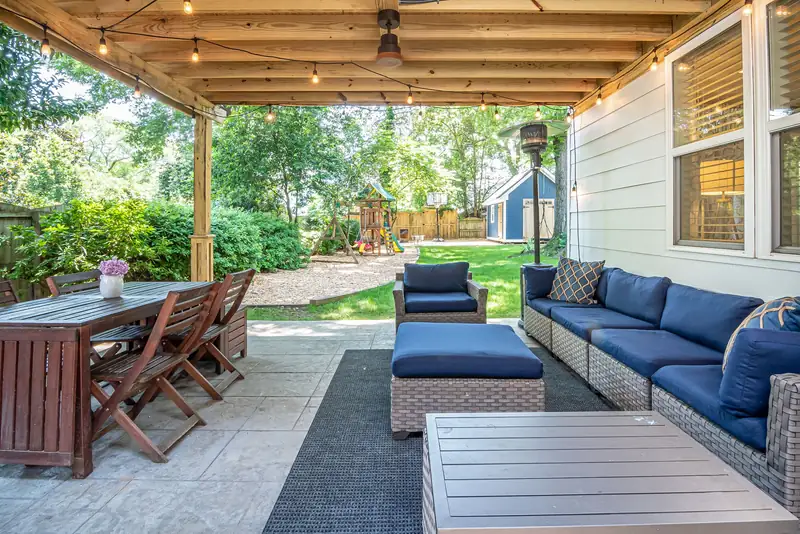
Paver Patios for Hunter's Creek Backyards
Paver patios around Hunter's Creek are running $10–$17 per sq ft installed, Florida pricing for October 2026. Orange County reviews paver work as a zoning permit rather than a full building permit, a lighter process than poured concrete, but the lot's overall open-space ratio and the community association's own sign-off still apply.
By the Opera Concrete & Pavers estimating team · Updated October 1, 2026
Get a free estimate
Tell us about the project and we'll call to set up a free site visit.
A $38 zoning permit, not a building-permit file
Orange County's paver guidance sets the process apart from poured concrete: a dimensioned site plan showing the paver location against property lines and easements, a $38 permit fee, a $38 Development Engineering review fee, and roughly 4 business days for review (Orange County, Residential Pavers). Where the patio falls inside a recorded easement, an Easement Acknowledgement form goes in the same packet, and the Zoning Division, 407-836-3111, is the office that reviews it before a patio crew starts work.
Where a screen enclosure track meets the paver field
A pool cage or screen room usually has an aluminum track anchored to its own footer, and the paver field has to meet that track cleanly without trapping water against it. We set a control joint there in practice, a slightly wider sand joint backed by a rigid edge restraint, right where the pavers meet the enclosure's base plate, so the two systems move independently without cracking the enclosure's footer or heaving the nearest paver course. On a Hunter's Creek lanai addition, matching that transition elevation precisely keeps the screen door swinging freely instead of dragging on a paver that settled a quarter inch high.
A backyard patio addition, worked out in square feet
A Hunter's Creek homeowner adding a 15 by 20 foot paver patio off the back of the house is working with 300 square feet. At the $10–$17 per sq ft installed range, that prices out to roughly $3,000 to $5,100, before any fire-pit or seating-wall add-on. Because the lot's existing driveway and pool deck already count against the 40 percent open-space figure, running the math on a current survey before the patio is designed is what keeps the whole package inside what the county allows.
The 40 percent open-space floor and a separate community review both still apply
The same county guidance cites Code §24-29(a)'s 40 percent residential open-space requirement, a figure a new patio has to respect alongside the house, driveway and any pool deck already on the lot (Orange County, Residential Pavers). On top of that, the Hunter's Creek Community Association's own architectural review applies to exterior changes generally, so confirming what that process requires for a patio specifically, separate from the driveway color rule, is worth a call before pavers are ordered.
Tree roots lifting a patio years after installation
A large tree planted or left standing near a patio will eventually send roots under the paver field looking for water, and a root thick enough to matter can lift an entire section a visible amount over a season or two. Some cities in this part of Florida protect legacy live oaks by ordinance, so cutting a structural root on a Hunter's Creek property near a protected tree can require a permit or an arborist's sign-off before any repair starts. Pavers make this problem easier to live with than a poured slab would, since lifting the affected units, addressing the root and resetting them doesn't mean breaking anything.
Flatwoods soil and why the base sometimes gets thicker
A lot of the territory we work in sits on flatwoods soils such as Myakka, Florida's official state soil, where a seasonal high water table can sit within 18 inches of the surface for part of the year. ICPI's guidance is direct about what that means for a paver base: continually wet or weak soil needs a base 2 to 4 inches thicker than the standard patio or walkway depth. On a Hunter's Creek lot with poor natural drainage, that extra aggregate, plus a perforated drain pipe where the soil stays saturated, does more for the long-term flatness of the patio than any amount of extra paver thickness would.
Day one on a paver patio job: layout and excavation
We start by staking the patio's actual footprint against the house, string lines pulled tight so the excavation depth accounts for base, bedding sand and paver thickness all at once rather than guessing and correcting later. Excavation on a Hunter's Creek lot usually goes a few inches past the planned finished grade to leave room for that full section, and we haul spoil off site the same day rather than stockpiling it on the lawn, since piled fill kills grass fast in Florida heat. By the end of day one the subgrade is cut, sloped and ready for whatever compaction the soil underneath needs.
Caring for travertine differently than concrete pavers
Travertine's porous surface takes in water, oils and tannin stains from leaves and pine straw faster than a denser concrete paver does, so a Hunter's Creek patio in travertine benefits from a sealer that's actually maintained on schedule rather than treated as optional. It also stays noticeably cooler underfoot in direct sun, part of why homeowners choose it around a pool, though we won't attach an unverified number to that difference. Day to day, the cleaning routine is the same as concrete, a mild cleaner and a regular rinse, just with less tolerance for letting stains sit before treating them.
Frequently asked questions
Is a paver patio a lighter permit than a concrete one in Hunter's Creek?
Yes. Orange County reviews paver work as a zoning permit, with a $38 permit fee and a $38 engineering review fee, rather than the full building-permit process poured concrete requires.
Does a Hunter's Creek patio count against the lot's open-space requirement?
Yes. The county's 40 percent residential private open-space standard counts the patio alongside the house, driveway and any pool deck already on the lot.
Does the Hunter's Creek Community Association review patios the same way it reviews driveways?
The published color rule is written for driveways specifically; a patio still goes through the association's general architectural review, so confirming the exact requirement for a patio with the Architectural Review Committee is worth doing first.
Sources
- Hunter's Creek Community Association, Architectural Guidelines (rev. Aug. 2024)
- Wikipedia, Hunter's Creek, Florida
- Wikipedia, Shingle Creek (Florida)
- Orange County — Do I Need a Permit
- Orange County — Residential Pavers
- Orange County — Residential Lot Grading Policy 2023
- Orange County — A Guide for Residential Plan Approval
- Orange County — ROW Utilization Permit directory
- NRCS OSD Myakka
- NRCS OSD Basinger
- SJRWMD Watering Restrictions
- Florida Administrative Code — Rule 62-308.100, Synthetic Turf (effective May 19, 2026)
- Florida Statutes §125.572 — synthetic turf on single-family lots
Ready for a price on your project?
Request a free estimate
Tell us about the project and we'll call to set up a free site visit.