
Concrete Patios · Palmetto, FL
Concrete Patio Installation in Palmetto
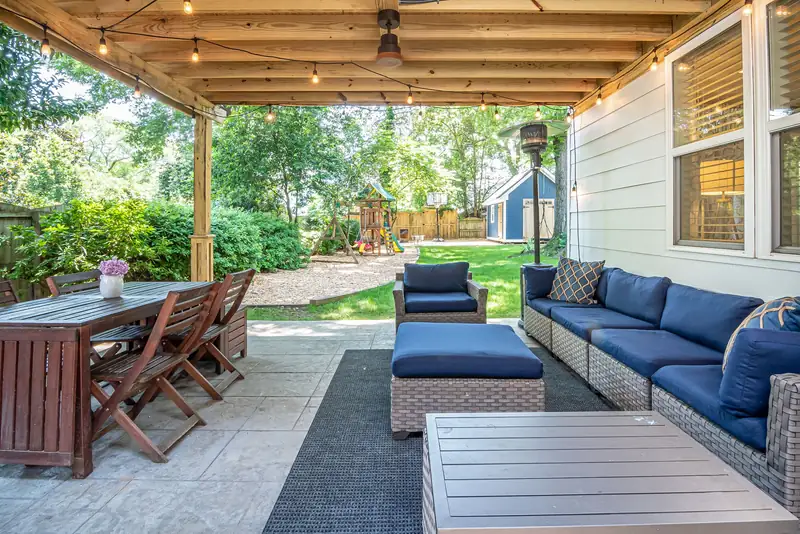
As of October 2026, a concrete patio in Palmetto costs $6–$13 per sq ft installed. The city's code covers driveways and walls in detail but says nothing specific about a patio, which makes a phone call to the Building Department the fastest way to confirm what a given project needs.
By the Opera Concrete & Pavers estimating team · Updated October 1, 2026
Get a free estimate
Tell us about the project and we'll call to set up a free site visit.
What the Building Department actually says about a patio
Palmetto's Building Department page lists building, electrical, plumbing and mechanical work, fences and "other minor construction projects such as storage sheds" as needing a permit, without naming a patio slab one way or the other Palmetto Building Department. The page's own advice is to call (941) 721-2166 when it isn't clear, which is the opposite of a published patio exemption and worth more trust than guessing, since a wrong assumption on a permit question can mean tearing out finished work.
A Downspout Can Undermine a Base Before It's Even Poured
A downspout that empties straight onto the footprint of a planned Palmetto patio is a base problem before it is ever a finish problem. Florida's rainy season pushes real volume through a gutter system, Orlando averages about 51.45 inches of rain a year and Sarasota-Bradenton about 49.05, and a corner of subgrade that gets soaked every time it rains compacts differently than the rest of the pad around it. Extending the downspout, adding a splash block or routing water to a swale before the base goes down costs little compared with finding out later that one corner of the patio settled because it never had a fair chance to compact evenly with the rest.
Fitting a patio into the flatwoods drainage picture
Felda soil, mapped on plenty of Palmetto lots, keeps groundwater within roughly a foot of grade for two to six months out of a typical year, a timeline that drives how a patio's slope and perimeter drain get laid out rather than how deep the base itself runs NRCS Felda soil series. Palmetto's stormwater utility fee under Sec. 29-207 is based on a parcel's impervious area Palmetto Code Sec. 29-207, so a sizeable patio addition is worth checking against that fee schedule even though it won't run into a hard coverage cap the way it might in a neighboring city.
The Vapor Retarder Question an Open-Air Patio Raises
Code requires a 6-mil polyethylene vapor retarder under most slabs on the ground, with exceptions carved out for garages and unheated accessory structures, a rule written mainly with conditioned interior floors in mind. An open-air Palmetto patio is not conditioned living space, but it is not quite a garage or accessory structure either, so whether it falls on one side of that exception or the other is worth confirming with the local building official rather than assuming either answer. Getting it wrong in either direction, skipping a retarder code actually requires, or adding one where it serves no purpose, is an easy mistake to avoid by just asking before the pour.
Say a 15 x 18 ft back patio addition off an older Palmetto home's lanai comes to 270 sq ft
Say a 15 x 18 ft back patio addition off an older Palmetto home's lanai comes to 270 sq ft. At $6–$13 per sq ft, figure $1,620 to $3,510 across the full range, tightening to roughly $1,890 to $2,700 inside the typical $7–$10 band for a broom finish. Before pricing it, a call to the Building Department confirms whether this particular scope needs a permit, since the published code doesn't spell out an answer for a patio the way it does for driveway work in the right-of-way, and the added square footage gets factored into the stormwater fee calculation either way.
Why Footer Inspections Happen Before the Slab Pour
Where a Palmetto patio includes footings for a lanai or screen enclosure, those footers get excavated, formed and typically inspected before the surrounding patio base and slab go in, not folded into the same pour as an afterthought. That sequencing matters because a footer inspector needs to see the hole, the forms and any reinforcement before concrete covers them, the same logic that applies to a driveway's base inspection, just for a different structural element. Scheduling the footer work as its own step, ahead of grading the rest of the patio, keeps the whole job from stalling while an inspection gets arranged around concrete that has already been poured over.
A Fenced Backyard Changes How a Hot Pour Dries
A fenced backyard or a patio boxed in by a pool cage and tall landscaping can trap heat and cut the wind that would normally help a hot pour evaporate at a predictable rate, which changes the plastic-shrinkage math a Palmetto crew plans around compared with an open, wind-exposed driveway. Less wind can lower the evaporation rate, which sounds like an advantage, but a boxed-in yard also traps radiant heat from fences and walls, so the net effect on a given lot is not automatic either way. Reading the actual microclimate of a specific backyard, rather than applying the same hot-weather plan used on every job, is what keeps a shaded or enclosed pour from surprising the crew.
Reading the Rain Totals Before Rainy Season Arrives
Orlando averages about 51.45 inches of rain a year and Sarasota-Bradenton about 49.05, most of it falling in a rainy season that typically runs from late spring into October, so walking a Palmetto patio before that season starts and clearing joints, downspout paths and any low spots is worth doing on a calendar, not just when a problem shows up. A joint packed with sand and leaves, or a downspout that has drifted since the last check, both work against the patio over an entire wet season rather than a single storm. A few minutes of looking in May saves far more time than dealing with a settled corner discovered in August.
Frequently asked questions
Does a concrete patio need a permit in Palmetto?
The published code doesn't say directly. The Building Department's own page recommends calling (941) 721-2166 to confirm, since patios aren't named among the listed permit categories the way building and fence work is.
Will a new patio affect my Palmetto utility bill?
Possibly. The city's stormwater fee under Sec. 29-207 is calculated from a parcel's impervious area, so adding a patio can shift that recurring charge even without triggering a separate coverage cap on the building permit.
Why does a Palmetto patio need extra drainage planning on some lots?
On Felda soil, common across parts of the city, the seasonal high water table sits within about a foot of the surface for part of the year, which changes how the slope and perimeter drainage around a patio get designed.
Sources
- Palmetto Code §25-2 Permit required for use of street or ROW
- Palmetto Right of Way Use Application/Permit (rev. 2019)
- Palmetto Building Department
- Palmetto Code §10-46 Seawall/retaining wall permit required
- Palmetto Code §29-207 Stormwater fee
- Manatee County - Modified Phase III water shortage restrictions
- SWFWMD District Water Restrictions
- FEMA - Features of Flood Insurance Rate Maps in Coastal Areas
- FDOT Structures Design Guidelines Vol. 1, §1.3.2 environmental classification
- NRCS OSD Immokalee
- NRCS OSD EauGallie
- NRCS OSD Felda
- Florida Administrative Code — Rule 62-308.100, Synthetic Turf (effective May 19, 2026)
- Florida Statutes §125.572 — synthetic turf on single-family lots
- F.S. 720.3045 (2026) Installation, display, and storage of items
- NWS Tampa Bay Thunderstorm Climatology Quick Reference
- Census Reporter, Palmetto FL (ACS 2020-2024 5-yr, B01003/B25035)
- Wikipedia, Palmetto, Florida
- Wikipedia, Snead Island
Ready for a price on your project?
Request a free estimate
Tell us about the project and we'll call to set up a free site visit.