
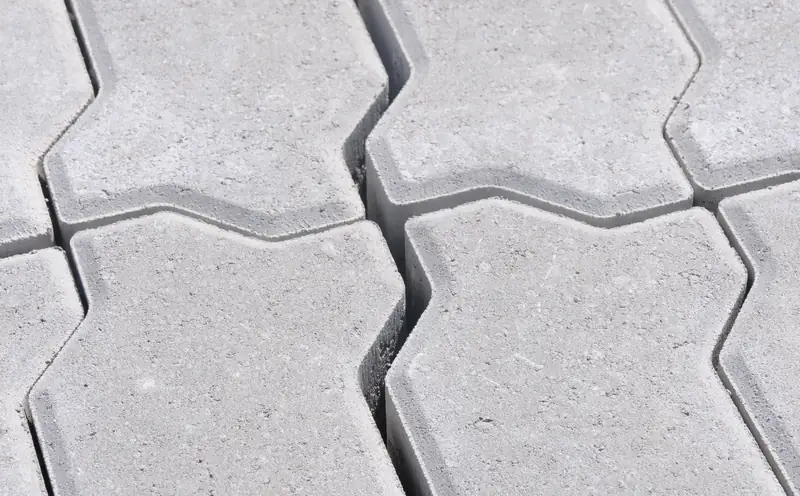
Paver Driveways · Siesta Key, FL
Paver Driveway Installation on Siesta Key
A paver driveway on Siesta Key runs $10–$30 per sq ft installed as of October 2026. Which coverage rule applies depends on when the lot was platted: a newer lot's cap touches only the house, while an older lot's cap counts the driveway's pavers directly.
By the Opera Concrete & Pavers estimating team · Updated October 1, 2026
Get a free estimate
Tell us about the project and we'll call to set up a free site visit.
The 35 percent rule doesn't touch a driveway at all
In the county's RSF districts, the standard development rule caps building coverage, the house itself, at 35 percent of the lot Sarasota County Code §124-76. A paver driveway on a lot governed by that rule simply isn't part of the math, which means widening a two-car paver driveway to three cars on a standard RSF lot doesn't push the parcel toward that particular ceiling.
Why a pre-1975 lot is a different conversation entirely
A nonconforming RMF lot of record from on or before November 11, 1975, common around Siesta Key's older platting, instead carries a 50 percent impervious cap that explicitly counts "concrete, asphalt, pavers" alongside the roof and any pool deck, while excluding grass, shell or other surfaces water can pass through Sarasota County Code §124-283. On one of these older lots, a paver driveway's square footage gets added to the running total before the job is priced, since that total, not just the house, is what the 50 percent line is measuring.
How the rainy season changes a base crew's schedule
Orlando's airport gauge averages 51.45 inches of rain a year and Sarasota-Bradenton's averages 49.05, with most of it landing in a rainy season that typically runs from late May into mid-October. Compacting an aggregate base on soil that's already saturated doesn't get a crew to 98 percent of Proctor density; it gets a base that looks compacted and isn't. That's why timing matters as much as technique on a Siesta Key job scheduled during the wet months: a day lost waiting for the subgrade to drain is cheaper than a base torn out and redone after the pavers are already down. Dry-season jobs skip that wait entirely.
Why an overlay job runs differently than a new build
Installing pavers over sound existing concrete skips the excavation and base-compaction steps that take up most of a new driveway's schedule, but it adds steps a fresh build doesn't need: checking the old slab for cracking or settlement that would transfer through the new surface, confirming the slab actually drains, and planning for the finished grade the added layers create at a garage threshold or a Siesta Key sidewalk tie-in. The bedding sand, paver-laying and joint-sand steps stay identical either way. What changes is the front end of the job, where an overlay trades digging for inspecting, and a bad slab underneath can turn what looked like the faster option into the slower one.
Picture an 18 × 32 ft paver driveway, 576 sq ft, on a lot platted before 1975 and already carrying a pool deck
Picture an 18 × 32 ft paver driveway, 576 sq ft, on a lot platted before 1975 and already carrying a pool deck. Pricing it at $10–$30 per sq ft comes out between $5,760 and $17,280, tightening toward $6,912 to $11,520 inside the typical $12–$20 band depending on the paver chosen. Because this lot falls under the nonconforming 50 percent impervious cap rather than the newer 35 percent building-only rule, the driveway's full footprint gets added to whatever the house, pool and pool deck already total before the design is finalized.
Joint sand or polymeric sand: what the spec leaves open
ICPI's own spec treats joint sand plainly: dry sand swept into the eighth-inch joints and compacted in place, with sealers or joint sand stabilizers listed as optional rather than required. Polymeric sand is the common stabilizer choice, meant to bind in the joint and resist the ordinary washout that plain sand can see over time, but the spec doesn't mandate it for a standard residential driveway. That leaves it as a real decision for a Siesta Key homeowner rather than a box every crew checks the same way: plain sand costs less and can be swept back in after a pressure wash, while a stabilized joint holds up longer between resweeps but costs more up front. Either way the joint itself keeps the same eighth-inch tolerance.
What an HOA can and can't require before you start
An HOA's authority to approve a driveway's look exists only to the extent its declaration or published guidelines actually say so, and Florida law requires that authority to be used reasonably, with a written denial that cites the specific rule being enforced. As of the 2026 statutes, an HOA also can't require a government-issued building permit as a prerequisite just to review a project, which separates the association's own approval step from the city or county's separate permitting process. A Siesta Key homeowner inside an HOA is dealing with two different approvals that don't have to happen in a fixed order, and confusing the two is a common way a paver driveway project stalls before it starts.
Sealing a paver driveway: no fixed clock, but a real one
ICPI's own spec doesn't give a number of years between sealer applications, noting only that it depends on use, climate and the sealer's own quality, with acrylic sealers typically holding up for what the spec calls a few years before recoating is worth it. Climate does real work in that sentence for a Siesta Key driveway: both service areas sit close to the 50-inch mark for annual rainfall, concentrated heavily in a rainy season, and that much water and sun exposure wears a sealer faster than a drier region would. Watching the surface for fading sheen or water that stops beading is a better guide than a calendar, since the spec itself won't give a firm date.
Frequently asked questions
Does a paver driveway count toward my Siesta Key lot's coverage limit?
It depends on the lot. Under the county's standard 35 percent rule, only the house counts; on a nonconforming lot recorded before November 11, 1975, pavers count directly toward a separate 50 percent impervious cap.
How do I know if my Siesta Key lot is nonconforming?
A lot recorded on or before November 11, 1975 typically qualifies, which is common on the older platted sections of the island. We check the plat date before pricing a wider driveway.
Can I widen a paver driveway on an older Siesta Key lot?
Only after checking the running impervious total against the 50 percent cap, since the house, pool, pool deck and driveway all count together on a nonconforming lot.
Sources
- Sarasota County Code §124-48 Right-of-Way Use Permit
- Sarasota County Code §98-3 Driveway culvert / ROW use permit fees
- Sarasota County Code §124-255 Additional Provisions (culverts)
- Sarasota County Code §124-76 District Development Standards
- Sarasota County Code §124-283 Nonconforming Lots of Record
- Sarasota County Code §54-723 Gulf Beach Setback Line
- Sarasota County Code §22-63 (retaining walls > 4 ft engineered)
- Sarasota County Building (search excerpt; 403 to direct fetch)
- Sarasota County Online Permitting
- FDEP Coastal Construction Control Line Program
- FDEP — Apply for a CCCL permit
- FDOT Structures Design Guidelines Vol. 1, §1.3.2 environmental classification
- Florida Administrative Code — Rule 62-308.100, Synthetic Turf (effective May 19, 2026)
- Florida Statutes §125.572 — synthetic turf on single-family lots
- SWFWMD District Water Restrictions
- USDA NRCS — Web Soil Survey
- USDA NRCS Official Series Description — Canaveral
- Census Reporter, Siesta Key CDP FL (ACS 2020-2024 5-yr, B01003/B25035/B25024)
- Siesta Key Association — History
- Your Observer — Sarasota city commissioners vote to extend a hand to Siesta Key (Jan. 18, 2022)
- Wikipedia — Siesta Beach (Harvard University sand-composition study, TripAdvisor ranking)
- WWSB/Mysuncoast.com — Hurricane Milton landfall near Siesta Key, one year later (Oct. 9, 2025)
Ready for a price on your project?
Request a free estimate
Tell us about the project and we'll call to set up a free site visit.