
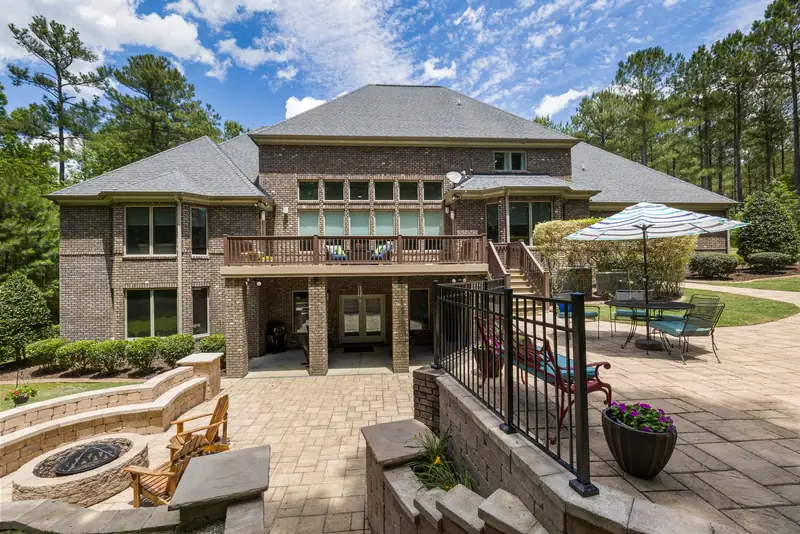
Paver Patios & Walkways · Siesta Key, FL
Paver Patios and Walkways on Siesta Key
A paver patio on Siesta Key runs $10–$17 per sq ft installed as of October 2026. A soil map check at the island comes back a 'Canaveral-Urban land' reading, meaning the dune sand under a given lot has often been disturbed or filled, not left as it was originally deposited.
By the Opera Concrete & Pavers estimating team · Updated October 1, 2026
Get a free estimate
Tell us about the project and we'll call to set up a free site visit.
What 'Urban land' means next to the soil series name
The reading at a Siesta Key coordinate comes back "Canaveral fine sand-Urban land complex, 0 to 5 percent slopes," pairing the island's natural dune soil with ground the survey itself flags as altered USDA NRCS — Web Soil Survey NRCS Official Series Description, Canaveral. The native Canaveral profile drains quickly, but decades of platting, fill and construction mean the compacted layer under a given Siesta Key lot is less predictable than that profile alone would suggest, which is why we probe the actual base before setting a paver patio's bedding depth rather than assuming the textbook soil answer.
Base under a walkway versus a full patio
A garden walkway or a run of stepping pavers from the driveway to the front door doesn't need the same base program as a 400-square-foot patio, but it still needs one. ICPI's 4-inch minimum compacted base for pedestrian areas applies to a 3-foot-wide path the same way it applies to an open patio, because a narrow walkway with no base shifts and dishes faster than a wide one, since there's less paver mass holding each course in line. On a Siesta Key property where a walkway crosses a soft, shaded side yard, we'll often add a touch more base depth there than the sunny, well-drained stretch of the same path.
Working around what's already buried
On an older lot near the Village, a new paver patio excavation sometimes turns up remnants of a prior slab, old shell fill or utility lines from a build predating current record-keeping. None of that changes the bedding-sand spec itself, but it does change how much of the layout gets confirmed by probing before the crew commits to a final elevation, especially on a patio that ties into an existing concrete surface rather than starting on open ground.
Choosing a pattern for a patio instead of a driveway
A paver pattern on a patio does a different job than the same pattern on a driveway. Herringbone resists the shifting caused by turning tires, a force a dining table and a few chairs never apply, so a Siesta Key patio has more room to run a running bond, basketweave or soldier-course border purely for the look homeowners want rather than for load distribution. We still keep cut pavers out of high-wear zones like the path from the back door to the grill, since small cut pieces are the first to work loose regardless of the overall pattern. The edge restraint, not the pattern, carries most of the structural work on a pedestrian surface.
Picture a 20 × 16 ft paver patio, 320 sq ft, replacing an older slab near Siesta Key Village
Picture a 20 × 16 ft paver patio, 320 sq ft, replacing an older slab near Siesta Key Village. At $10–$17 per sq ft, the job comes to $3,200 to $5,440; picking a paver and pattern within the typical $12–$16 range tightens that to about $3,840 to $5,120. Because the soil reading here flags disturbed ground alongside the natural dune sand, a test probe ahead of excavation is what decides the final base depth, not the series name alone, and any leftover shell fill or old slab fragments get cleared before the new bedding sand goes down.
The last day: inspection, cleanup and the final walk
If the jurisdiction reviewing the job requires a permit or inspection for the patio, that typically happens after base compaction and before pavers are set, so the base stays visible for the inspector. Once joints are swept and compacted, we do a final walk across the whole surface checking for any paver that rocks or sits proud, resetting it in its sand bed before calling the job finished rather than after. On a Siesta Key patio, cleanup also means clearing excess joint sand and any base material off adjacent grass or planting beds, since leftover aggregate smothers turf within a couple of weeks.
Downspouts and sprinkler overspray undermining the edge
A gutter downspout aimed at the patio edge, or an irrigation head throwing water against the same spot every cycle, concentrates far more water on one section of base than the rest of the patio ever sees. Over time that washes fines out from under the nearest pavers, and the edge restraint, which relies on solid compacted base to hold its spikes, loses its grip. On a Siesta Key patio bordered by a sprinkler zone, redirecting the head or adding a splash block costs little compared with resetting a section of pavers that settled because the ground under it was quietly eroding for two seasons.
When to reseal a paver patio
ICPI's own technical guidance gives no fixed resealing interval for paver sealers, saying only that they need reapplication after a period of wear and weather and that acrylic sealers generally last a few years before a recoat is due. Rather than sealing on a calendar, the better signal on a Siesta Key patio is watching the surface: water that used to bead now soaks in, or the color has gone flat and faded, both mean the old coat has worn through. A paver patio that's never been sealed can go years without a problem, since sealing is about appearance and stain resistance more than structural need.
Frequently asked questions
Is Siesta Key's soil different from Longboat Key's?
They share the same Canaveral dune sand series, but the Siesta Key reading comes back paired with 'Urban land,' flagging ground that's been disturbed or filled by decades of construction, which Longboat Key's own reading at the coordinates we checked didn't show.
Will excavation for a paver patio hit old fill or debris here?
It can, especially near the older platted sections of the island. We probe the base before setting a final bedding depth rather than relying on the soil series name alone.
Does disturbed soil mean a deeper paver base is required?
Not automatically, but it does mean the compacted layer under a given lot is harder to predict than an undisturbed dune, so we check it directly rather than assume the textbook depth applies.
Sources
- Sarasota County Code §124-48 Right-of-Way Use Permit
- Sarasota County Code §98-3 Driveway culvert / ROW use permit fees
- Sarasota County Code §124-255 Additional Provisions (culverts)
- Sarasota County Code §124-76 District Development Standards
- Sarasota County Code §124-283 Nonconforming Lots of Record
- Sarasota County Code §54-723 Gulf Beach Setback Line
- Sarasota County Code §22-63 (retaining walls > 4 ft engineered)
- Sarasota County Building (search excerpt; 403 to direct fetch)
- Sarasota County Online Permitting
- FDEP Coastal Construction Control Line Program
- FDEP — Apply for a CCCL permit
- FDOT Structures Design Guidelines Vol. 1, §1.3.2 environmental classification
- Florida Administrative Code — Rule 62-308.100, Synthetic Turf (effective May 19, 2026)
- Florida Statutes §125.572 — synthetic turf on single-family lots
- SWFWMD District Water Restrictions
- USDA NRCS — Web Soil Survey
- USDA NRCS Official Series Description — Canaveral
- Census Reporter, Siesta Key CDP FL (ACS 2020-2024 5-yr, B01003/B25035/B25024)
- Siesta Key Association — History
- Your Observer — Sarasota city commissioners vote to extend a hand to Siesta Key (Jan. 18, 2022)
- Wikipedia — Siesta Beach (Harvard University sand-composition study, TripAdvisor ranking)
- WWSB/Mysuncoast.com — Hurricane Milton landfall near Siesta Key, one year later (Oct. 9, 2025)
Ready for a price on your project?
Request a free estimate
Tell us about the project and we'll call to set up a free site visit.