
Paver Patios & Walkways · Belle Isle, FL
Paver Patios and Walkways for a Belle Isle Home
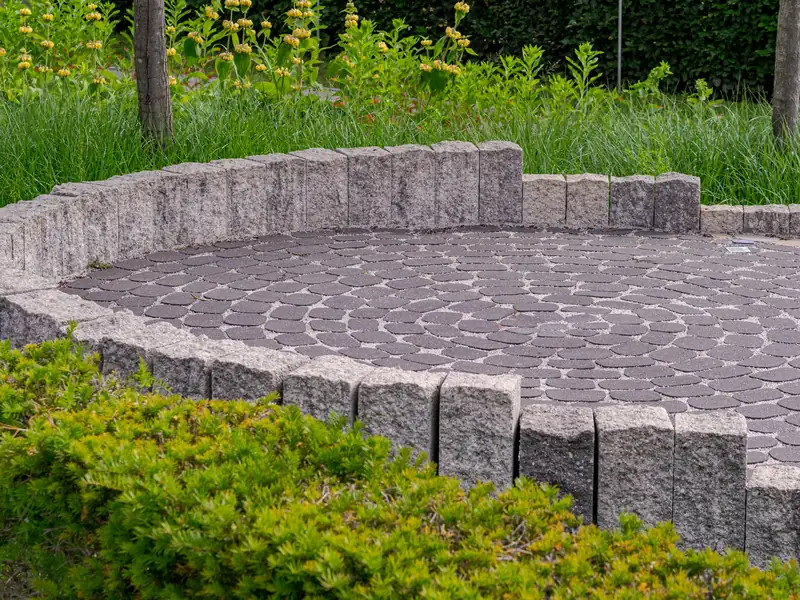
A paver patio or walkway in Belle Isle runs $10–$17 per sq ft installed as of October 2026. Unlike pavers laid on the driveway apron, a patio or walkway beyond that footprint goes through a separate building permit with the city's contracted engineering firm rather than the driveway application.
By the Opera Concrete & Pavers estimating team · Updated October 1, 2026
Get a free estimate
Tell us about the project and we'll call to set up a free site visit.
Beyond the apron, the paperwork changes
Belle Isle's driveway form is specific about where its own coverage ends: pavers on the apron are reviewed with the driveway application, but anything beyond that scope, a patio, a side-yard walkway, has to be filed as its own building permit through UES, the firm the city contracts to administer permitting (City of Belle Isle, Driveway Review Application). That's a different office path than the driveway review, even though both ultimately answer to the same 35 percent base impervious calculation.
Why ridge sand doesn't get a free pass on base work
On the sandy ridge soils found west of Orlando, in series like Candler, Astatula and Tavares, water drains so fast that the ground rarely holds a puddle, and some installers assume that means the base can be thinner. It can't. Florida's residential code still limits how deep fill can go without engineering review: no more than 24 inches of clean sand or gravel, or 8 inches of earth fill. Excessively drained sand also shifts underfoot more than people expect once pavers carry chairs and daily foot traffic, so a Belle Isle patio on ridge sand still gets full-depth, properly compacted aggregate rather than a thin leveling layer over native sand.
The same 35 percent math still applies once the patio is added in
A paver patio still counts toward the base impervious allowance set by multiplying total lot area by 0.35 under code sections 50-74 through 50-77 (City of Belle Isle, Driveway Review Application). On a lot that already fronts the chain, pushing a patio closer to the bank narrows the margin against both that 35 percent figure and the state's own setback for anything installed near open water, which is why we walk the shoreline distance on site rather than scaling it off a plat.
Building a walkway or a run of stepping pavers
A connecting walkway, say from a Belle Isle driveway to the front porch, usually runs 3 to 4 feet wide, narrow enough that a full paver base and bedding sand bed still apply but the material list shrinks fast. Large-format stepping pavers set individually in a lawn, spaced by a comfortable stride, are a lighter-duty option for an informal path across a side yard, each unit bedded in its own patch of sand and gravel rather than a continuous paver field. The two approaches use the same base principles at different scales, and mixing them, a formal paver walkway near the house that transitions to stepping pavers farther out, is a common way to control cost over a longer path.
A lakeside patio addition near Lake Conway, worked out in square feet
Picture a Belle Isle home on the Conway Chain adding a 16 by 14 foot paver patio, 224 square feet, between the house and the shoreline. At $10–$17 per sq ft installed, that patio runs roughly $2,240 to $3,584, filed as its own building permit through UES rather than riding along on a driveway application, and checked against the lot's 35 percent base coverage figure before the final footprint is set.
Tying new paver work into an existing slab mid-project
When a patio extends off an existing concrete pad, the saw-cutting and elevation matching happen early, usually on day one, so every later stage, base compaction, sand screeding, paver laying, is built around a confirmed, flush transition rather than guessed at and corrected at the end. We dry-lay a row of pavers against the cut edge before compacting the final base lift, checking the finished height against the old slab with a straightedge. On a Belle Isle addition this extra verification step adds maybe an hour to the job and prevents the far more time-consuming fix of pulling up a finished section later.
Treating landscape edging as a real edge restraint
Plastic or metal edging sold for flower beds is not rated to hold back a paver field, but it gets substituted in on budget jobs often enough that ICPI's own technical guidance specifically calls it out as unacceptable. Without a proper restraint spiked into the compacted base, the outer courses of a Belle Isle patio creep outward a little at a time, usually from weight shifting as people walk the perimeter or furniture gets dragged across it, and the joints near the edge start opening within a year or two. Replacing bed edging with a real restraint after the fact means pulling and resetting the whole border course.
Re-sanding paver joints before they open up
Joint sand works its way out over time through rain, foot traffic and the odd ant colony excavating a channel, and once it drops much below the top of the paver, the units can rock and the joint edges start to chip. Topping off joint sand and compacting it back in is routine upkeep, not a repair, and catching it before the joints are visibly open is what keeps it that way. On a well-used Belle Isle patio we'd expect this every couple of years, sooner in high-traffic zones near a door or a grill than in a quiet corner.
Frequently asked questions
Does a Belle Isle patio use the same permit as the driveway?
No. Pavers on the driveway apron itself are covered by the driveway application, but a patio or walkway beyond that footprint needs its own building permit filed through UES, the city's contracted engineering firm.
Does a patio count toward Belle Isle's 35 percent base coverage figure?
Yes. The same lot-area-times-0.35 calculation that sets the driveway's allowance also includes the patio, walkway and any accessory structures on the property.
Are there extra rules for a patio near the Lake Conway shoreline?
The 35 percent base-coverage figure doesn't change for a waterfront lot, but a design that stretches a patio right up to the bank is worth running past the state's setback rules for water-adjacent turf and plantings before the final drawing is cut.
Sources
- City of Belle Isle, Driveway Review Application
- City of Belle Isle, Zoning Permits
- Wikipedia, Belle Isle, Florida
- Census Reporter, Belle Isle, FL
- Census Reporter API, Belle Isle median year structure built (B25035)
- SJRWMD Watering Restrictions
- Florida Administrative Code — Rule 62-308.100, Synthetic Turf (effective May 19, 2026)
- Florida Statutes §125.572 — synthetic turf on single-family lots
- F.S. 720.3045 (2026) Installation, display, and storage of items
- USGS WRI 03-4257, Hydrogeology and Quality of Ground Water in Orange County, Florida
Ready for a price on your project?
Request a free estimate
Tell us about the project and we'll call to set up a free site visit.