
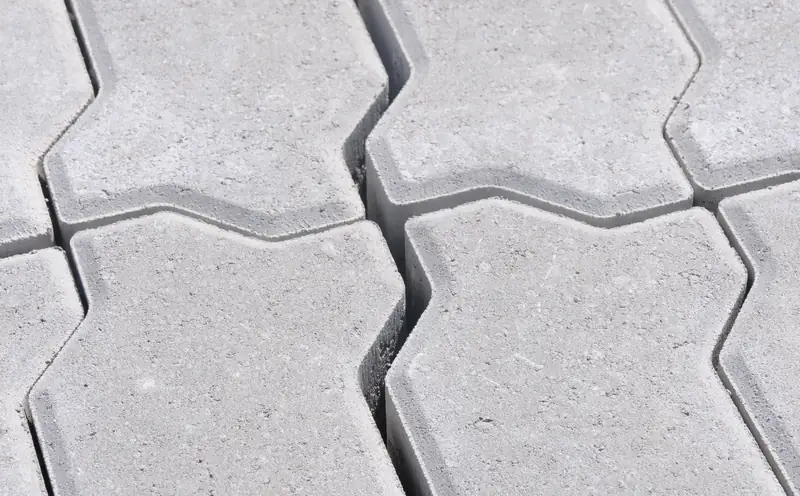
Paver Driveways · Clermont, FL
Paver Driveways in and Around Clermont
Paver driveway work near Clermont currently prices out at $10–$30 per sq ft installed, per October 2026 Florida contractor pricing. Outside the city limits, in unincorporated Lake County, a residential driveway has its own published dimensions, a 10-foot minimum width and a required flare or radius at the road, and the excessively drained ridge sand under much of the area behaves differently from the flatwoods soil common elsewhere in the Orlando unit.
By the Opera Concrete & Pavers estimating team · Updated October 1, 2026
Get a free estimate
Tell us about the project and we'll call to set up a free site visit.
Lake County's transportation standards set the driveway's width and flares
For a lot outside Clermont's city limits, Lake County's own development standards set a single-family driveway at a 10-foot minimum width, with either an 8-foot radius or 8-by-4-foot flares where it meets the road, kept at least 10 feet clear of the property corner and paved back at least 10 feet from the edge of pavement (Lake County, LDR Appendix A Transportation Standards). On a curbed road, a valley gutter is required through the driveway itself. A culvert, where one is needed, either matches the neighborhood's existing culverts or runs at least 15 inches in diameter and 30 feet long (Lake County, Residential Driveway Apron Permit). Public Works, 352-253-6019, reviews that apron permit.
Edge restraint: the part of a paver driveway nobody sees
Every paver driveway needs edge restraint along its full perimeter and anywhere the paving material changes, because without it the field has nothing stopping it from spreading sideways under traffic. The spec allows plastic or aluminum restraint on a flexible base, with steel reserved for rigid bases, and it's specific about where the anchoring spikes go: into the compacted aggregate base, never into the surrounding soil. It also rules out one shortcut: the metal edging sold for planting beds isn't an acceptable substitute, even though it looks similar on a hardware store shelf. Once the pavers and joint sand are down, the restraint disappears from view on a Clermont driveway, which is exactly why it's worth getting right the first time.
A driveway outside the city limits, worked out in square feet
A driveway on an unincorporated Lake County lot measuring 12 by 40 feet runs 480 square feet on its own, and two 8-by-4-foot flares where it meets the road add another 64, for 544 square feet total. Multiplied against the $10–$30 per sq ft installed range, that comes to somewhere between $5,440 and $16,320, not counting a culvert priced separately if the lot needs one. Because the ground here is Candler or Astatula sand rather than flatwoods clay-adjacent soil, the crew spends more of the prep time on compaction passes than on drainage planning, since the water table on ridge sand like this sits well below where the base itself ever reaches.
Ridge sand drains fast, which changes what the base is checking for
Candler soil, common on the sand hills around Clermont, is excessively drained with a water table deeper than 80 inches, and Astatula, nearby, drains just as fast with saturation more than 60 inches down (NRCS, Official Series Description, Candler; NRCS, Official Series Description, Astatula). That's close to the opposite of the flatwoods ground that sits wet for months elsewhere in the Orlando unit, so a compacted aggregate base under a paver driveway here is less often fighting a shallow water table and more often fighting loose, excessively permeable sand that needs real compaction effort to hold a stable grade under vehicle loads.
What an HOA can and can't require before you start
An HOA's authority to approve a driveway's look exists only to the extent its declaration or published guidelines actually say so, and Florida law requires that authority to be used reasonably, with a written denial that cites the specific rule being enforced. As of the 2026 statutes, an HOA also can't require a government-issued building permit as a prerequisite just to review a project, which separates the association's own approval step from the city or county's separate permitting process. A Clermont homeowner inside an HOA is dealing with two different approvals that don't have to happen in a fixed order, and confusing the two is a common way a paver driveway project stalls before it starts.
Why 6 inches of base isn't automatic under a driveway near Clermont
ICPI's own spec sets a residential driveway base at a minimum of 6 inches of compacted aggregate over well-drained soil, while a patio or walkway only needs about 4 inches. That minimum isn't the end of the math: on wet or poorly drained ground, the same spec calls for 2 to 4 inches more before the base is considered done. Around Clermont, which number applies depends on what's actually under the topsoil, not on habit. A crew that quotes 6 inches for every lot skipped the step where someone checks the soil, and that's the step that keeps a driveway from settling at the edges a year later.
Joint sand compaction is the last step, not an afterthought
Once every paver is set and cut to fit, dry joint sand gets swept across the whole field and worked down into the eighth-inch joints, then the entire surface gets a final pass with the plate compactor to seat the sand and lock the units together. Skipping this step, or rushing it, leaves a driveway that looks complete but isn't actually interlocked yet; the pavers can still shift individually under a tire until the joints are filled and compacted. For a Clermont crew, that final compaction pass is also the point where a low or high paver still shows up and can be reset before the job is called finished, which is harder to do convincingly later.
Resetting a sunken paver, instead of patching it
Because a paver driveway is built from individual units rather than one poured surface, a localized low spot, from a soft patch in the base or sand that migrated after heavy rain, can usually be fixed by lifting the affected pavers, correcting the bedding sand underneath, and resetting the same units rather than pouring a visible patch the way a concrete repair would need. That's a meaningful difference for a Clermont homeowner weighing long-term upkeep: the fix addresses the base problem directly instead of covering it, and the repaired section matches the rest of the driveway once the joint sand is swept back in, rather than standing out as an obviously patched spot.
Frequently asked questions
How wide does a driveway have to be in unincorporated Lake County?
At least 10 feet, with either an 8-foot radius or 8-by-4-foot flares where the driveway meets the road, and the paved surface has to run at least 10 feet back from the edge of pavement. Those figures apply outside the Clermont city limits.
Does a paver driveway near Clermont need a culvert?
Only where Lake County's apron permit calls for one, typically to match the culverts already in place along that stretch of road, or at least 15 inches in diameter and 30 feet long if there's no existing pattern to match.
Does Clermont's ridge sand change how a paver base is built?
It changes what the base is built to resist. Candler and Astatula sand drain excessively, so the compaction effort focuses on building a stable, well-packed base in loose sand rather than managing a shallow water table the way a flatwoods lot would.
Sources
- City of Clermont — Building Services FAQ
- City of Clermont — Permit Checklists
- City of Clermont — Applications & Forms
- City of Clermont — Permit Type Descriptions
- City of Clermont — Municode Ch. 125 Div. 5 R-1
- City of Clermont, Economic Information
- Census Bureau PEP, City and Town Population Totals, Vintage 2025 (July 1, 2025)
- Census Reporter, Clermont FL (ACS 2020-2024 5-yr, B25035)
- Wikipedia, Sugarloaf Mountain (Florida)
- Lake County — Residential Work Exempt from Permits
- Lake County — Residential Driveway Apron Permit
- Lake County — LDR Appendix A Transportation Standards
- Lake County — Right-of-Way Permit
- Lake County — Building Services
- NRCS OSD Candler
- NRCS OSD Tavares
- NRCS OSD Astatula
- SJRWMD Watering Restrictions
- Florida Administrative Code — Rule 62-308.100, Synthetic Turf (effective May 19, 2026)
- Florida Statutes §125.572 — synthetic turf on single-family lots
- Florida Senate Interim Report 2011-104 (sinkhole insurance)
- Citizen Portal, Clermont City Council meeting summary — Sky Ridge Road paver variance
- Kings Ridge Community, Frequently Asked Questions
Ready for a price on your project?
Request a free estimate
Tell us about the project and we'll call to set up a free site visit.