
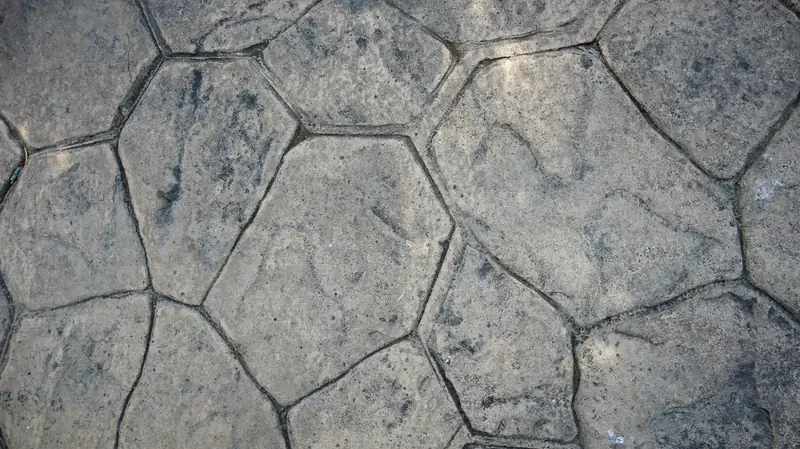
Concrete Patios · Oviedo, FL
Building a Concrete Patio in Oviedo
As of October 2026, a concrete patio in Oviedo falls between $6–$13 per sq ft installed. Oviedo's own carve-out list keeps a standard 4-inch patio slab on grade on its planning and zoning permit roster, and the flatwoods ground under much of Seminole County holds water close enough to the surface to shape how that slab gets pitched.
By the Opera Concrete & Pavers estimating team · Updated October 1, 2026
Get a free estimate
Tell us about the project and we'll call to set up a free site visit.
A backyard patio addition on flatwoods ground, worked out in square feet
Say a home adds a 16 by 18 ft patio off the back of the house, 288 sq ft, replacing a bare patch of St. Augustine between the lanai and the yard. Pricing that at $6–$13 per sq ft installed works out to roughly $1,728 to $3,744 before a broom or stamped finish changes the number. Because the slab counts as non-structural 4-inch flatwork, it still needs Oviedo's planning and zoning permit even under the 2026 exemption, and because the lot sits on the kind of flatwoods soil common across the county, the crew checks where the yard already sheds water before the forms go in, rather than after.
A non-structural 4-inch slab is still on Oviedo's permit list by name
Oviedo's carve-out list for HB 803's 2026 exemption spells out “Non-structural 4" concrete slabs on grade” as work that still needs a planning and zoning permit, sitting alongside pavers and driveways on the same list (City of Oviedo, Building Services). A typical patio pour is exactly that, a 4-inch slab on grade rather than a footed foundation, so the exemption homeowners may expect from the new law doesn't apply here. The paperwork behind that review covers a patio the same application the city uses for a slab, a notarized permit form plus proof of the contractor's license and insurance, checked against how far the work sits from the lot line (City of Oviedo, Slab/Paver Permit Guidelines).
Routing a Control Joint Around a Column Instead of Through It
Control joints on an open slab can run in a simple grid, but a lanai's support columns break that grid up, and a joint that would otherwise cross right through a post has to be routed around it instead. Panel-shape guidance still applies at every column: each section stays close to square, with the length no more than about one and a half times the width, rather than tapering into a long sliver next to a post. On a Oviedo patio with four or more columns, that means planning the joint layout around the columns before the pour, not sawing a standard grid afterward and hoping it lines up.
Flatwoods ground sets the slope before the forms go up
Seminole County's own water-quality program names Myakka fine sand, Florida's official state soil since 1989, as typical of the flatwoods ground found across the county (Seminole County Water Atlas, Learn More: Soils; Florida Dept. of State, State Soil). Ground like that can hold a water table close to the surface for part of a typical year, so a patio's pitch has to carry rainwater away from the house rather than let it pond against the slab, a detail worth checking on site rather than assuming a flat, dry backyard.
Why a Patio's Base Doesn't Need a Driveway's Depth
A patio never carries a car's rolling weight, which is why paver base guidance calls for at least 4 inches of compacted aggregate on well-drained soil under a patio or walkway, against 6 inches under a residential driveway. Florida's residential code still treats the ground under a Oviedo patio the same as any other slab on the ground: fill compacted for uniform support, topped with at least 4 inches of clean graded sand, gravel or crushed stone. On flatwoods soils like Myakka, Smyrna or EauGallie, which hold a water table within 18 inches of the surface part of the year, that lighter design load doesn't make the base work optional, only right-sized for what will actually sit on it.
A Downspout Corner Is Where a Base Softens First
A downspout left draining onto one corner of a Oviedo patio's footprint through construction, or relocated incorrectly after the pour, repeatedly saturates that one section of subgrade in a way the rest of the compacted base never experiences. Over a full rainy season, Orlando averages roughly 51.45 inches of rain and Sarasota-Bradenton about 49.05, that uneven wetting is exactly the kind of condition that leads to a soft spot settling unevenly while the rest of the slab stays flat. The crack or dip that shows up a year or two later usually traces straight back to that one downspout, which is why checking gutter discharge points is part of finishing the job, not an afterthought.
Permit-Free Patios Skip a Step Footer Patios Can't
Several jurisdictions across the service area treat an on-grade Oviedo patio without footers as work that does not need a building permit at all, while the same patio with a lanai's footings added crosses into slab-with-footer territory that does. That distinction changes the whole front end of the process: a footer-free patio can sometimes go straight from design to pour, while a footed one needs plans submitted, a footer inspection scheduled and a final sign-off before anyone calls the job finished. Finding out which category a given Oviedo patio falls into, before quoting a timeline, is what keeps the schedule realistic from the first conversation.
Reading the Rain Totals Before Rainy Season Arrives
Orlando averages about 51.45 inches of rain a year and Sarasota-Bradenton about 49.05, most of it falling in a rainy season that typically runs from late spring into October, so walking a Oviedo patio before that season starts and clearing joints, downspout paths and any low spots is worth doing on a calendar, not just when a problem shows up. A joint packed with sand and leaves, or a downspout that has drifted since the last check, both work against the patio over an entire wet season rather than a single storm. A few minutes of looking in May saves far more time than dealing with a settled corner discovered in August.
Frequently asked questions
Is a concrete patio exempt from a permit in Oviedo under the 2026 law?
No. The city's own list names “Non-structural 4" concrete slabs on grade” as work that still needs a planning and zoning permit, which covers a typical backyard patio pour.
Does Oviedo's soil affect how a patio drains?
It can. Flatwoods ground common across Seminole County, including Myakka fine sand, Florida's official state soil, can hold a water table close to the surface for part of the year, which shapes a patio's slope more than it changes the mix design.
What permit application covers a patio slab in Oviedo?
The city's slab-and-paver package, the same one used for a driveway or pool deck: proof of licensing and insurance on file with the city, a notarized form, and a pair of site plans pinning down where the slab sits relative to the lot line.
Sources
- Census Bureau PEP, City and Town Population Totals, Vintage 2025 (July 1, 2025)
- Census Reporter, Oviedo FL (ACS 2020-2024 5-yr, B25035)
- City of Oviedo — Building Services
- City of Oviedo — Right of Way Type I Application
- City of Oviedo — Slab/Paver Permit Guidelines
- City of Oviedo — Permit Guidelines
- Seminole County — Residential Driveway Construction Application
- Seminole County — New State Legislation Affecting Permits
- SJRWMD Watering Restrictions
- Florida Dept. of State - State Soil
- Florida Senate Interim Report 2011-104 (sinkhole insurance)
- Florida Administrative Code — Rule 62-308.100, Synthetic Turf (effective May 19, 2026)
- Florida Statutes §125.572 — synthetic turf on single-family lots
- City of Oviedo, Oviedo on the Park
- Seminole County Water Atlas, Learn More: Soils
- Wikipedia, Econlockhatchee River
- Wikipedia, Oviedo, Florida
Ready for a price on your project?
Request a free estimate
Tell us about the project and we'll call to set up a free site visit.