
Concrete Patios · Winter Park, FL
Building a Concrete Patio in Winter Park
A concrete patio in Winter Park runs $6–$13 per sq ft installed as of October 2026. Unlike a coverage rule written only around the front yard, Winter Park's ordinance names patios directly inside a single citywide 50 percent impervious cap, so a backyard addition still gets checked against the whole lot's math.
By the Opera Concrete & Pavers estimating team · Updated October 1, 2026
Get a free estimate
Tell us about the project and we'll call to set up a free site visit.
A backyard patio under a protected canopy, worked out in square feet
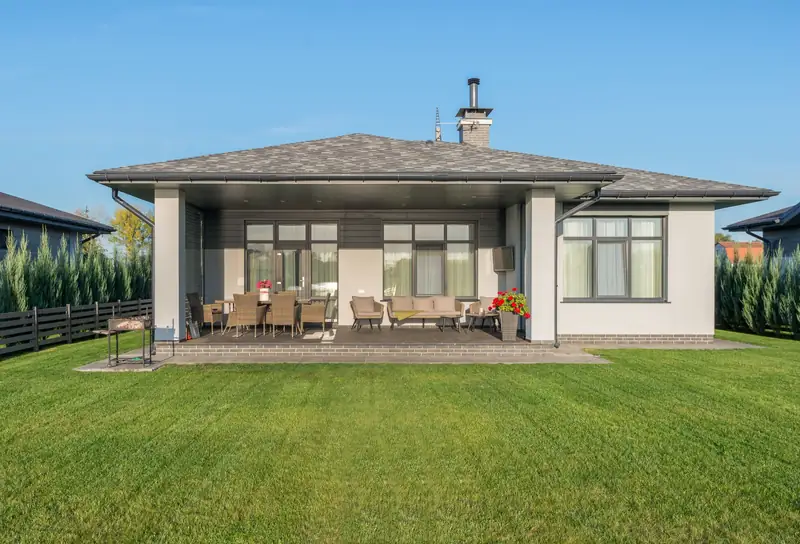
Say a 1970s-era Winter Park home adds a 16 by 12 foot back patio, 192 square feet, off the kitchen, on a lot shaded by a live oak measuring close to 30 inches across. At $6–$13 per sq ft installed, that lands between roughly $1,152 and $2,496 before any adjustment for working around the root zone. If the oak measures at or above 30 inches once it's checked on site, the landmark designation adds a step to the permit plan, and the patio's shape sometimes shifts a few feet to keep the pour clear of the root flare.
Patios are named, not implied, in the coverage ordinance
Section 58-65 lists “patios” by name alongside buildings, decks and drives as part of the lot's impervious total, capped at 50 percent of the whole parcel (City of Winter Park, Sec. 58-65 R-1A districts). That's a different scope than a rule aimed only at the front setback: a backyard patio behind an older Winter Park home still counts against the same citywide ceiling as the driveway out front, so the two additions compete for the same square footage rather than being judged separately. The permit itself still runs through Building and Permitting Services before the forms go up (City of Winter Park, Do I Need a Permit).
A Lanai's Footers Aren't Sized Like the Slab Around Them
A screen enclosure's support posts need footings sized for that structure, not for the patio slab around them, and several Winter Park-area permitting offices draw a formal line between a plain slab and a slab with footers for exactly that reason. The footer's depth and width come from what the enclosure manufacturer or an engineer specifies for the posts, independent of the 4-inch flatwork thickness used for the rest of the patio. Pouring the footers as their own element, rather than trying to build extra thickness into the surrounding slab and call it enough, is what lets the posts carry wind and structural loads the slab itself was never designed to take.
A landmark oak changes where the slab can go
Any application tied to site work has to include a plan showing the proposed patio against the trees already on the lot (City of Winter Park Ordinance 3320-24). A live oak or bald cypress 30 inches or more in diameter, in fair to excellent condition, earns landmark status under the city's 2024 tree ordinance, a tier above the six-inch threshold that protects an ordinary tree (Ordinance 3320-24). On a lot with a specimen like that near the back of the house, the patio footprint and the contractor's equipment path both work around the canopy's root zone before a shovel goes in.
Ridge Sand Under a Patio Still Needs Shallow Lifts
The sand ridge soils under parts of Winter Park, Candler, Astatula and Tavares among them, drain so well that the water table can sit more than 80 inches down, yet that same looseness means a compactor's plate can push material sideways instead of locking it in place. Under a patio, where the base only needs to carry foot traffic and outdoor furniture rather than a vehicle, it is still worth wetting loose ridge sand enough to bind it and compacting in shallow lifts rather than one deep pass. Skipping that step on a sandy lot shows up later as a soft spot under one corner of the slab, often near wherever foot traffic concentrates, like a step down from a door.
Why 'No License for Driveways' Doesn't Settle a Patio Job
Florida law bars local governments from requiring a license specifically for driveway installation, but patios are not named in that same carve-out, and whether a given Winter Park patio job needs a state-certified contractor can come down to a judgment call about whether it matches the structural masonry scope that covers slabs, footers and walls. Assuming a patio gets the same blanket exemption a driveway does, especially once footings for a lanai are part of the scope, is a mistake that surfaces at permitting, not before. Asking the local building department how it classifies a specific patio scope, rather than guessing from the driveway rule, avoids a permit application that gets kicked back.
Curing Has to Wait on the Finish You Picked
Curing a patio that is going to be stained or colored cannot follow the same fixed schedule as a plain gray slab, because some stains and sealers need the surface moisture content and cure time further along than a basic curing compound requires before they will take evenly. On a Winter Park job, that means the finish decision made back at the planning stage, broom, exposed aggregate, color, feeds directly into how the crew schedules curing and when the next trade is allowed back on the slab. Rushing a stained finish onto a patio that has not cured long enough is a common way to end up with blotchy, uneven color instead of the look that was ordered.
What Salt Air Adds to a Coastal Patio's Checklist
A patio within reach of salt air, more of a factor on the coastal side of Sarasota and Manatee than on the Orlando side of the service area, benefits from an occasional check of any exposed rebar or wire mesh near a chip or a crack, since airborne salt speeds up corrosion once metal is exposed to it. Outdoor furniture hardware, a screen enclosure's fasteners and any metal edging near a Winter Park patio age faster in that same salt air, so a yearly look at the whole setup, not just the concrete, catches small problems before they spread. Coastal exposure does not change how the patio was built, only how closely it is worth watching afterward.
Frequently asked questions
Does a backyard patio count toward Winter Park's 50 percent coverage limit?
Yes. Section 58-65 names patios directly as part of the citywide impervious total, capped at half the lot, so a backyard addition is weighed against the same ceiling as the driveway and any other hard surface already on the property.
What happens if a live oak is near where I want a new patio?
Any permit tied to site work needs a plan showing the patio relative to the trees on the lot. A live oak 30 inches or more in diameter, in fair to excellent condition, is a landmark tree under the city's 2024 ordinance, which adds protection beyond the standard six-inch threshold.
Is a patio permit separate from a driveway permit in Winter Park?
They're the same permit category, a building or miscellaneous permit reviewed by Building and Permitting Services, though each addition is submitted with its own site plan and counted separately in the lot's coverage math.
Sources
- City of Winter Park — Do I Need a Permit
- City of Winter Park — Sec. 58-65 R-1A districts
- City of Winter Park — Driveway Permit Requirements
- City of Winter Park — Setback/Coverage Worksheet
- City of Winter Park — Right of Way FAQ
- City of Winter Park Ordinance 3320-24 (tree preservation)
- City of Winter Park, Tree Removal Permit Application
- SJRWMD Watering Restrictions
- F.S. 720.3045 (2026) Installation, display, and storage of items
- Florida Statutes §125.572 — synthetic turf on single-family lots
- Florida Administrative Code — Rule 62-308.100, Synthetic Turf (effective May 19, 2026)
- Census Reporter, Winter Park, FL (ACS 2024 5-yr)
- Census Reporter API, Winter Park median year structure built (B25035)
- City of Winter Park, Street Brick Policy
Ready for a price on your project?
Request a free estimate
Tell us about the project and we'll call to set up a free site visit.