
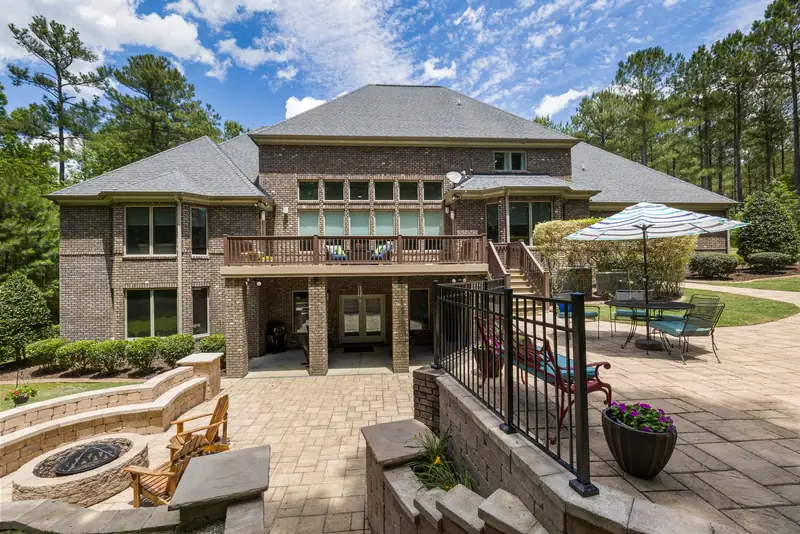
Paver Patios & Walkways · Winter Park, FL
Paver Patios and Walkways Around a Winter Park Home
A paver patio or walkway in Winter Park runs $10–$17 per sq ft installed as of October 2026. A front walk that steps into the right-of-way needs its own permit, separate from the patio itself, and the city's rule reaches further than driveways: planters, walls and landscaping in that strip are all covered.
By the Opera Concrete & Pavers estimating team · Updated October 1, 2026
Get a free estimate
Tell us about the project and we'll call to set up a free site visit.
The right-of-way rule covers more than pavement
Winter Park's right-of-way FAQ states plainly that “a city right of way permit is required for work or activities in the right of way including… installation of planters, retaining walls, mailbox… landscaping,” with Public Works at 407-599-3233 and Engineering at 407-450-0815 handling separate pieces of that review (City of Winter Park, Right of Way FAQ). A front paver walkway that crosses from the porch to the sidewalk often touches that strip even when the rest of the patio sits well inside the property line, which is why we flag the walkway's endpoint on the site plan before pricing the job.
The same tree site plan applies to a walkway as to a slab
The 2024 tree ordinance's site-plan requirement names “pool decks, patios, fences, walls, driveways” and, separately, sidewalks among the features a permit application has to map against protected trees (City of Winter Park Ordinance 3320-24). A paver patio or walkway routed around a mature oak's canopy, rather than straight through its drip line, is a common reason the finished layout curves where a drawing board version would have run straight. Paver sealing later on doesn't reopen that review; only new or relocated pavers do.
Grading a patio to slope away from the house
Before any base goes in, we set the finished grade so water runs away from the foundation and off the paver field, typically a slope of about 1 inch for every 8 to 10 feet of patio. That matters here: Winter Park sees most of its roughly 50 inches of annual rain packed into a rainy season running from late May into October, often as a hard afternoon downpour rather than a gentle soak. A patio graded flat, or tipped back toward the house, holds that water against the slider or the lanai threshold instead of carrying it into the yard. Getting the slope right in the base is cheaper than fixing it after the pavers are down.
The last day: inspection, cleanup and the final walk
If the jurisdiction reviewing the job requires a permit or inspection for the patio, that typically happens after base compaction and before pavers are set, so the base stays visible for the inspector. Once joints are swept and compacted, we do a final walk across the whole surface checking for any paver that rocks or sits proud, resetting it in its sand bed before calling the job finished rather than after. On a Winter Park patio, cleanup also means clearing excess joint sand and any base material off adjacent grass or planting beds, since leftover aggregate smothers turf within a couple of weeks.
A front walkway and back patio combination, worked out in square feet
Say a Winter Park home relays a 4-foot-wide, 30-foot front walkway, 120 square feet, plus a 200 square foot paver patio off the back porch, 320 square feet combined. At $10–$17 per sq ft installed, that lands between roughly $3,840 and $5,120, with the front walkway's last few feet checked against the right-of-way rule since it crosses into the planting strip near the sidewalk.
Why edge restraint isn't optional on a patio
Every paver field needs a continuous edge restraint around the perimeter and anywhere the paving material changes, whether that's plastic, aluminum or steel. The spikes that hold it down drive into the compacted aggregate base, not into the native soil beneath it, since soil alone won't hold a spike against the outward push of thousands of interlocking pavers. A strip of plastic landscape edging meant for a flower bed is not a substitute; it isn't rated for that job. On a Winter Park patio bordered by turf or mulch, a proper restraint is what keeps the outer courses from creeping outward season after season until the edge joints open up.
Tree roots lifting a patio years after installation
A large tree planted or left standing near a patio will eventually send roots under the paver field looking for water, and a root thick enough to matter can lift an entire section a visible amount over a season or two. Some cities in this part of Florida protect legacy live oaks by ordinance, so cutting a structural root on a Winter Park property near a protected tree can require a permit or an arborist's sign-off before any repair starts. Pavers make this problem easier to live with than a poured slab would, since lifting the affected units, addressing the root and resetting them doesn't mean breaking anything.
Upkeep on a walkway versus a full patio
A narrow connecting walkway sees concentrated foot traffic along the same path every day, so its joints and bedding sand near the center wear faster than the edges, unlike a patio where wear spreads out more evenly across furniture zones and open space. Individual stepping pavers set in a lawn are even simpler to maintain, since a single unit that settles or tilts can be lifted and reset in its sand bed without touching anything around it. On a Winter Park property with both a walkway and a patio, expect the walkway's joints to need attention more often even though it's the smaller surface.
Frequently asked questions
Does a front paver walkway need a right-of-way permit in Winter Park?
If it extends into the strip between the sidewalk and the street, yes, the same permit that covers planters, retaining walls and mailboxes in that area. A walkway that stays entirely on private property doesn't trigger that separate review.
Do paver patios need the same tree site plan as a driveway in Winter Park?
Yes. The 2024 tree ordinance's site-plan requirement applies to patios, walkways and driveways alike whenever the permit is tied to site work, so a mature oak's location shapes the layout the same way regardless of which hardscape feature is being added.
Can a paver walkway be rerouted around a protected tree instead of removed?
Usually, yes, and it's the preferred option. Curving a walkway or patio edge around a canopy's root zone avoids triggering a tree removal or encroachment review altogether, which is simpler and often cheaper than the alternative.
Sources
- City of Winter Park — Do I Need a Permit
- City of Winter Park — Sec. 58-65 R-1A districts
- City of Winter Park — Driveway Permit Requirements
- City of Winter Park — Setback/Coverage Worksheet
- City of Winter Park — Right of Way FAQ
- City of Winter Park Ordinance 3320-24 (tree preservation)
- City of Winter Park, Tree Removal Permit Application
- SJRWMD Watering Restrictions
- F.S. 720.3045 (2026) Installation, display, and storage of items
- Florida Statutes §125.572 — synthetic turf on single-family lots
- Florida Administrative Code — Rule 62-308.100, Synthetic Turf (effective May 19, 2026)
- Census Reporter, Winter Park, FL (ACS 2024 5-yr)
- Census Reporter API, Winter Park median year structure built (B25035)
- City of Winter Park, Street Brick Policy
Ready for a price on your project?
Request a free estimate
Tell us about the project and we'll call to set up a free site visit.