
Paver Patios & Walkways · South Venice, FL
Paver Patios on South Venice Canal Lots
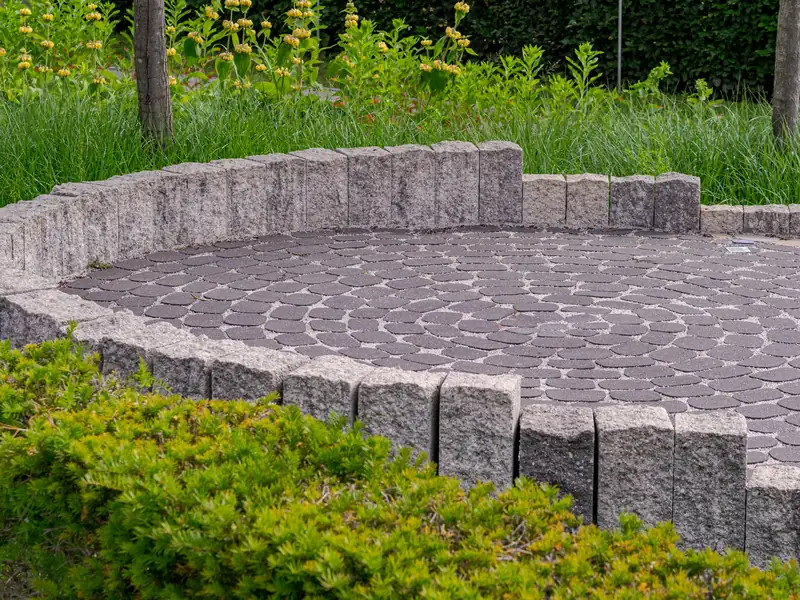
A paver patio in South Venice runs $10–$17 per sq ft installed this October 2026. A canal lot here often pairs a straightforward patio with an older seawall, and the county's coverage limit that applies depends on exactly when the lot was platted.
By the Opera Concrete & Pavers estimating team · Updated October 1, 2026
Get a free estimate
Tell us about the project and we'll call to set up a free site visit.
Why the 50 percent rule, not the newer 35 percent one, usually governs here
The Smadbecks' 1952 plat predates Sarasota County's 35 percent RSF building-coverage standard by decades, so most South Venice parcels default instead to the county's older nonconforming rule, a 50 percent ceiling on impervious surface that counts a paver patio or pool deck directly and leaves grass and shell out of the tally Sarasota County Code §124-283. A homeowner on one of the community's rarer, re-platted parcels is the exception who instead answers to that newer rule, which caps the house footprint rather than the paving beside it Sarasota County Code §124-76.
Base under a walkway versus a full patio
A garden walkway or a run of stepping pavers from the driveway to the front door doesn't need the same base program as a 400-square-foot patio, but it still needs one. ICPI's 4-inch minimum compacted base for pedestrian areas applies to a 3-foot-wide path the same way it applies to an open patio, because a narrow walkway with no base shifts and dishes faster than a wide one, since there's less paver mass holding each course in line. On a South Venice property where a walkway crosses a soft, shaded side yard, we'll often add a touch more base depth there than the sunny, well-drained stretch of the same path.
A moving drainage picture on the creek that carries this area's runoff
Sarasota County is about to reshape 2.3 miles of Alligator Creek, the stream carrying much of South County's stormwater into Lemon Bay, under a $25 million restoration project breaking ground this fall My Suncoast, Alligator Creek restoration project. That work won't touch most South Venice canals directly, but it's a reminder that the drainage pattern a patio gets graded against isn't fixed here the way it might be in a newer subdivision. Separately, any canal-side wall built or rebuilt past 4 feet in height still needs an engineer's drawing, whatever the age of the seawall next to it Sarasota County Code §22-63.
Picking a paver thickness for a patio that only sees foot traffic
ICPI sets 60 mm (2.375 inches) as the standard thickness for pedestrian areas and residential driveways, reserving 80 mm (3.125 inches) units for streets and industrial pavement. A patio in South Venice that only carries foot traffic, patio furniture and the occasional wheelbarrow doesn't need the heavier unit some homeowners request after seeing it quoted for a driveway elsewhere. Going thicker than the job calls for mostly adds cost without adding durability where the load never approaches vehicle weight. What does more for long-term performance on a foot-traffic surface is a properly compacted base and a snug joint, not a thicker unit sitting on a thin one.
A patio built out to a canal-side seawall, worked out in square feet
Consider a 280 square foot paver patio planned between the back of the house and an existing seawall on one of South Venice's original 1952 canal lots. At $10–$17 per sq ft installed, the job runs $2,800 to $4,760, narrowing to about $3,360 to $4,480 inside the typical $12–$16 band. Before pricing it, the driveway and any dock or deck already on the lot get added up against the parcel's 50 percent impervious ceiling, since whatever room is left over sets the real limit on the new patio's size.
Scheduling a patio job around the rainy season
Central and southwest Florida both see a rainy season running roughly from late May into October, often arriving as a sharp afternoon storm rather than steady rain, which changes how a crew sequences the work. We try to get base compaction and bedding sand finished before midday on a South Venice job scheduled during those months, since a sudden downpour on exposed, uncompacted aggregate can wash fines out and force a section to be redone. Paver laying itself tolerates a light rain better than the base stage does, but joint-sand sweeping and compacting still wants a dry window to lock the sand in properly.
Ants and weeds moving into the joints
Dry joint sand is an easy place for ants to excavate a nest and for windblown weed seed to germinate, especially in joints that were never compacted tight or that have washed thin over time. On a South Venice patio in a shaded or irrigated corner, both problems tend to show up together, since loose, damp sand is friendlier to ants and seedlings than sand that's been properly compacted and kept topped off. Re-sanding and compacting the joints removes the loose material both are living in, and it's a maintenance task, not a sign the patio was built wrong, though neglected joints make it worse.
A seasonal rinse before the rainy season hits
A paver patio collects pollen, leaf litter and wind-blown dirt year-round, and all of it works into the joints and feeds algae if it's left to sit. A straightforward rinse and sweep a few times a year, timed before the rainy season ramps up from late May into October, keeps that buildup from compounding into a bigger cleaning job later. On a South Venice patio under any tree cover, clearing debris off the surface regularly also protects the joint sand underneath it, since decomposing organic matter breaks sand down and gives weeds a foothold faster than clean sand ever would.
Frequently asked questions
Why does the 1950s platting date matter for my South Venice patio?
Because it predates the county's newer 35 percent building-coverage rule, most lots here fall under an older nonconforming standard instead: a 50 percent ceiling on paving, pool decks and the house combined, which leaves grass and shell out of the count.
Does a patio built out to a seawall need an engineer's drawing?
Only if the wall itself is being built or replaced above 4 feet in height, measured from its lowest adjacent grade. A patio surface tying into an existing, undisturbed seawall doesn't trigger that requirement on its own.
Will the Alligator Creek project change drainage rules for a South Venice patio?
Not directly for most lots, since the restoration work targets the creek corridor itself rather than the community's residential canals, but it signals that this area's stormwater routing is still being actively reworked rather than fixed in place.
Sources
- Sarasota County Code §124-48 Right-of-Way Use Permit
- Sarasota County Code §98-3 Driveway culvert / ROW use permit fees
- Sarasota County Code §124-255 Additional Provisions (culverts)
- Sarasota County Code §124-76 District Development Standards
- Sarasota County Code §124-283 Nonconforming Lots of Record
- Sarasota County Code §22-63 (retaining walls > 4 ft engineered)
- Sarasota County Online Permitting
- Sarasota County Building (search excerpt; 403 to direct fetch)
- SWFWMD District Water Restrictions
- NRCS OSD EauGallie
- NRCS OSD Felda
- Florida Administrative Code — Rule 62-308.100, Synthetic Turf (effective May 19, 2026)
- Florida Statutes §125.572 — synthetic turf on single-family lots
- F.S. 720.3045 (2026) Installation, display, and storage of items
- Wikipedia, South Venice, Florida
- Census Reporter, South Venice, FL (ACS 2020-2024 5-yr, B01003/B25035)
- South Venice Beach, History of South Venice Beach
- South Venice Beach, Beach Ferry
- My Suncoast, Sarasota County launches $25 million Alligator Creek restoration project
- Your Sun, County's plan to eliminate septic tanks on hold
Ready for a price on your project?
Request a free estimate
Tell us about the project and we'll call to set up a free site visit.