
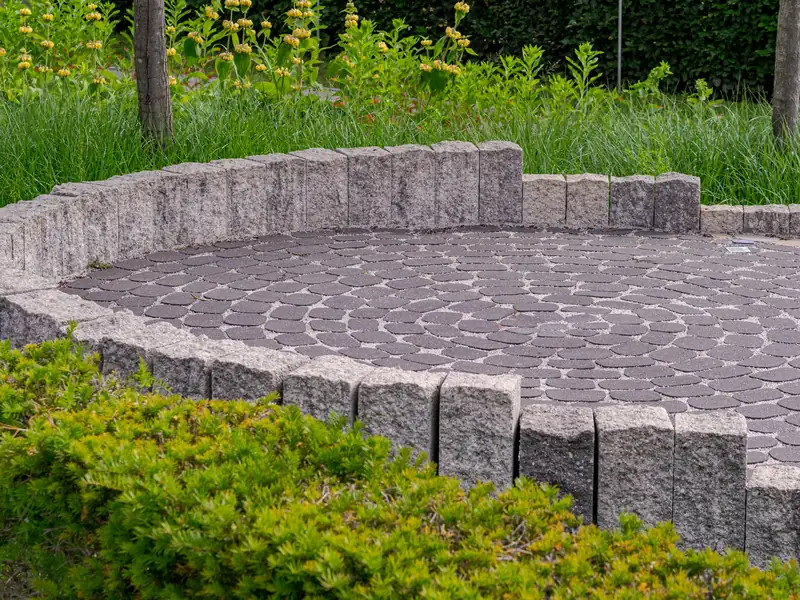
Paver Patios & Walkways · Venice, FL
Paver Patios and Walkways in Venice
A paver patio in Venice runs $10–$17 per sq ft installed as of October 2026. In the Venetian Golf & River Club community in North Venice, a patio or walkway change needs the Architectural Control Committee's sign-off before work starts, reviewed on a monthly cycle separate from any city permit.
By the Opera Concrete & Pavers estimating team · Updated October 1, 2026
Get a free estimate
Tell us about the project and we'll call to set up a free site visit.
Venetian Golf & River Club's ACC reviews exterior changes monthly
The community's Master Declaration requires that 'no material alteration, modification or addition to a Home, or material change in external appearance of a Home, shall be undertaken without the prior written approval of the ACC' Venetian Golf & River Club POA, ACC Application. The committee meets the first Monday of each month at 2 p.m., with applications due by noon on the last Monday of the prior month, and decisions go out by email within 72 hours; approval holds for six months once granted. A home inside a sub-HOA or condo association needs that association's president or manager to sign the application too, on top of the ACC's own review.
Grading a patio to slope away from the house
Before any base goes in, we set the finished grade so water runs away from the foundation and off the paver field, typically a slope of about 1 inch for every 8 to 10 feet of patio. That matters here: Venice sees most of its roughly 50 inches of annual rain packed into a rainy season running from late May into October, often as a hard afternoon downpour rather than a gentle soak. A patio graded flat, or tipped back toward the house, holds that water against the slider or the lanai threshold instead of carrying it into the yard. Getting the slope right in the base is cheaper than fixing it after the pavers are down.
A walkway crossing the property line adds the city's right-of-way review
A paver walkway running from the driveway to the front door usually stays entirely on private ground, but one that crosses the sidewalk strip toward the street falls under the same Right-of-Way Use Permit the city requires for any work placed in the public right-of-way Venice LDR §9.1. A concrete walkway crossing that same strip faces an identical review regardless of surface material. Inside a community like Venetian Golf & River Club, that city-level review runs alongside, not instead of, the ACC's own sign-off on the finished look.
Picking a paver thickness for a patio that only sees foot traffic
ICPI sets 60 mm (2.375 inches) as the standard thickness for pedestrian areas and residential driveways, reserving 80 mm (3.125 inches) units for streets and industrial pavement. A patio in Venice that only carries foot traffic, patio furniture and the occasional wheelbarrow doesn't need the heavier unit some homeowners request after seeing it quoted for a driveway elsewhere. Going thicker than the job calls for mostly adds cost without adding durability where the load never approaches vehicle weight. What does more for long-term performance on a foot-traffic surface is a properly compacted base and a snug joint, not a thicker unit sitting on a thin one.
A Venetian Golf & River Club paver patio, worked out in square feet
Say a North Venice household in Venetian Golf & River Club relays 275 square feet of paver patio off the lanai, timed to clear the ACC's first-Monday meeting before materials get ordered. Pricing it at $10–$17 per sq ft installed puts the job between $2,750 and $4,675, settling near $3,300 to $4,400 inside the typical $12–$16 range once the paver size and pattern are picked. Since the application deadline falls at noon on the last Monday before the meeting, missing that cutoff bumps the whole project, review and start date alike, back by roughly four weeks.
Locking the joints and setting the edge restraint
With the field laid, we sweep dry joint sand across the surface and run a plate compactor fitted with a protective pad over the whole patio two or three passes, which both seats the pavers into the bedding sand and drives sand up into the joints. Edge restraint goes in along the perimeter before or during this step, spiked into the base rather than the sand. A final sweep clears excess sand off the paver faces so it doesn't haze in the Florida sun. On a Venice job, this compaction and joint-sand stage is usually the last full working day before cleanup.
That white haze on new pavers: efflorescence
New concrete pavers can develop a whitish, chalky film called efflorescence, a calcium carbonate deposit that can appear within 60 days of installation and sometimes doesn't show at all until the paver's first wet season if it was laid during a dry stretch. It does not affect the strength or durability of the paver itself. On a Venice patio, the bloom typically fades with normal weathering and rinsing over time, and sealing too early can sometimes trap it rather than help it wear off. It's worth knowing this before the first efflorescence shows up, because it looks alarming and almost never is.
Caring for travertine differently than concrete pavers
Travertine's porous surface takes in water, oils and tannin stains from leaves and pine straw faster than a denser concrete paver does, so a Venice patio in travertine benefits from a sealer that's actually maintained on schedule rather than treated as optional. It also stays noticeably cooler underfoot in direct sun, part of why homeowners choose it around a pool, though we won't attach an unverified number to that difference. Day to day, the cleaning routine is the same as concrete, a mild cleaner and a regular rinse, just with less tolerance for letting stains sit before treating them.
Frequently asked questions
Does Venetian Golf & River Club require approval before a new patio?
Yes. Its Master Declaration bars any material change to a home's external appearance without the ACC's prior written approval, reviewed at a monthly meeting with applications due by the last Monday of the prior month.
How long is an ACC approval good for at Venetian Golf & River Club?
Six months from the date granted. A patio project that stalls past that window needs a fresh application before work can start.
Does a paver walkway to the street need a separate city permit in Venice?
The portion crossing the public sidewalk strip does, under the same Right-of-Way Use Permit a driveway apron needs. A path that stays fully on private ground doesn't trigger that particular review.
Sources
- Venice LDR §9.1 Defined Terms (Right-of-Way Use Permit)
- Venice LDR §3.1 General Development Standards
- Venice LDR §3.8 Fences, Walls, Berms, and Retaining Walls
- Venice Engineering — Permits, Forms and Applications (search excerpt)
- Venice Building Division FAQ (search excerpt)
- Venice Building Permit Guidelines (3rd-party copy, FBC 2014 era)
- Census Bureau PEP, City and Town Population Totals, Vintage 2025 (July 1, 2025)
- Census Reporter, Venice FL (ACS 2020-2024 5-yr, B25035)
- Wikipedia, John Nolen Plan of Venice Historic District
- SWFWMD District Water Restrictions
- FDOT Structures Design Guidelines Vol. 1, §1.3.2 environmental classification
- FEMA - Features of Flood Insurance Rate Maps in Coastal Areas
- FDEP Coastal Construction Control Line Program
- FDEP — Apply for a CCCL permit
- Florida Senate Interim Report 2011-104 (sinkhole insurance)
- Sarasota County Code §124-255 Additional Provisions (culverts)
- Sarasota County Code §124-76 District Development Standards
- Sarasota County Code §22-63 (retaining walls > 4 ft engineered)
- Sarasota County Online Permitting
- Florida Administrative Code — Rule 62-308.100, Synthetic Turf (effective May 19, 2026)
- Florida Statutes §125.572 — synthetic turf on single-family lots
- Venetian Golf & River Club POA, ACC Application
- Sarasota County / USF Water Atlas, Intracoastal Waterway (Venice)
- Sarasota County / USF Water Atlas, Roberts Bay (Venice)
Ready for a price on your project?
Request a free estimate
Tell us about the project and we'll call to set up a free site visit.