
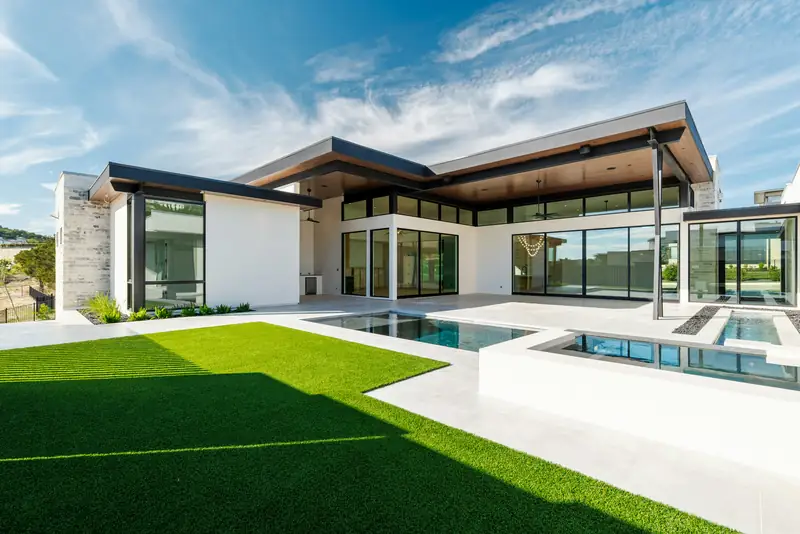
Concrete Pool Decks · Kissimmee, FL
Concrete Pool Decks for Kissimmee Homes
Pricing a concrete pool deck in Kissimmee runs $5–$15 per sq ft installed, a Florida market range as of October 2026. A fair share of the newer pools going in around the city sit on lots zoned for short-term rental use, and across the area generally, the flatwoods soil under the slab holds water close to the surface for part of the year, which shapes how the deck is graded.
By the Opera Concrete & Pavers estimating team · Updated October 1, 2026
Get a free estimate
Tell us about the project and we'll call to set up a free site visit.
A new pool deck on flatwoods ground, worked out in square feet
Say a new-construction home pours a 720 square foot pool deck around a freshly set pool shell on ground mapped as Smyrna fine sand. Figuring $5–$15 per sq ft installed puts the job somewhere between $3,600 for a plain broom texture and $10,800 for a cool-touch decorative surface, with most finishes falling between those two numbers. Because the water table on that soil can sit within 18 inches of the surface during the wettest months, the crew confirms the pool's finished elevation against the yard's drainage pattern before the deck forms go up, not after.
Flatwoods soil holds a water table within 18 inches for part of the year
The Smyrna soil series, officially established in Osceola County in 1976, is one of the flatwoods soils that cover a lot of ground under Kissimmee-area yards, alongside Myakka, Florida's own state soil (NRCS, Official Series Description, Smyrna; NRCS, Official Series Description, Myakka). Both can sit wet within about a foot and a half of grade for one to four months of a typical year, so a crew lays out a pool deck's pitch and its finished height over the yard before forming, instead of trusting a site plan drawn for a lot with faster-draining sand.
The Isolation Joint at the Coping Is Not Optional
Where the deck meets the pool's bond beam, we leave a continuous gap filled with a compressible backer rod and a flexible polyurethane sealant instead of pouring concrete tight against the coping. The pool shell and the surrounding deck move at different rates on different schedules, so a rigid connection there cracks the first time one settles even slightly more than the other. A Kissimmee deck without that isolation joint often shows its first crack as a hairline running the length of the coping within a year or two, well before the rest of the slab shows any sign of stress. The sealant itself needs periodic attention, not a one-time install.
New pools near the attractions often sit on rental-zoned lots
A lot of the newer construction around Kissimmee's resort corridor is on parcels zoned for short-term rental use, either inside a Short Term Rental Planned Development or an area on the county's rental overlay map (Osceola County, STRPD District). A pool deck on one of those lots goes through the same slab review as any other, but a property manager overseeing a rental often specifies a slip-resistant, cool-touch finish built for guests in wet feet rather than the household's own routine use.
Slope Has Two Jobs on a Pool Deck, Not Just One
A patio only needs to slope away from the house. A pool deck does that too, but it also has to carry water toward deck drains or a perimeter channel without letting it pool against the coping or run back into the pool itself. We set that two-direction grade into the subgrade before any base goes down, typically shaping a slight fall from the house side out to the drain line rather than one flat pitch across the whole deck. Skip that step on a Kissimmee job and an afternoon storm leaves standing water right where people walk barefoot between the pool and the house, long after the rest of the yard has drained.
Saltwater Pools and What the Salt Does to Nearby Concrete
A saltwater pool runs at a far lower salt concentration than ocean water, but splash-out and backwash still leave that salt behind on the deck surface and at the coping as the water evaporates, cycle after cycle. Airborne salt from a coastal location does the same thing to exposed rebar or wire mesh at a crack or chipped edge that it does anywhere near the coast generally, speeding up corrosion once metal is exposed. On a Kissimmee deck around a saltwater pool, that means the coping and any spot where splash-out concentrates deserve closer attention for small chips and cracks than the parts of the deck that only ever see rain.
Why We Start Early on a Hot, Open Pour
A pool deck usually sits wide open to direct sun with no roof or tree cover until the screen cage goes up, which pushes evaporation rates higher than a shaded driveway pour sees on the same morning. Hot-weather guidance calls for avoiding the hottest part of the day and getting curing started as soon as finishing wraps up, and that matters more on a deck than almost anywhere else on a Kissimmee property, since there's so little shade working in the crew's favor. Starting before sunrise on a summer pour buys real working time before the surface starts drying faster than the slab underneath can gain strength.
Cleaning Algae Off the Shaded or Splash-Zone Sections
The parts of a pool deck that stay wettest longest, whether from shade or constant splash-out, grow algae and mold faster than the rest of the surface, and a slick green or black film there is a safety problem as much as a cosmetic one. A mild cleaner made for the deck's finish, scrubbed with a stiff brush and rinsed well, handles most of it without stripping a sealer or an acrylic coating the way a close-range pressure washer can. On a Kissimmee deck, those splash-zone sections are worth checking on their own schedule, separate from the rest of the deck, since they build up algae faster.
Frequently asked questions
Does Kissimmee's soil affect how a pool deck is built?
The Smyrna and Myakka series common under Kissimmee-area lots can sit wet within about a foot and a half of grade for part of the year. That shapes the deck's slope and finished elevation more than it changes the concrete mix itself.
Do rental-zoned pool homes near Kissimmee need a different deck permit?
No, the slab permit process is the same regardless of how the home is used. Zoning for short-term rental use is a separate check against the county's overlay map or a Short Term Rental Planned Development designation, not a different building permit category.
What finish works best on a pool deck that sees heavy guest traffic?
A slip-resistant, cool-touch broom or textured finish holds up to wet feet and frequent turnover better than a smooth trowel finish, which is one reason property managers on rental-zoned lots often specify it even though the underlying slab spec doesn't change.
Sources
- Census Bureau PEP, City and Town Population Totals, Vintage 2025 (July 1, 2025)
- Census Reporter, Kissimmee FL (ACS 2020-2024 5-yr, B25035)
- City of Kissimmee, Parks
- City of Kissimmee — Apply for Driveway/Sidewalk Construction
- City of Kissimmee — Apply for Right-of-Way Permits
- City of Kissimmee — Types of Permits
- Osceola County — Right-of-Way Permit Information
- Osceola County — Parking Ordinance, Ch. 22 Art. II (Sec. 22-50.6)
- Osceola County — Permit Information
- Osceola County — Homeowners
- NRCS OSD Smyrna
- NRCS OSD Myakka
- Celebration, Architectural Review Committee
- Florida Administrative Code — Rule 62-308.100, Synthetic Turf (effective May 19, 2026)
- Florida Statutes §125.572 — synthetic turf on single-family lots
- Toho Water Authority, Watering Days and Times
- Osceola County, STRPD District
Ready for a price on your project?
Request a free estimate
Tell us about the project and we'll call to set up a free site visit.