
Concrete Pool Decks · St. Cloud, FL
Concrete Pool Decks for St. Cloud Homes
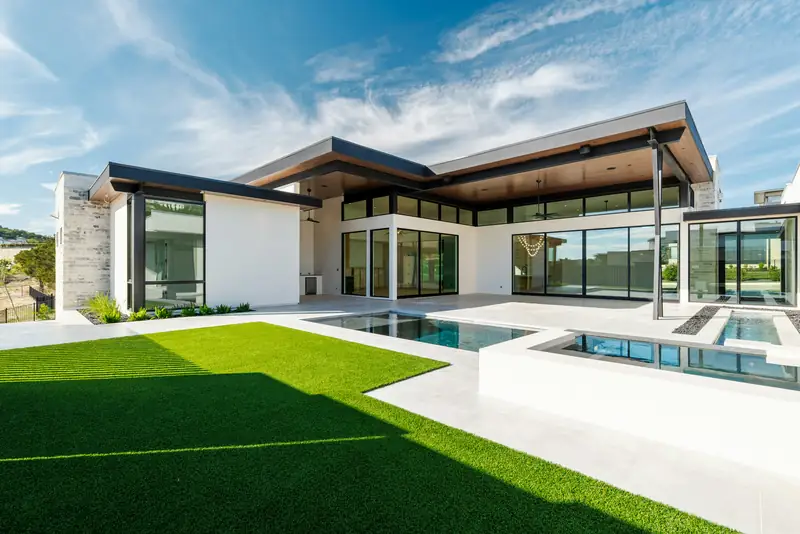
A concrete pool deck in St. Cloud costs $5–$15 per sq ft installed, a Florida market range as of October 2026. The Building Division reviews a pool deck under its “Swimming Pool and Spa” permit category, and with new subdivisions filling in across the city, a good share of that work is a deck poured around a brand-new pool rather than a resurfacing job.
By the Opera Concrete & Pavers estimating team · Updated October 1, 2026
Get a free estimate
Tell us about the project and we'll call to set up a free site visit.
“Swimming Pool and Spa” is its own line on the permit list
St. Cloud's permit-required list keeps pools and spas in a category of their own, separate from the “Residential Other – Concrete Pad” line that covers a patio or walkway (City of St. Cloud, Permit Information). A pool deck poured at the same time as the shell typically goes through that review as part of the larger pool package rather than as a stand-alone slab permit, while a deck replacement on an existing pool without new construction can file separately. Either way, the Building Division at City Hall, 407-957-7300, confirms which path applies.
New-construction pools are a bigger share of the work than in an older city
The city's July 2025 population estimate, 74,960, is roughly 15,900 higher than its 2020 base of 59,090 (Census Bureau PEP, City and Town Population Totals, Vintage 2025), growth that's landed largely in new subdivisions rather than infill on older streets. A pool deck poured alongside a brand-new pool shell follows a straightforward grading plan tied to the subdivision's own stormwater design, while a deck going in around an older pool has to work with whatever drainage pattern the original construction left behind.
Base Work Where a Screen Cage Footer Lands on the Deck
Most pool decks in this market get enclosed by a screen cage before the job is finished, and the cage's aluminum posts land on isolated concrete footers, not on the deck slab itself. We pour those footers first and set an isolation strip between the footer and the surrounding deck so the two can move independently. On a St. Cloud job, skipping that isolation strip lets the deck slab crack outward from the footer the first time the ground beneath either one shifts even slightly. Coordinating footer layout with the screen company before the deck forms go up keeps that joint in the right place the first time.
Applying the Kool Deck-Style Coating After the Base Cures
A spray texture coating doesn't go on the same day as the base slab pour, it waits until the concrete underneath has cured enough to take the topping without trapping moisture or causing bond problems. On a St. Cloud job, that usually means a gap of at least several days between the structural pour and the coating step, timed around the same curing standard as the base slab rather than rushed to finish sooner. Skipping ahead on that timeline is one of the more common reasons a coating delaminates or blisters within the first season, since it never had a fully cured, dry surface to bond to.
A new-construction pool deck, worked out in square feet
Say a new home pours a 650 square foot pool deck around a freshly set pool shell, on a lot graded as part of a new subdivision's stormwater plan. Run that footage through $5–$15 per sq ft installed and the deck lands between about $3,250 for a plain broom finish and $9,750 for a cool-touch decorative surface. Because the subdivision's drainage was engineered before the first house went up, the deck's slope usually just follows the lot's existing grading plan rather than requiring a separate drainage study the way a retrofit on an older street sometimes does.
Choosing a Finish That Doesn't Get Slick Wet
A smooth trowel finish, fine for an interior floor, is a poor choice anywhere near standing water, since it offers little grip underfoot the moment the surface is wet. A broom finish or a spray-applied acrylic texture coating, the kind sold under names like Kool Deck, both leave enough surface texture to cut slip risk around a St. Cloud pool where bare, wet feet are the normal condition, not the exception. The acrylic coating also comes in lighter colors the manufacturer says stay cooler than plain gray concrete in direct sun, though we won't attach a specific temperature figure to that claim since no verified measurement exists for Florida conditions.
Irrigation Heads Aimed at the Deck Instead of the Lawn
A sprinkler head that drifts toward the pool deck over time soaks the same strip of concrete, or the coating on top of it, every cycle, leaving mineral staining and, on a coated deck, wearing through the acrylic topping faster than normal foot traffic would. It also adds water to the ground right next to the isolation joint and the coping, exactly the spot that joint is supposed to be protecting from uneven movement. On a St. Cloud property, checking irrigation aim against the finished deck footprint once construction wraps up is worth doing before the first watering cycle after the pour, not months later once staining has set in.
Keeping Deck Drains Clear Before the Rainy Season
A deck drain clogged with leaves, pine straw or pool debris stops doing its job exactly when an open, sun-exposed deck needs it most, during a hard afternoon storm typical of the rainy season running roughly from late May into October. Clearing drain inlets and the low points leading to them a few times a year, and especially right before that season starts, keeps water moving the way the two-direction slope was built to send it. On a St. Cloud deck, a clogged drain usually shows up first as standing water pooling right at the inlet rather than anywhere else, an easy spot to check during a routine walk-through.
Frequently asked questions
What permit covers a new pool deck in St. Cloud?
The Building Division's “Swimming Pool and Spa” category, usually reviewed as part of the larger pool permit when the deck is poured alongside new construction. A deck added later to an existing pool can be a separate filing; confirm which applies with the Building Division.
Are most St. Cloud pool decks new construction or replacements?
A larger share than in some nearby cities is new construction, with the city's population up by roughly 15,900 since 2020, much of it in new subdivisions where the pool and deck go in together.
Does a new-construction pool deck need its own drainage plan?
Usually not a separate one. New subdivisions typically have their stormwater grading engineered before homes are built, so the deck's slope follows that existing plan rather than needing an independent drainage study.
Sources
- City of St. Cloud — Permit Information
- City of St. Cloud — Public Works Fees
- Census Bureau PEP, City and Town Population Totals, Vintage 2025 (July 1, 2025)
- Census Reporter, St. Cloud, FL (ACS 2020-2024 5-yr, B25035)
- NRCS OSD Smyrna
- NRCS OSD Myakka
- NRCS OSD Basinger
- Osceola County — Parking Ordinance, Ch. 22 Art. II (Sec. 22-50.6)
- Florida Administrative Code — Rule 62-308.100, Synthetic Turf (effective May 19, 2026)
- Florida Statutes §125.572 — synthetic turf on single-family lots
- Florida Statutes §720.3045 — items not visible from the frontage or an adjacent parcel
- Toho Water Authority, Watering Days and Times
- Toho Water Authority, St. Cloud Utility Integration News Release
- Wikipedia, St. Cloud, Florida
Ready for a price on your project?
Request a free estimate
Tell us about the project and we'll call to set up a free site visit.