
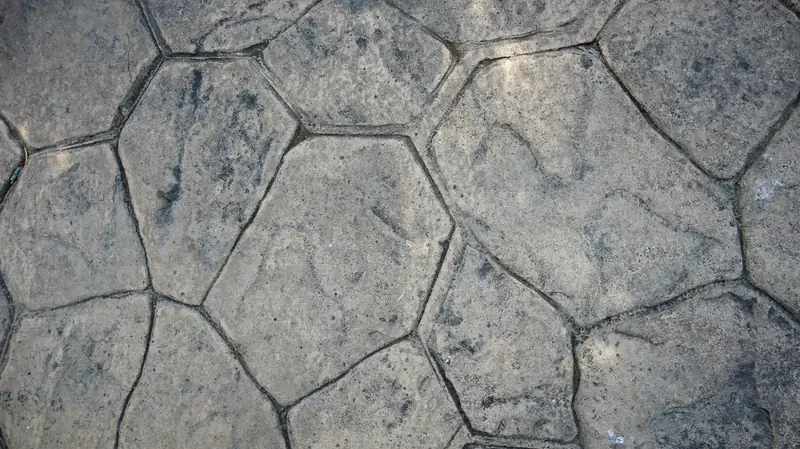
Concrete Patios · Venice, FL
Building a Concrete Patio in Venice
A concrete patio in Venice runs $6–$13 per sq ft installed as of October 2026. An older city guidance sheet lists an on-grade patio without footings as not needing a permit, though we confirm that's still current with the Building Department before pouring rather than assume it still applies.
By the Opera Concrete & Pavers estimating team · Updated October 1, 2026
Get a free estimate
Tell us about the project and we'll call to set up a free site visit.
What an older city guidance sheet says about patios on grade
A Building Permit Guidelines sheet written for the 2014 edition of the Florida Building Code lists 'decks and patios directly on grade and without footings' as work that does not require a permit, alongside a parallel entry for a non-buildable-slab patio or deck on grade Venice Building Permit Guidelines. Florida's building code has moved through several editions since that sheet was written, and the copy available is hosted on a third-party site rather than the city's own, so we treat it as a starting point and confirm current practice with the Building Department, at 941-882-7547, before pricing a patio as permit-exempt Venice Building Division FAQ.
A Patio's Thickness Starts at Code, Not Above It
Florida's residential code sets 3 1/2 inches as the floor for any slab on the ground, but a patio built to that bare minimum leaves little margin for a loaded planter, a nearby footing or a few years of settling. We build a Venice patio to 4 inches, in the same general 3,000 to 4,000 psi range used for other residential flatwork, even though the slab will never see a car's weight the way a driveway does. The extra margin over code is not about matching a driveway's spec, it is about giving an exterior slab enough reserve that normal patio loads, furniture, planters, a grill, do not concentrate stress right at the code minimum.
A lanai extension off a screened pool cage, worked out in square feet
Say a 1980s Venice home adds an 18 by 14 foot patio extension, 252 square feet, off the back of an existing screened lanai, flush with the current grade and without footings. At $6–$13 per sq ft installed, that runs $1,512 to $3,276, or roughly $1,764 to $2,520 in the typical $7–$10 band for a broom finish with a control-joint layout matched to the slab. Because the addition stays on grade without footings, it's the kind of scope the city's older guidance sheet treats as exempt, but we still confirm with the Building Department before scheduling the pour rather than rely on a document written for an earlier code edition.
A patio doesn't count toward Venice's lot-coverage limit the way an addition does
Venice's own lot-coverage rule measures building footprint, and the code text specifically excludes paved areas, a backyard patio among them, from that count Venice LDR §3.1. That's useful on a lot that already carries a full house footprint and a pool cage, since a paver or concrete patio addition doesn't push the parcel toward a coverage ceiling the way it might under a percentage-based impervious cap. A concrete pool deck on the same lot works the same way under this definition, though online permitting through the city's portal is still the only application path either way.
A Fenced Backyard Changes How a Hot Pour Dries
A fenced backyard or a patio boxed in by a pool cage and tall landscaping can trap heat and cut the wind that would normally help a hot pour evaporate at a predictable rate, which changes the plastic-shrinkage math a Venice crew plans around compared with an open, wind-exposed driveway. Less wind can lower the evaporation rate, which sounds like an advantage, but a boxed-in yard also traps radiant heat from fences and walls, so the net effect on a given lot is not automatic either way. Reading the actual microclimate of a specific backyard, rather than applying the same hot-weather plan used on every job, is what keeps a shaded or enclosed pour from surprising the crew.
Ridge Sand Under a Patio Still Needs Shallow Lifts
The sand ridge soils under parts of Venice, Candler, Astatula and Tavares among them, drain so well that the water table can sit more than 80 inches down, yet that same looseness means a compactor's plate can push material sideways instead of locking it in place. Under a patio, where the base only needs to carry foot traffic and outdoor furniture rather than a vehicle, it is still worth wetting loose ridge sand enough to bind it and compacting in shallow lifts rather than one deep pass. Skipping that step on a sandy lot shows up later as a soft spot under one corner of the slab, often near wherever foot traffic concentrates, like a step down from a door.
Scheduling a Cure Around a Screen Enclosure Crew
When a screen enclosure contractor is scheduled to anchor posts into a new Venice patio soon after the pour, the curing timeline has to work backward from that install date rather than following a fixed default. Hot-weather curing calls for keeping the surface moist, by compound or wet curing, for at least 3 days before anyone treats the slab as finished work, and anchoring posts into concrete that has not had that time can disturb a cure that is still gaining strength. Coordinating the pour date with the enclosure crew's schedule, instead of booking both independently, avoids a scramble where one trade is waiting on concrete that genuinely is not ready yet.
Moving the Planters Before They Leave a Mark
A heavy planter, an outdoor kitchen's grill island or a cluster of furniture left in exactly the same spot on a Venice patio for years can leave a faint discoloration or staining ring on the surface, especially on a sealed or stained finish where UV exposure differs between the covered and uncovered concrete underneath. Moving furniture and planters periodically, even just a few inches every season, spreads out that exposure and keeps one section of the patio from visibly aging faster than the rest. It is a small habit that costs nothing and keeps a stained or colored patio looking closer to uniform for longer.
Frequently asked questions
Does a small concrete patio in Venice need a building permit?
An older city guidance sheet lists an on-grade patio without footings as exempt, but since it was written for an earlier Florida Building Code edition, we confirm current practice with the Building Department at 941-882-7547 before pricing a job as permit-free.
Does a patio count against my Venice lot's coverage limit?
No, under the city's own definition. Lot coverage measures building footprint only and excludes paved areas, including a patio, from that count.
Can I apply for a Venice patio permit on paper instead of online?
No. The Building Division's FAQ page is explicit that online permitting is the only route and paper applications aren't accepted.
Sources
- Venice LDR §9.1 Defined Terms (Right-of-Way Use Permit)
- Venice LDR §3.1 General Development Standards
- Venice LDR §3.8 Fences, Walls, Berms, and Retaining Walls
- Venice Engineering — Permits, Forms and Applications (search excerpt)
- Venice Building Division FAQ (search excerpt)
- Venice Building Permit Guidelines (3rd-party copy, FBC 2014 era)
- Census Bureau PEP, City and Town Population Totals, Vintage 2025 (July 1, 2025)
- Census Reporter, Venice FL (ACS 2020-2024 5-yr, B25035)
- Wikipedia, John Nolen Plan of Venice Historic District
- SWFWMD District Water Restrictions
- FDOT Structures Design Guidelines Vol. 1, §1.3.2 environmental classification
- FEMA - Features of Flood Insurance Rate Maps in Coastal Areas
- FDEP Coastal Construction Control Line Program
- FDEP — Apply for a CCCL permit
- Florida Senate Interim Report 2011-104 (sinkhole insurance)
- Sarasota County Code §124-255 Additional Provisions (culverts)
- Sarasota County Code §124-76 District Development Standards
- Sarasota County Code §22-63 (retaining walls > 4 ft engineered)
- Sarasota County Online Permitting
- Florida Administrative Code — Rule 62-308.100, Synthetic Turf (effective May 19, 2026)
- Florida Statutes §125.572 — synthetic turf on single-family lots
- Venetian Golf & River Club POA, ACC Application
- Sarasota County / USF Water Atlas, Intracoastal Waterway (Venice)
- Sarasota County / USF Water Atlas, Roberts Bay (Venice)
Ready for a price on your project?
Request a free estimate
Tell us about the project and we'll call to set up a free site visit.