
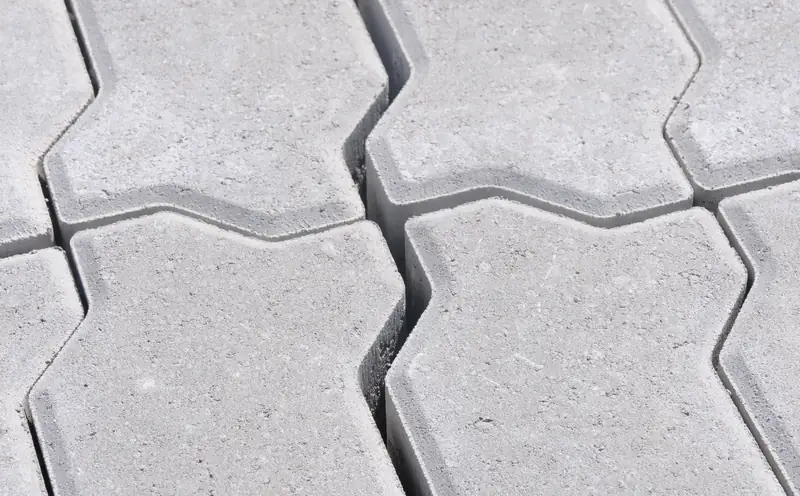
Paver Driveways · Parrish, FL
Paver Driveway Installation in Parrish
Budget $10–$30 per sq ft installed for a paver driveway in Parrish as of October 2026, the figure holding steady whether it's the builder's first install on a new lot or a motor-court upgrade on an established one. Three-car-garage floor plans are common enough in the area's newer subdivisions that the county's widest-allowed apron comes up often, not just as a rare exception.
By the Opera Concrete & Pavers estimating team · Updated October 1, 2026
Get a free estimate
Tell us about the project and we'll call to set up a free site visit.
Reading the county's paver spec on a newer floor plan
North River Ranch and Seaire both sell plenty of three-car-garage layouts, and the county's own paver driveway guidance lets that style of home build out to 30 feet of apron width at the street, wider than the standard 12-to-24-foot range it sets for everything else, as long as the compacted sub-base and the paver together still land at a 6-inch grade cut Manatee paver driveway inspections. A crew pricing a new-build job checks the garage configuration against that spec before assuming the standard width applies.
Ridge sand versus flatwoods: two different subgrades under Parrish driveways
Central Florida and the Suncoast sit on two very different subgrade types. Ridge sands such as Candler and Astatula drain excessively, with a water table that can sit 80 inches or deeper, about as forgiving a subgrade as pavers ever see. Flatwoods soils such as Myakka, Florida's official state soil, or Smyrna and EauGallie hold a water table within 18 inches of the surface for part of most years. A driveway base built the same way on both will perform differently: the sandy ridge lot drains the base almost on its own, while the flatwoods lot needs the extra depth the spec allows for wet ground. Knowing which one sits under a given Parrish address changes the base plan before anything gets dug.
Compacting over wetter ground near the creek
EauGallie soil, mapped across parts of the Parrish area, keeps a water table within about 18 inches of the surface for one to four months most years, while Felda runs wetter still, staying within roughly a foot of grade for two to six months NRCS EauGallie soil series NRCS Felda soil series. ICPI calls for 2 to 4 extra inches of compacted aggregate on ground that wet compared with a free-draining lot, a distinction worth confirming before the base order goes in on a new paver drive rather than guessed from the model home next door.
A driveway built to carry more than a sedan
A standard residential paver driveway is built around the loads a car puts on it, but a boat trailer, an RV, or a loaded work truck asks more of the same surface. ICPI's spec response is layered: a thicker 80 mm paver instead of the usual 60 mm, a base compacted to the stricter modified Proctor standard used for vehicular areas rather than the pedestrian number, and edge restraint that can actually hold the field together under a turning tire. None of those changes are visible once the job is finished, part of why they're easy to skip on a Parrish quote that never asks what the driveway will actually carry. Specifying the load up front is cheaper than rebuilding a surface that wasn't built for it.
Say a circular paver motor court on a Parrish new-build lot adds 20 x 45 ft of surface, 900 sq ft
Say a circular paver motor court on a Parrish new-build lot adds 20 x 45 ft of surface, 900 sq ft. At $10–$30 per sq ft, figure $9,000 to $27,000 across the full range, narrowing to about $10,800 to $18,000 inside the typical $12–$20 band depending on paver thickness and pattern. Because the addition sits past the garage apron the builder originally poured, it still needs its own access and drainage permit filed before work starts, and the grade cut gets checked the same way a standalone driveway's would, whether the base soil underneath leans toward Myakka, EauGallie or Felda.
What a crew checks before a single paver goes down
By the time the first paver is set, the base underneath has already been checked against two separate numbers: compaction density, tested to at least 98 percent of standard Proctor for a driveway, and surface tolerance, held to plus or minus three-eighths of an inch over a 10-foot span. Both checks happen before the bedding sand is even screeded, because fixing a low spot in the base is straightforward and fixing one after the pavers are set is not. On a Parrish job, that inspection step is the quiet middle of the process, sandwiched between the excavation everyone notices and the finished surface everyone sees, and it's the part that decides how the driveway looks in two years, not two days.
A sunken paver driveway is almost never a sinkhole
Most dips in a paver driveway trace back to the base underneath: a spot that never reached full compaction, a wet area that settled differently than the rest of the lot, or bedding sand that migrated once water found a path through a joint. True sinkhole activity is a separate geological process, and claims for it concentrate heavily in a handful of counties, Hernando, Pasco and Hillsborough chief among them, with Orange County also appearing on the state's list of counties with the most reported claims. For a driveway in or near Parrish, a localized dip after a rainy season is far more likely to be ordinary base settlement than ground collapse, though a sudden, sharply defined depression is worth a second look regardless of which county it's in.
Resetting a sunken paver, instead of patching it
Because a paver driveway is built from individual units rather than one poured surface, a localized low spot, from a soft patch in the base or sand that migrated after heavy rain, can usually be fixed by lifting the affected pavers, correcting the bedding sand underneath, and resetting the same units rather than pouring a visible patch the way a concrete repair would need. That's a meaningful difference for a Parrish homeowner weighing long-term upkeep: the fix addresses the base problem directly instead of covering it, and the repaired section matches the rest of the driveway once the joint sand is swept back in, rather than standing out as an obviously patched spot.
Frequently asked questions
How wide can a three-car-garage paver driveway be in Parrish?
The county's paver driveway spec allows up to 30 feet of width at the street for that garage configuration specifically, well past the 12-to-24-foot range that governs a one- or two-car driveway.
Does a paver motor-court addition need its own permit in Parrish?
Yes. Adding motor-court paving past a builder's original apron is still an enlargement under the county's access and drainage permit rule, filed the same way a brand-new driveway application would be.
Why does base depth vary so much across Parrish paver jobs?
The soil underneath varies. EauGallie and Felda both hold groundwater within about 18 inches of the surface for part of the year, calling for 2 to 4 inches more compacted base than a better-drained lot would need.
Sources
- Manatee County LDC §1004.2 Access and Drainage Permit
- Manatee — Request a Driveway or Culvert Permit
- Manatee Driveway and Culvert Application (2022)
- Manatee — Inspections Required for Paver Driveways
- Manatee — What Does Not Require a Permit (6-16-26)
- Manatee County LDC §511.16 Swimming Pools, Spas, Screen Enclosures
- Manatee County - Modified Phase III water shortage restrictions
- SWFWMD District Water Restrictions
- FEMA Flood Map Service Center
- NRCS OSD Myakka
- NRCS OSD EauGallie
- NRCS OSD Felda
- Florida Administrative Code — Rule 62-308.100, Synthetic Turf (effective May 19, 2026)
- Florida Statutes §125.572 — synthetic turf on single-family lots
- F.S. 720.3045 (2026) Installation, display, and storage of items
- Census Reporter, Parrish CCD, Manatee County FL (ACS 2020-2024 5-yr, B01003/B25035)
- Wikipedia, Fort Hamer Bridge
- USGS Water Data, Gamble Creek at County Road 675 near Parrish FL (Station 02300017)
- USF Water Atlas, Gamble Creek
- Your Observer, Big projects to keep an eye on in Parrish
Ready for a price on your project?
Request a free estimate
Tell us about the project and we'll call to set up a free site visit.